




In today’s fast-moving and highly connected corporate environment, time isn’t just money—it’s the cornerstone of productivity.
Scheduling meetings, a seemingly simple task often becomes a significant productivity bottleneck. Between juggling time zones, aligning calendars, sending reminders, and dealing with last-minute changes, scheduling is a problem begging for innovation.
Enter the AI voice assistant: a transformative solution redefining how companies manage meeting coordination.The Scheduling Dilemma in CorporatesLarge organizations and even small-to-medium enterprises (SMEs) struggle with coordinating internal and external meetings. Administrative staff or team members spend hours weekly aligning calendars, following up on RSVPs, and handling reschedules.
These inefficiencies not only waste time but also result in missed opportunities, strained communication, and poor meeting attendance.Traditional scheduling tools, like email invites or calendar apps, while helpful, still rely heavily on human input. They lack the intelligence to dynamically converse, reschedule, or understand preferences in real-time.
At this point, AI voice assistants demonstrate their value as a powerful and groundbreaking solution.
What is an AI Voice Assistant?
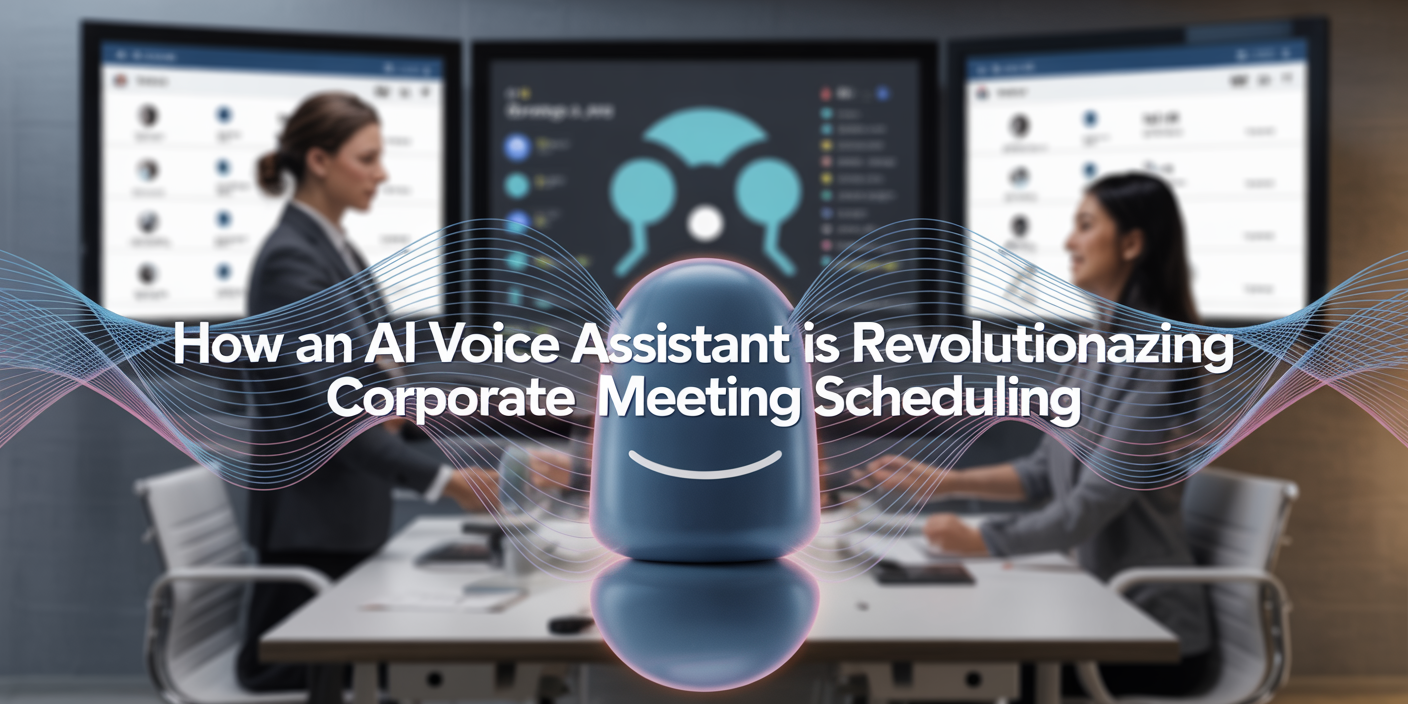
An AI voice assistant is a software solution powered by artificial intelligence that can understand, interpret, and respond to human speech. Unlike traditional chatbots or command-based systems, AI voice assistants are conversational, context-aware, and capable of performing complex tasks like scheduling, follow-ups, and reminders through natural dialogue.
Voice assistants like the Vocal.app integrates deeply with communication tools and calendars to provide seamless scheduling experiences. They can speak to employees and clients, understand their availability, and confirm meetings—all through a human-like conversational interface.
Key Benefits of AI Voice Assistants for Corporate Scheduling
1. 24/7 Scheduling AvailabilityAI voice assistants work round-the-clock. Whether it’s a late-night scheduling request from a global partner or a rescheduling due to an emergency, the assistant can handle it without any manual intervention.
2. Real-Time Calendar CoordinationThese assistants are synced with Google Calendar, Outlook, or any enterprise scheduling system. They can check calendar availability for all participants in real-time and propose the best possible slots.
3. Elimination of Back-and-Forth CommunicationAI voice assistants remove the hassle of repetitive email exchanges typically needed to finalize a meeting time. With just one interaction, the assistant understands the preference and locks the slot, sending confirmations to all parties involved.
4. Improved Meeting Attendance and RemindersOnce a meeting is scheduled, the AI assistant automatically sends calendar invites, reminders, and even follow-up messages. This helps minimize no-shows and boosts overall meeting attendance.
5. Natural Language UnderstandingModern AI voice assistants are built on extensive conversational datasets, allowing them to recognize and adapt to different speech patterns, accents, and user intents. Users can converse naturally, resulting in smoother and more lifelike interactions.
6. Cost-efficiency and ScalabilityReplacing or augmenting human schedulers with AI voice assistants can significantly reduce administrative overhead. Moreover, these assistants can scale effortlessly across departments and time zones without additional hiring.
Real-World Use Cases in Enterprises
1. Executive Assistants for Leadership TeamsExecutives often have dynamic schedules. AI voice assistants can manage daily meeting coordination, schedule strategy sessions, and rearrange appointments on the fly.
2. Sales and Client MeetingsSales teams use AI assistants to schedule demos, discovery calls, or proposal reviews with clients. It ensures quick booking, faster response times, and less friction in the sales funnel.
3. Recruitment SchedulingHR teams leverage AI voice assistants to schedule interviews with candidates. The assistant communicates with both candidates and interviewers, reducing the recruiter's workload and speeding up hiring.
4. Remote and Hybrid Work CoordinationIn distributed teams, scheduling becomes even more complex due to time zones. AI voice assistants close the gap by ensuring meetings are scheduled in a fair and inclusive manner.
Integration with Communication Platforms Modern AI voice assistants like Vocal.app are built to integrate with enterprise tools such as:Microsoft TeamsSlackZoomGoogle MeetCRM and HRMS toolsThis means users can initiate meeting bookings directly through voice or text commands in the tools they already use. The assistant handles the backend work seamlessly.
Overcoming Common ConcernsAdopting AI voice assistants frequently brings up concerns around accuracy, data privacy, and security. Leading platforms mitigate these by:Using enterprise-grade encryption.
Allowing user-level permission controlsProviding detailed audit trails for transparencyOffering multilingual and accent-aware voice models
The Future of Scheduling is ConversationalThe evolution of AI voice assistants is just beginning. With generative AI capabilities, future assistants will not only book meetings but also:Suggest agendas.
Summarize meeting notesCoordinate follow-upsAnalyze meeting outcomesThis delivers a comprehensive, end-to-end meeting experience that extends well beyond just scheduling.
Final Thoughts
AI voice assistants like Vocal.app are not just about automation; they’re about enhancing the way professionals interact with time. These assistants are revolutionizing corporate meeting scheduling by reducing friction, increasing efficiency, and enabling natural conversation.In a world where every second counts, having an AI voice assistant is no longer a luxury—it’s a necessity for modern businesses.