





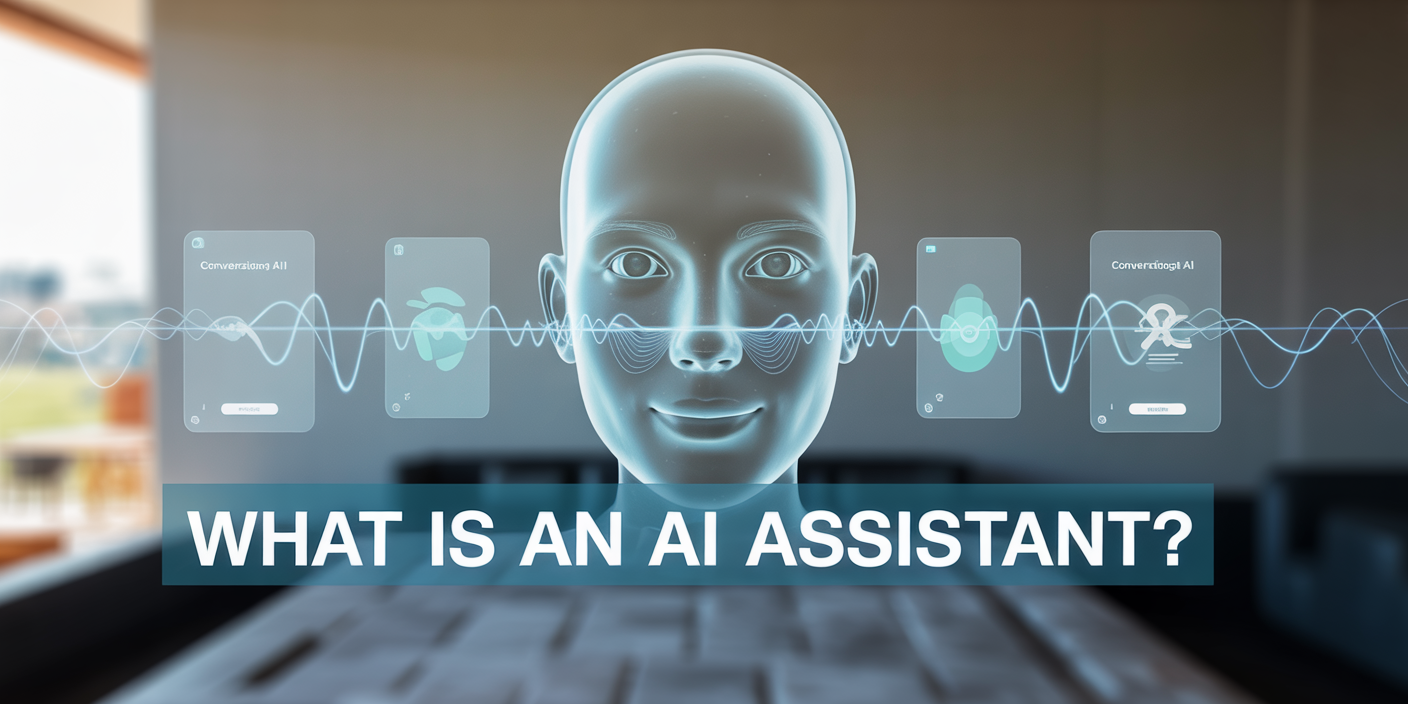
What Is an AI Assistant? Breaking Down the Technology Behind the Voice
In a world where time is the new currency, every missed call could mean a missed opportunity. Imagine this: You’re deep in a meeting, your phone buzzes, and you glance at it—an unknown number.
You ignore it. Five minutes later, another call. Then an email follows: “Hi, I was trying to schedule a quick call with you, but I couldn’t get through.Sound familiar?
Now imagine that same call being answered—politely, professionally, and instantly—by an AI that knows your calendar, speaks naturally, and can schedule that call for you. You stayed focused, and your lead stayed engaged.
That, in its simplest form, is what an AI assistant does.But what is an AI assistant?
How does it think, respond, and act like a real person? And why is it becoming a must-have tool for modern businesses, consultants, and creators?
Let’s break it down.
🔹 What Is an AI Assistant?
At its core, an AI assistant is a virtual helper powered by artificial intelligence. It’s software that can communicate with humans through voice or text—and perform tasks like answering questions, checking calendars, sending reminders, or booking meetings.Unlike traditional bots or auto-responders, AI assistants are context-aware, self-learning, and conversational.
That means they can understand your tone, respond like a human, and handle dynamic situations—without needing constant supervision.Think of it as a personal executive assistant… but one available 24/7, never forgets anything, and scales effortlessly as your business grows.
🔹 Why AI Assistants Are on the RiseWork as we know it has evolved dramatically in recent years. Remote teams, digital-first businesses, and an “always-on” economy have created more demand than ever for fast, responsive, and intelligent communication.
That’s where AI assistants shine. They act as a bridge, making sure no lead, client, or opportunity slips through the cracks just because you were in a meeting, asleep, or out of the office.Whether it's handling incoming calls, helping users on a website, or booking appointments automatically, AI assistants are quietly transforming productivity across industries.
🔹 So, What Powers an AI Assistant?To understand what is AI assistant is, you need to peek under the hood. Let’s take a look at the core technologies that power AI assistants:
🗣️ 1. Automatic Speech Recognition (ASR)This is how the assistant “hears” you. ASR converts spoken words into written text so the system can understand what the user is saying in real time. It’s trained on thousands of voices and languages to detect even fast or accented speech.
🧠 2. Natural Language Processing (NLP)Once the assistant hears you, it has to figure out what you mean. NLP is the brain of the system. It analyzes the text, understands context, identifies intent (“reschedule a meeting” vs “cancel it”), and decides what to do next.
🗨️ 3. Natural Language Generation (NLG)Now that it knows what you’re asking, it needs to talk back. NLG allows the assistant to craft responses that feel natural and conversational.It turns structured data or logic into conversational responses like:“Sure, I can help with that. Let me check availability.
”🔁 4. Machine Learning (ML)Machine Learning helps the assistant get smarter over time. Every conversation helps it learn what works, what doesn’t, and how to respond better next time. That’s how AI assistants become more natural and less “robotic.”
🔄 5. Memory & Context ManagementReal conversations aren’t one-and-done. You ask follow-up questions, change your mind, or refer to something said earlier. AI assistants now use memory frameworks to keep track of context so they can respond as naturally as a real assistant would.
🔹 What Can an AI Assistant Do?AI assistants come in many forms—voice-based, chat-based, or even multimodal.
Here are some practical ways they’re being used today:
✅ Answering Incoming CallsMissed calls become scheduled meetings. The assistant greets callers, asks their intent, and checks your calendar in real time.
✅ Scheduling MeetingsNo more “Does Thursday at 3 work?” back-and-forth. The AI scans availability, offers slots, and confirms the time—all automatically.
✅ Taking MessagesIf the user just wants to leave a message, the assistant captures all key details and logs them for you to follow up later.
✅ Lead QualificationIn sales or customer support, AI assistants can ask discovery questions, capture interest, and pass qualified leads to your team.
🔹 Real-World Example: Meet VocalAssistLet’s bring it to life. VocalAssist is one such AI assistant that specializes in call handling and calendar booking.
Imagine this flow:A client calls your number.You’re in a meeting, so VocalAssist answers.It politely says, “Hi, you’ve reached Rahul’s office. Would you like to schedule a meeting?
”The caller says yes. VocalAssist checks your availability, offers two slots, and confirms one.It logs the meeting, sends a calendar invite, and notifies you—all within 30 seconds.You didn’t touch your phone. You didn’t lose the lead.
The assistant just handled it.This is the kind of smart automation that frees you from micromanaging calendars and lets you focus on the work that truly matters.
What Makes AI Assistants So Valuable?
Saves time – It handles your repetitive tasks like scheduling and call routing
Round-the-Clock Availability – Ensures that no call goes unanswered, ever.
Improves customer experience – Instant, polite, consistent responsesScales easily – One assistant can handle hundreds of conversations a day
Secure & Reliable – No memory lapses, no judgment, just precision.
Final Thoughts:
So, what is an AI assistant?It’s not just a voice. It’s not just automation. It’s a new layer of productivity—one that listens, learns, and acts with speed and professionalism.And in a world that moves this fast, having an AI assistant like VocalAssist is less of a luxury and more of a necessity.Whether you're a founder, a freelancer, or a fast-scaling team, an AI assistant is your silent partner, taking care of calls, bookings, and messages so you don’t have to.