




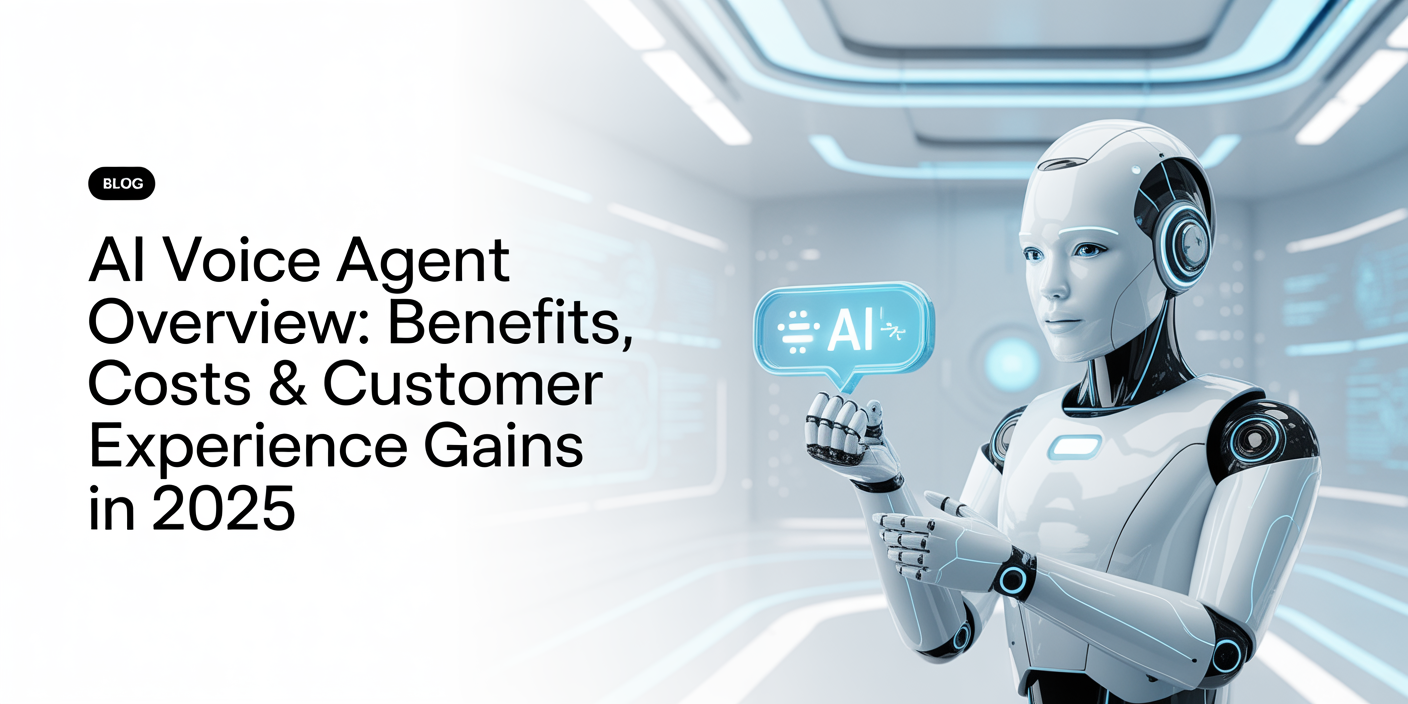
In today's fast-paced world, the growing demand for instant, round-the-clock assistance is reshaping how support is provided. Welcome to the future of customer service with our AI voice agent overview. This post aims to provide a comprehensive survey of AI voice agents, revealing their benefits and cost efficiency while highlighting how automated voice support enhances customer experience. Stay tuned as we delve into what AI voice agents are, how they work, and the real-world advantages they bring.
What Are AI Voice Agents?
AI voice agents are AI-powered software entities that receive spoken input, interpret intent through speech-to-text (STT) and natural language processing (NLP), then reply via text-to-speech (TTS). These advanced systems perform core tasks such as answering FAQs, booking appointments (https://vocallabs.ai/blogs/whatsub-blogs-vocallabs-voice-agent-for-appointment-bookings), lead qualification, troubleshooting, and processing payments without human intervention. They employ technologies like speech-to-text, NLP, and text-to-speech to interact seamlessly (https://dev.to/kaymen99/ai-voice-agents-in-2025-a-comprehensive-guide-3kl" target="blank" rel="noopener noreferrer">source, https://cloudtalk.io/blog/what-is-ai-voice-agents/" target="blank" rel="noopener noreferrer">source).
Architectural Approaches
Two key architectural approaches exist for AI voice agents:
- Modular Architecture: Involves separate components for STT conversion, a large language model (LLM) text processor, and TTS synthesis.
- Unified/Realtime Architecture: Introduced by OpenAI in late 2024, this model processes audio input and generates speech output in one seamless operation, boasting millisecond latency for faster interactions (source).
Distinction from IVR
AI voice agents are distinct from Interactive Voice Response (IVR) systems. Unlike the structured menus of IVR, AI voice agents utilize conversational context, reducing "zero out" frustration and offering a more natural interaction experience (https://www.cloudtalk.io/blog/what-is-ai-voice-agents/" target="blank" rel="noopener noreferrer">source). For a deeper dive into how these systems compare, check out our discussion on https://vocallabs.ai/blogs/iryn20-whatsub-blogs-vocallabs-voice-ai-and-ivr-systems" target="blank" rel="noopener noreferrer">source.
Industry Adoption
Industries already adopting AI voice agents include e-commerce, healthcare appointment lines, banking fraud checks (see our insights on https://vocallabs.ai/blogs/whatsub-blogs-vocallabs-ai-agents-for-banks" target="blank" rel="noopener noreferrer">source), travel booking, and telco tech-support. Additionally, sectors such as sales automation have also benefited, as discussed in our https://vocallabs.ai/blogs/whatsub-blogs-vocallabs-ai-voice-agents-for-sales" target="blank" rel="noopener noreferrer">source blog.
How Do AI Voice Agents Work?
Understanding the intricate workings of AI voice agents is essential for grasping their powerful capabilities and how they improve customer experience.
Step-by-Step Interaction Flow
- Caller speaks → voice captured through microphone or phone.
- STT layer converts audio waveform to text.
- NLP/LLM determines intent and entities, consulting CRM or knowledge base APIs.
- Response Generation: AI produces a text response; has optional sentiment analysis.
- TTS synthesises a natural voice response with adaptive prosody.
Real-Time Architecture
Real-time architecture is a game-changer, boasting reduced latency by concurrently running STT, LLM, and TTS processes, achieving a benchmark response time of less than 300 milliseconds (https://assemblyai.com/blog/ai-voice-agents" target="_blank" rel="noopener noreferrer">source).
Security Considerations
AI voice agents prioritize security through data encryption during transit and compliance with PCI-DSS for payment processing, ensuring safe interactions.
Benefits of AI in Customer Support
The benefits of AI in customer support are numerous and impactful.
- Efficiency & Faster Response: AI voice agents handle routine queries instantly, with CloudTalk noting companies can cut average handle times by 40% (source).
- 24/7 Availability: AI agents operate continuously, eliminating the need for shift scheduling and supporting global customers around the clock.
- Personalisation through Data: AI uses customer data, such as purchase history and sentiment, to tailor recommendations, creating more engaging experiences (source).
- Reliability: AI voice agents provide consistent tone and adherence to compliance without concerns over sick leave.
To further explore how AI transforms service delivery, visit our post on https://vocallabs.ai/blogs/whatsub-blogs-vocallabs-ai-customer-service" target="_blank" rel="noopener noreferrer">source.
Automated Voice Support Advantages
Automated voice support advantages are numerous, significantly reducing reliance on large human teams.
- Scalability: One AI agent can manage thousands of simultaneous calls, minimizing the need for extensive human teams (source).
- Minimise Human Error: AI integrates scripted compliance, reducing error rates from 4% to less than 1% (source).
- Effortless Scaling: During peak times like holiday seasons, automated systems easily handle increased call volumes by spinning up cloud instances real-time.
- Global Consistency: Using multi-lingual TTS models ensures consistent service across different regions and languages.
Improving Customer Experience with AI
Improving customer experience with AI voice agents involves delivering seamless and superior interactions.
- Accurate Information: AI systems provide consistent and accurate information by pulling data from a centralized knowledge base.
- Omni-Channel Integration: Seamless handoffs across SMS, chat or to a live agent eliminate the need for customers to repeat information.
- Natural Conversations: NLP capabilities ensure context is retained for ongoing conversations, such as remembering previous orders.
- Sentiment Detection: AI analyzes caller sentiment to determine when to escalate a call to a human agent for a more empathetic response (source).
Cost Efficiency with AI Voice Agents
The cost efficiency with AI voice agents is a major incentive for businesses.
- Lower Operational Costs: AI voice agents cost significantly less, approximately $0.10 to $0.40 per minute, compared to $1.00+ for human agents (source).
- Reduced Training/Onboarding: Updating AI models is quicker and more economical than conducting extensive training sessions for human staff.
- Cloud-Based Pricing: Pay-per-use models allow businesses to scale their AI usage up or down based on demand, reducing unnecessary expenses.
- Resource Reallocation: Money saved can be directed towards product innovation or providing premium, white-glove customer support.
Real-World Examples & Case Studies
Practical applications of automated voice support advantages illustrate AI’s effectiveness.
- Placeholder Retailer XYZ reduced abandoned call rates by 25% (source).
- Placeholder Healthcare Clinic employs AI to book 3,000 monthly appointments, freeing two full-time nurses for other tasks (source).
- Placeholder Fintech Startup shortened fraud verification from 5 minutes to 90 seconds (source).
Implementation Checklist for Businesses
To ensure successful integration, businesses need to consider these elements for an AI voice agent overview:
- Define Objectives & KPIs: Set goals like average handle time (AHT), customer satisfaction (CSAT), and containment rates.
- Choose Architecture: Pick either modular or unified based on latency and control needs.
- Integration Needs: Assess CRM, ticketing, and payment gateway requirements.
- Data Privacy & Compliance: Ensure adherence to regulations like GDPR, HIPAA, or PCI-DSS.
- Continuous Improvement: Monitor error logs, retrain AI models, and A/B test different voice personas.
Future Trends Heading into 2025 & Beyond
The future of AI voice agent overview looks promising.
- Multimodal Agents: Emerging systems will feature combined voice and visual interaction.
- Emotionally Adaptive TTS: Text-to-speech systems will mirror caller moods using prosody.
- Edge Deployment: Ultra-low latency for IoT devices will become more widespread.
- Generative AI Auditors: Automated compliance checkers will review each call.
- Retell AI forecasts that 70% of routine calls will be managed by AI voice agents by 2027.
- For further insights into the evolving landscape, check out our list of source.
Conclusion
AI voice agents are redefining customer support by delivering efficient, scalable, and personalized service. They handle routine tasks independently, allowing human agents to focus on complex issues, greatly enhancing business performance. With predictions stating that AI technology will continue to advance, businesses implementing AI voice agents can anticipate increased customer satisfaction, reduced costs, and a competitive edge in customer experience. We encourage readers to evaluate AI voice solutions tailored to their needs or request a demo to see these benefits firsthand.