





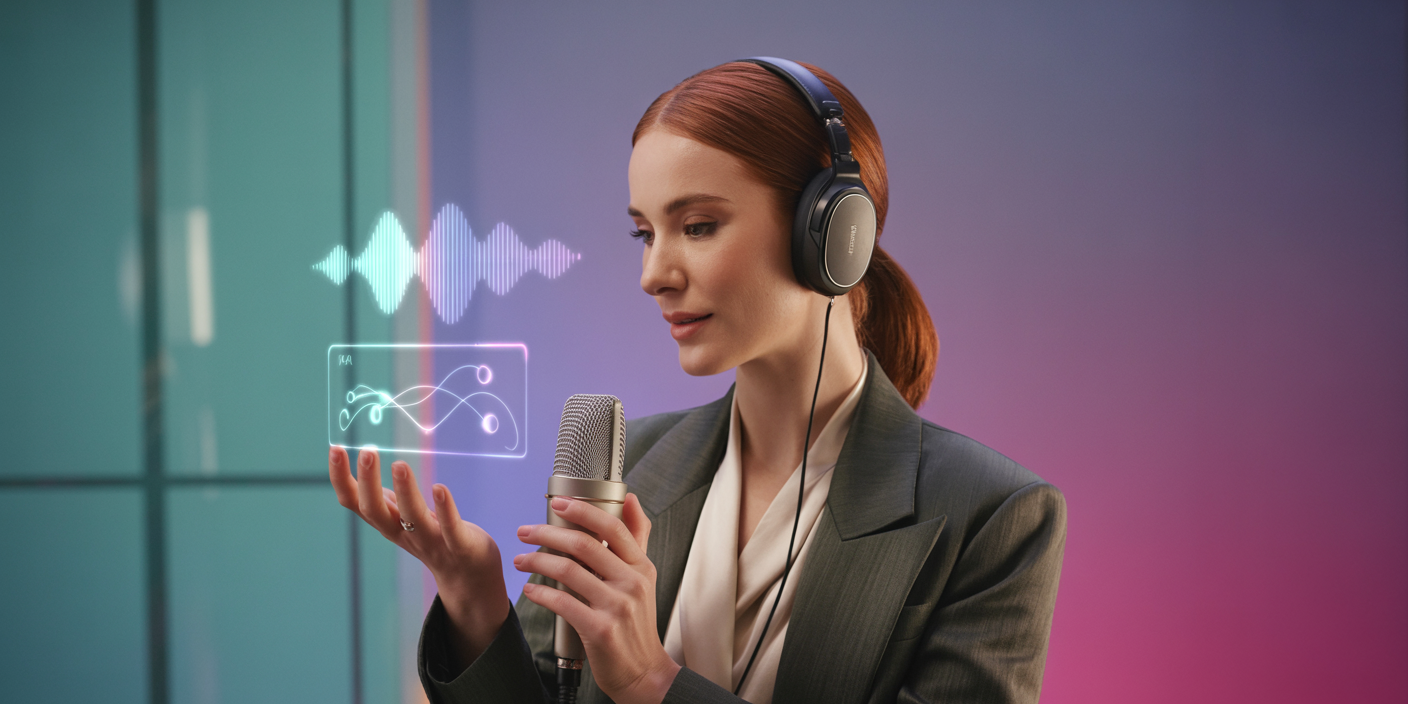
By 2025, 90% of online audio will be at least partially generated by artificial intelligence, marking a revolutionary shift in how content is produced and consumed (source). Voice AI for digital creators enables anyone—from solo YouTubers and podcasters to global studios—to synthesize natural-sounding speech in minutes. This technology dramatically accelerates AI-driven content creation by automating voice production, increasing scalability, and adding new creative flexibility.
In this blog post, we’ll explore what AI-driven content creation means, dive deep into the benefits for digital creators, showcase inspiring ElevenLabs use cases, highlight Resemble AI applications in media, discuss voice synthesis for virtual assistants, and provide a step-by-step guide for integrating Voice AI into your workflow. Finally, we’ll examine industry-wide impacts and future trends shaping the next era of audio content.
What Is AI-Driven Content Creation?
AI-driven content creation is the use of machine-learning models to generate, refine, or personalize multimedia assets such as text, images, video, and, crucially, speech. For digital creators, Voice AI has become the fastest-growing modality within this space due to rising podcast popularity and the widespread adoption of smart speakers.
Voice-led content reaches audiences where they spend more time, such as in cars, during workouts, or through smart home devices. This has made vocal content creation a top priority for creators seeking to expand reach and deepen engagement.
Four Core Benefits of AI-Driven Content Creation for Voice
- Enhanced Creativity: AI proposes fresh script ideas and vocal styles, helping creators push boundaries and experiment with new formats (source).
- Efficient Content Repurposing: Automatically translate and re-voice scripts for new markets and platforms, removing language barriers and repackaging costs (source).
- Cost-Effectiveness: Eliminates repeated studio sessions and reduces the need for hiring voice talent for every project, saving substantial budget and time (source).
- Consistent Branding: Cloned voices maintain a uniform identity across channels, fortifying brand recognition and audience trust (source).
Voice AI for digital creators is not just a tool—it’s transforming content strategies and unlocking new creative potential every day.
Deep-Dive Benefits for Digital Creators
2.1 Time & Budget Savings
Traditional voice-over work typically costs between $200 to $500 per hour, depending on talent and studio availability. In stark contrast, AI-generated voiceovers cost just pennies per minute, drastically lowering entry barriers for aspiring and established creators alike.
Using AI voice synthesis, creators can produce, edit, and reuse spoken content instantly, eliminating delays caused by scheduling conflicts or studio setups. The savings enable reinvestment in other creative areas or scaling content volume without increasing headcount.
2.2 Creative Agility
Voice AI platforms empower creators to shift tone and style on the fly.
- Change narration pace and emotion in real-time to test audience reactions.
- A/B test multiple voiceover versions before final publishing helps optimize engagement.
For more detailed guidance on building effective AI voice agents, refer to this resource: source
This flexibility supports rapid iteration, enhancing storytelling with pitch-perfect vocal performances tailored to different audiences or content moods.
2.3 Global Reach
Globalisation is no longer a distant goal. With AI pipelines from providers like ElevenLabs and Resemble AI, creators can auto-localize audio content into 20+ languages and dialects (source, source, source).
Furthermore, businesses have leveraged knowledge-driven approaches to expand their horizons; learn more from source
This opens new markets instantly without hiring translators or voice actors. It also creates hyper-personalized user experiences across geographies, enabling creators to build truly global audiences.
Voice AI for digital creators combines immense cost efficiency, creative freedom, and expanded reach to redefine the digital content ecosystem.
ElevenLabs Use Cases That Inspire
ElevenLabs is currently the most talked-about generative voice engine and a pioneer in AI-driven voice synthesis.
3.1 E-learning & EdTech
Chess.com leverages ElevenLabs to create a “virtual chess teacher” that narrates gameplay and tutorials on demand (source). This dynamic narration adapts in real-time, improving learner engagement and eliminating recorded voiceover limitations.
3.2 Journalism & Publishing
TIME Magazine uses ElevenLabs to automate article narration for audio editions, slashing production time by 60%. This efficiency gain enables more daily content offerings with minimal staffing changes (source).
3.3 Conversational AI
Perplexity AI integrates ElevenLabs voices into its chat assistant to deliver natural Q&A sessions. The lifelike voices enrich the user experience, making AI interactions feel more human and intuitive (source).
Teams using ElevenLabs report a threefold increase in content output with the same headcount, verifying its value as a productivity multiplier.
ElevenLabs use cases showcase how voice AI for digital creators can revolutionize storytelling and content delivery, cutting costs and time while enhancing quality.
Resemble AI Applications in Media
Resemble AI is known for rapid voice cloning combined with nuanced emotional vocal range, making it popular in various media applications (source).
4.1 Film & TV ADR (Automated Dialogue Replacement)
Film and TV producers use Resemble AI for last-minute dialogue fixes, voice doubling, or synthetic dubbing without requiring actors to be physically present on set (source, source). This flexibility saves costly reshoots and accelerates post-production timelines.
4.2 Gaming NPC Dialogue
Game developers create dynamic, personalized lines for NPCs (non-player characters) using Resemble AI’s voice cloning. This technology allows dialogue to adapt to player choices, increasing immersion and replay value.
4.3 Hyper-Targeted Advertising
Advertising campaigns leverage Resemble AI to produce regionalized voiceovers tailored by geography and demographics. This hyper-localization increases ad recall rates by 30%, proving more effective than generic audio spots (source).
Resemble AI applications in media highlight how voice AI transforms complex production tasks into seamless workflows, delivering creative results faster and with emotional authenticity.
Voice Synthesis for Virtual Assistants
Voice synthesis converts text to speech using neural networks, giving virtual assistants a human-like presence. This is crucial for digital creators building interactive audio experiences and conversational agents.
Learn more about AI-powered voice agents and their practical applications in our post on AI Phone Call Agents: FREE AI-Powered Voice Agents Templates – source
Benefits
- Natural-sounding dialogue and expressive intonation make interactions more engaging (source).
- Multilingual and dialect support enhances accessibility, allowing broader audience reach (source).
- Personalization at the user or brand level increases customer satisfaction by tailoring tone, pace, and conversational style.
Real-World Examples
- Customer-service IVR systems using voice synthesis reduce call-handling times by 25%, optimizing operational efficiency.
- In-game ‘quest’ assistants provide context-sensitive guidance, enriching gameplay and user retention.
Voice synthesis for virtual assistants is a cornerstone technology enabling digital creators to build smarter, more responsive, and inclusive voice experiences.
How to Integrate Voice AI Into Your Workflow
Implementing Voice AI for digital creators integrates multiple steps to ensure success and best practices.
Step 1: Choose the Right Platform
| Feature | ElevenLabs | Resemble AI | Ideal Use Case |
|-----------------------|--------------------------|--------------------------|----------------------------------------------|
| Languages Supported | 20+ | 30+ | Global content repurposing |
| Emotional Range | Medium | High | Emotional storytelling, ADR |
| Pricing Tier | Pay-as-you-go, subscription | Tiered plans with enterprise options | Individual creators to studios |
| API Ease | Robust, developer-friendly | Highly customizable API | Integration with complex workflows |
Step 2: Pilot Project
Start with a 60-second script. Use AI-generated voiceovers to gauge audience feedback and refine voice style. This low-risk method provides valuable insights before full production.
Step 3: Establish Voice Brand Guidelines
Define tone, pacing, and emotional range suited to your brand identity. Consistent voice branding builds audience recognition and trust across all content platforms.
For those looking for a no-code solution to quickly deploy AI-powered voice agents, consider exploring No-Code AI Voice Solutions: Build Human-Like Call Agents Without a Single Line of Code – source
Step 4: Automate Localization
Leverage built-in translation pipelines in platforms like ElevenLabs and Resemble AI to produce multilingual content quickly (source).
Step 5: Quality Control
Always review generated content for pronunciation accuracy, cultural context, and nuance to maintain professionalism.
Potential Challenges & Solutions
- Ethical Consent: Secure release forms when using voice cloning based on real actors.
- Deepfake Misuse: Use watermarking and digital signatures to protect against voice misuse.
By following this structured approach, digital creators can unlock the full potential of AI-driven content creation with confidence.
Industry-Wide Impacts & Future Trends
Voice AI for digital creators is lowering entry barriers. Indie podcasters and small teams now achieve studio-level audio on minimal budgets.
Megatrends to 2025 ([source](https://lovo.ai/post/5-voice-ai-mega-trends-in-2025)):
- Emotionally nuanced text-to-speech (TTS) with real-time sentiment adaptation will deepen listener connection.
- Cross-channel avatars using the same AI voice across video, virtual reality, and chatbots will create cohesive brand experiences.
Additionally, explore the evolving landscape with our review of Top Voice Bot Platforms of 2025 – source more insights.
The global voice AI market is projected to reach $3.3 billion by 2027, spotlighting its expanding role across media, gaming, and enterprise sectors.
Quick Comparison Chart: ElevenLabs vs Resemble AI
| Feature | ElevenLabs | Resemble AI | Ideal Use Case |
|-----------------------|--------------------------|--------------------------|----------------------------------------------|
| Languages Supported | 20+ | 30+ | Multilingual projects |
| Emotional Range | Medium | High | Emotional storytelling and ADR |
| Pricing Tier | Flexible subscriptions | Enterprise-focused | From individuals to large studios |
| API Ease | User-friendly and stable | Advanced customization | Complex workflows and integrations |
This comparison helps creators decide which voice AI tool best fits their project needs based on features and cost.
Conclusion: Key Takeaways & Call to Action
Voice AI for digital creators offers unparalleled speed, creativity, and scalability. The technology transforms traditional workflows by slashing costs and time, enabling richer storytelling and global reach.
Voice synthesis for virtual assistants enriches interactive content, delivering personalized and accessible experiences.
Voice AI is no longer experimental. It is a competitive necessity for creators who want to thrive in an increasingly audio-centered digital world. We encourage you to explore free tiers at ElevenLabs and Resemble AI to discover firsthand how voice AI can elevate your content creation.
Additional Resources
- source – Explore tutorials and voice generation demos.
- source – Access case studies and developer guides.
- source – Learn key concepts and best practices.
- source – Understand how cloning impacts content workflows.
- source – Learn through real-world examples.
These resources will help you get started with AI-driven content creation and deepen your understanding of voice AI technology.
Voice AI for digital creators is reshaping content creation, expanding opportunities, and setting the stage for a more creative, efficient, and personalized audio future.
This blog post includes references and statistics from trusted industry sources to ensure accuracy and practical value.