



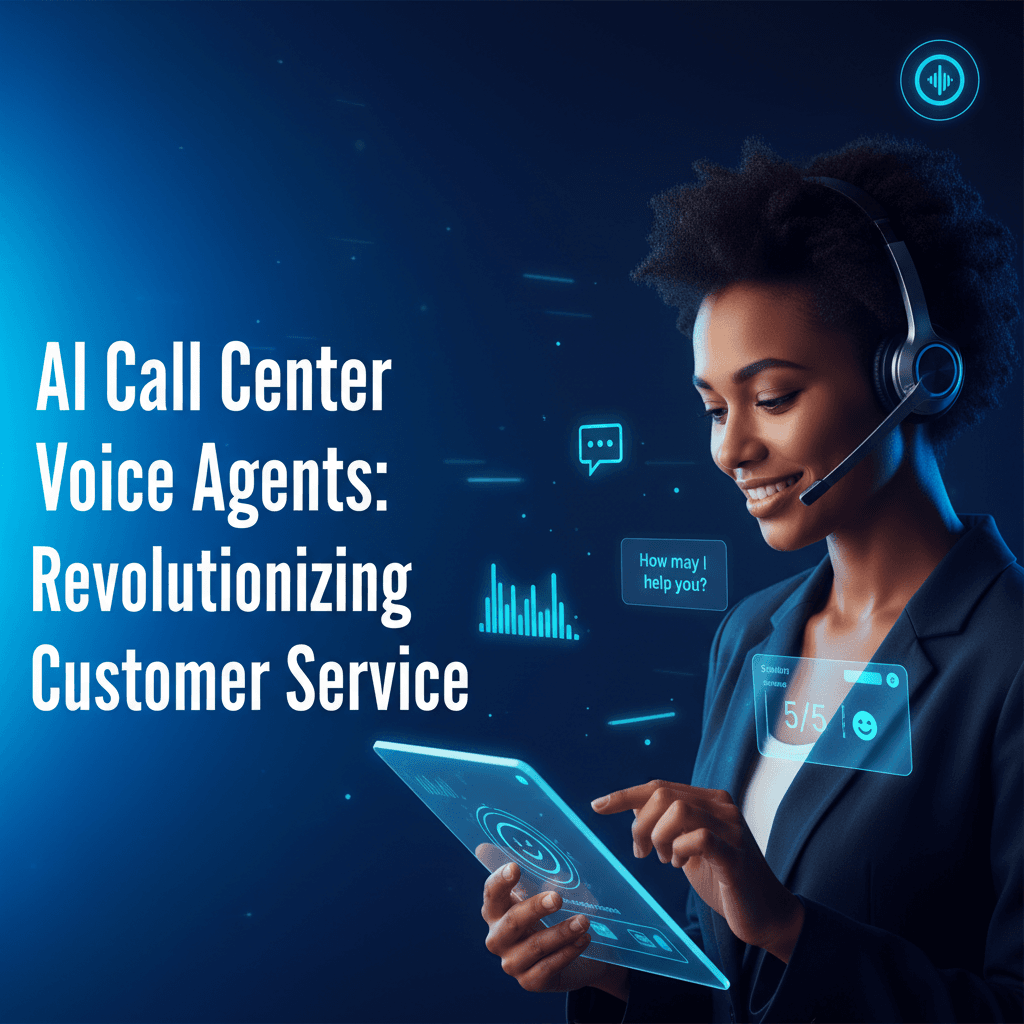
In today's fast-paced business landscape, customer expectations are higher than ever. Businesses are constantly seeking innovative solutions to enhance customer experience, streamline operations, and reduce costs. This is where the AI call center voice agent steps in, revolutionizing how companies interact with their customers. Far beyond simple chatbots, these intelligent systems leverage advanced voice AI to provide human-like interactions, offering a new frontier in customer service and operational efficiency. Let's delve into what makes these agents a game-changer for modern contact centers.
What is an AI Call Center Voice Agent?
An AI call center voice agent, often referred to as a voice AI call center or call center voice AI, is an artificial intelligence system designed to handle customer interactions over the phone using natural language processing (NLP) and speech recognition. Unlike traditional interactive voice response (IVR) systems that rely on rigid menus, these agents can understand and respond to complex spoken queries, engage in natural conversations, and even express empathy. They are a core component of conversational AI for contact centers, enabling businesses to automate a wide range of customer service tasks.
The Transformative Power of AI in Call Centers
The integration of AI into call center operations brings about a paradigm shift. It's not just about automating tasks; it's about elevating the entire customer service experience. Here's how:
Enhanced Customer Experience
Voice AI customer support offers instant, 24/7 assistance, eliminating wait times and providing immediate resolutions to common queries. Customers no longer need to navigate complex phone trees or wait for an agent to become available. This leads to higher customer satisfaction and loyalty.
Operational Efficiency and Cost Reduction
By handling routine inquiries, an AI call center agent frees up human agents to focus on more complex, high-value interactions. This significantly reduces operational costs associated with staffing and training. It's a prime example of effective call center automation.
Scalability and Consistency
AI agents can handle an unlimited volume of calls simultaneously without performance degradation, ensuring consistent service quality even during peak times. Every customer receives the same high standard of interaction, something challenging to achieve with human-only teams.
Key Use Cases for AI Call Center Voice Agents
The applications for call center AI use cases are vast and growing. Here are some of the most impactful:
Inbound Customer Support
An inbound AI call agent can handle a multitude of common queries, such as checking order status, providing account information, answering FAQs, and assisting with password resets. Think of it as an advanced AI receptionist for call center operations, greeting callers and resolving issues efficiently. This is the essence of effective automated phone answering for business.
Outbound Calling Campaigns
An AI outbound calling bot can be deployed for proactive customer engagement. This includes appointment reminders, payment collection, customer surveys, and even proactive outreach for product updates. A lead qualification voice agent can also pre-screen potential customers, ensuring human sales teams focus only on high-potential leads.
Appointment Scheduling
With appointment scheduling voice AI, customers can book, reschedule, or cancel appointments simply by speaking naturally. The AI integrates with calendars and scheduling systems, providing a seamless experience for both the customer and the business.
Information Retrieval and Personalization
Advanced AI agents can access and retrieve information from CRM systems and databases in real-time, providing personalized responses based on customer history and preferences. This deep integration is a hallmark of robust AI call center software.
Implementing an AI Call Center Voice Agent
Adopting an AI call center voice agent requires careful planning and execution. Here are key considerations:
Define Clear Objectives
What specific problems are you trying to solve? Is it reducing wait times, improving first-call resolution, or automating routine tasks? Clear objectives will guide your implementation strategy for your call center voicebot.
Choose the Right Platform
Evaluate different AI call center software solutions. Look for platforms that offer robust NLP, easy integration with existing CRM and business systems, scalability, and strong analytics capabilities. Consider providers specializing in voice AI call center solutions.
Data and Training
The effectiveness of your AI call center agent heavily depends on the quality and quantity of training data. This includes historical call transcripts, FAQs, and customer interaction logs. Continuous training and refinement are crucial for optimal performance.
Seamless Handoff to Human Agents
While AI can handle many tasks, complex or sensitive issues will still require human intervention. Ensure your system has a smooth, intelligent handoff mechanism, providing the human agent with all the context from the AI interaction. This ensures a truly integrated call center automation strategy.
Monitoring and Optimization
Regularly monitor the performance of your AI call center voice agent. Analyze call logs, identify areas for improvement, and continuously optimize the AI's scripts and understanding capabilities. This iterative process ensures the AI remains effective and responsive to evolving customer needs.
The Future is Conversational
The evolution of AI call center voice agents marks a significant leap forward in customer service. From enhancing efficiency and reducing costs to delivering superior customer experiences, these intelligent systems are reshaping the contact center landscape. Businesses that embrace this technology will be better positioned to meet the demands of modern customers and stay ahead in a competitive market. The future of customer interaction is conversational, intelligent, and powered by AI.
Frequently Asked Questions (FAQ)
Q: How does an AI call center voice agent differ from traditional IVR?
A: Traditional IVR systems rely on pre-recorded messages and keypad inputs, offering a rigid, menu-driven experience. An AI call center voice agent, powered by advanced NLP and speech recognition, can understand and respond to natural language, engage in dynamic conversations, and handle complex queries without requiring specific button presses. It's a much more intelligent and human-like interaction, making it a true call center voicebot.
Q: Can an AI voice agent replace all human call center agents?
A: Not entirely. While an AI call center voice agent can automate a significant portion of routine inquiries and tasks, human agents remain crucial for handling complex, sensitive, or highly emotional customer interactions. The goal is typically to augment human agents, allowing them to focus on higher-value tasks, rather than complete replacement. It's about optimizing the entire call center automation process.
Q: What are the main benefits of using voice AI in a call center?
A: The main benefits of integrating voice AI call center technology include 24/7 customer support, reduced customer wait times, improved first-call resolution rates, significant cost savings, enhanced operational efficiency, scalability to handle fluctuating call volumes, and consistent service quality. These collectively lead to higher customer satisfaction and a more productive contact center environment.
Q: Is an AI call center agent difficult to integrate with existing systems?
A: Modern AI call center software solutions are designed with integration in mind. Many platforms offer APIs and pre-built connectors for popular CRM systems (like Salesforce, HubSpot), ticketing systems, and other business applications. While some technical effort is required, the process is generally streamlined to ensure seamless data flow and functionality, making it easier to deploy an inbound AI call agent or AI outbound calling bot.