



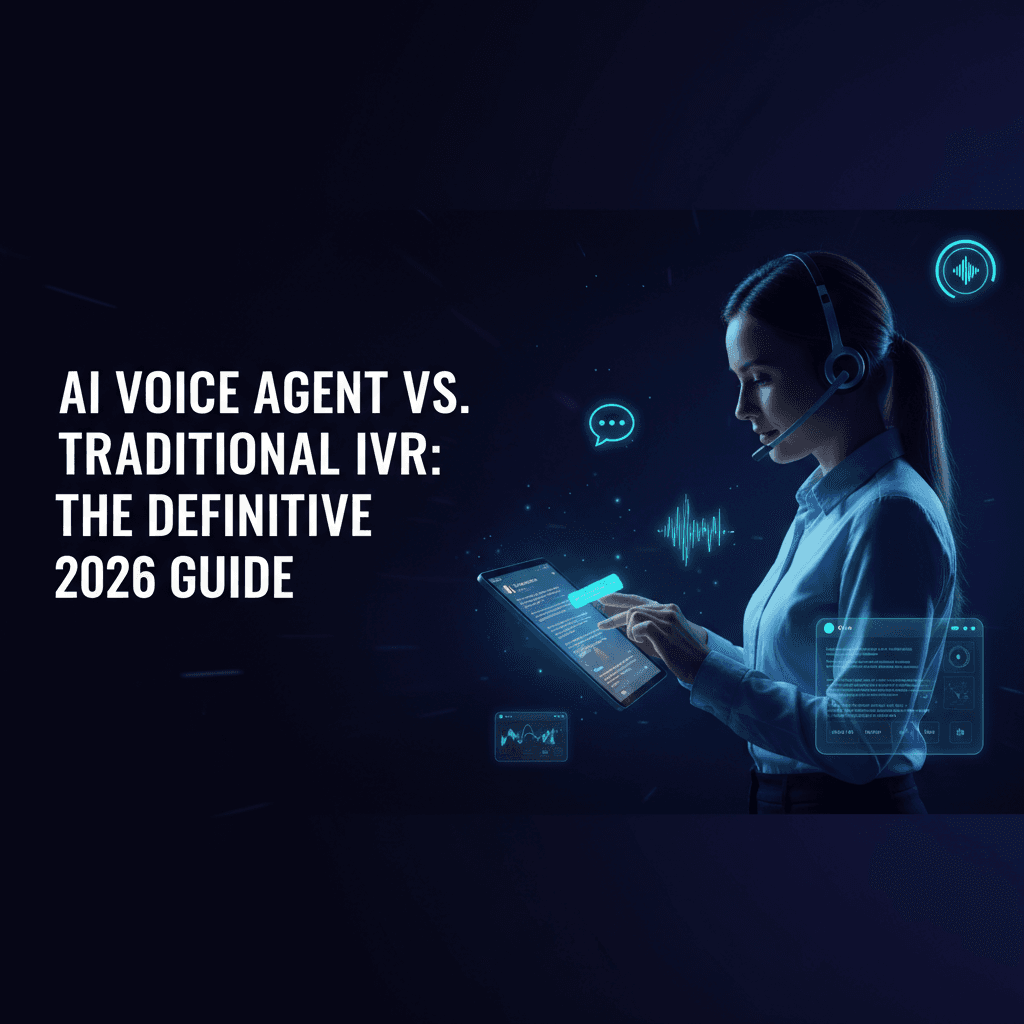
In the rapidly evolving landscape of customer service and operational efficiency, businesses are constantly seeking innovative solutions to enhance their communication channels. For years, Interactive Voice Response (IVR) systems have been the go-to for automating phone interactions. However, with the advent of advanced artificial intelligence, AI voice agents are now presenting a compelling alternative. This article delves into a comprehensive comparison of the AI voice agent vs. traditional IVR systems, exploring their capabilities, benefits, and applications across various industries like healthcare, enterprise, and collections.
Understanding Traditional IVR Systems
Traditional IVR systems operate on a predefined script and menu navigation. Users interact by pressing numbers on their keypad or speaking simple, specific commands. While effective for basic tasks, they often lead to menu navigation frustration and can be rigid, making complex inquiries difficult to resolve. This often results in higher call abandonment rates and a less-than-ideal customer experience.
The Rise of AI Voice Agents
AI voice agents, powered by sophisticated technologies like natural language processing (NLP), large language models (LLMs), and advanced speech recognition, offer a dramatically different experience. They can understand and respond to natural human speech, engage in conversational AI, and even detect user intent with remarkable accuracy. This allows for more dynamic and personalized interactions, moving beyond the limitations of traditional IVR.
Key Differentiators: AI Voice Agent vs. Traditional IVR
Conversational Ability and Intent Detection
One of the most significant advantages of an AI voice agent vs. traditional IVR is its ability to understand and engage in natural conversation. Thanks to intent detection, AI agents can quickly grasp the user's need, even if phrased unconventionally, leading to faster first call resolution. Traditional IVR, in contrast, relies on rigid keyword matching or menu selections, often frustrating callers who don't fit the predefined paths.
End-to-End Resolution and Human Escalation Reduction
AI voice agents are designed for end-to-end resolution of complex queries, significantly reducing the need for human escalation reduction. They can access and process information from various systems in real-time, handling tasks that would typically require a human agent. Traditional IVR systems, while capable of routing calls, rarely resolve issues entirely without human intervention.
Multilingual Support and Accessibility
For businesses serving diverse populations, multilingual support is crucial. AI voice agents excel here, often offering seamless interactions in multiple languages. Traditional IVR systems typically require separate, pre-recorded menus for each language, which can be cumbersome and expensive to maintain.
Industry-Specific Applications and Benefits
AI Voice Agent vs. Traditional IVR for Healthcare
In healthcare, the benefits of an AI voice agent vs. traditional IVR for healthcare are profound. AI agents can significantly improve patient experience by streamlining appointment scheduling, handling billing and insurance inquiries, managing prior authorization requests, and conducting benefits verification. For multi-specialty clinics, this means reduced administrative burden and more focused care. Traditional IVR often struggles with the complexity and sensitivity of healthcare interactions.
AI Voice Agent vs. Traditional IVR for Enterprise and Call Centers
For large organizations, the comparison of AI voice agent vs. traditional IVR for enterprise and call centers highlights operational advantages. AI agents can provide 24/7 availability, handle high call volumes without fatigue, and significantly boost customer satisfaction scores. This translates to substantial operational cost savings compared to maintaining a large human agent workforce, which is a key factor in the ROI comparison.
AI Voice Agent vs. Traditional IVR for Collections
In the sensitive area of collections, the AI voice agent vs. traditional IVR for collections and AR collections offers a more empathetic and efficient approach. AI agents can engage in personalized conversations, negotiate payment plans, and secure higher payment promise rates. Their ability to handle interactions consistently and without emotional bias can also lead to better DSO reduction (Days Sales Outstanding) and improved customer relationships, a stark contrast to the often impersonal and rigid nature of traditional IVR in this domain.
ROI and Investment Considerations
When evaluating the AI voice agent vs. traditional IVR for ROI comparison, it's essential to look beyond the upfront investment costs. While AI voice agents may have a higher initial setup, their long-term benefits in terms of operational cost savings, increased efficiency, and improved customer satisfaction often lead to a significantly better return on investment. The ability to scale effortlessly and provide consistent, high-quality service around the clock contributes directly to the bottom line.
Conclusion: The Future is Conversational
The comparison of AI voice agent vs. traditional IVR systems clearly indicates a shift towards more intelligent, conversational, and user-friendly automation. While traditional IVR has served its purpose, the limitations in flexibility, customer experience, and resolution capabilities are becoming increasingly apparent. For businesses aiming to stay competitive, enhance customer service, and achieve significant operational efficiencies in 2026 and beyond, investing in AI voice agents is not just an upgrade, but a strategic imperative. The future of customer interaction is undoubtedly conversational, powered by advanced AI.
Frequently Asked Questions (FAQ)
What is the primary difference between an AI voice agent and a traditional IVR system?
The primary difference lies in their intelligence and flexibility. Traditional IVR relies on rigid, menu-driven interactions and keypad inputs. AI voice agents, powered by conversational AI and natural language processing (NLP), can understand and respond to natural human speech, offering a more intuitive and personalized experience.
How do AI voice agents improve customer satisfaction compared to traditional IVR?
AI voice agents significantly boost customer satisfaction scores by providing faster first call resolution, reducing menu navigation frustration, and offering 24/7 availability. Their ability to understand context and provide relevant information leads to a much smoother and more efficient interaction, unlike the often frustrating experience with traditional IVR, which can lead to high call abandonment rates.
What industries benefit most from adopting AI voice agents?
Industries with high call volumes and complex customer inquiries, such as healthcare (for appointment scheduling, billing and insurance, prior authorization), enterprise, and collections (for AR collections and improving payment promise rates), stand to benefit immensely. AI voice agents excel in environments requiring multilingual support and advanced intent detection.
What are the ROI considerations when comparing AI voice agents to traditional IVR?
While upfront investment costs for AI voice agents might be higher, the ROI comparison often favors AI due to significant operational cost savings, reduced human escalation reduction, improved first call resolution, and better DSO reduction in collections. These factors contribute to a stronger bottom line and enhanced overall efficiency for call centers and businesses.
What role do Large Language Models (LLMs) play in AI voice agents?
Large Language Models (LLMs) are critical to the advanced capabilities of AI voice agents. They enable sophisticated conversational AI, allowing agents to understand context, generate human-like responses, and engage in complex dialogues. Combined with speech recognition, LLMs empower AI agents to provide seamless and intelligent interactions, leading to true end-to-end resolution.