



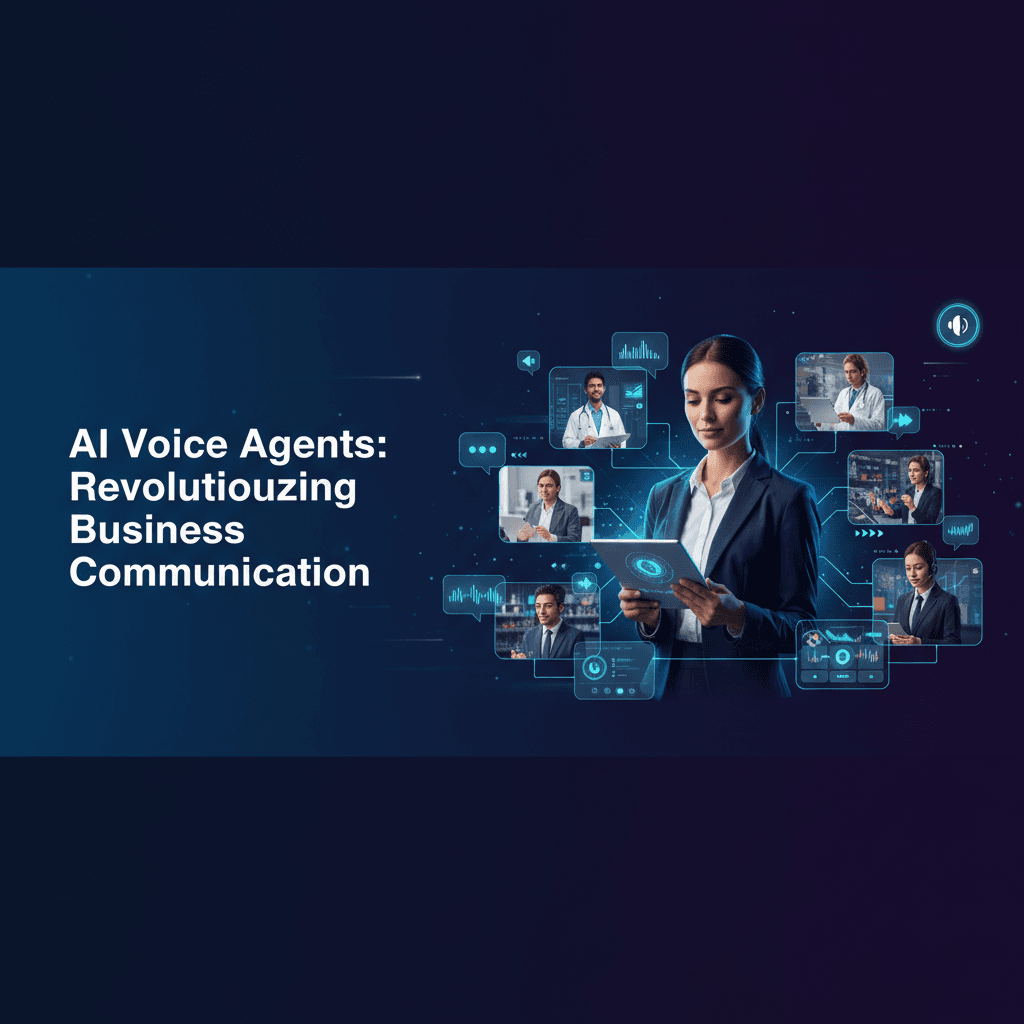
In today's fast-paced business landscape, efficient and intelligent communication is paramount. This is where AI voice agents come into play, revolutionizing how organizations interact with customers, prospects, and even their own employees. Far beyond simple chatbots, these sophisticated systems leverage advanced artificial intelligence to understand, process, and respond to human speech in real-time, offering unparalleled levels of automation and personalization. From streamlining customer service to enhancing sales efforts and optimizing internal workflows, the capabilities of voice AI are rapidly expanding. This article will delve into the diverse applications of AI voice agents across various industries, explore their benefits, and guide you through the crucial considerations for evaluating, deploying, and scaling these transformative solutions.
What Are AI Voice Agents?
At its core, an AI voice agent is an artificial intelligence program designed to interact with users through spoken language. Utilizing natural language processing (NLP), automatic speech recognition (ASR), and text-to-speech (TTS) technologies, these agents can understand complex queries, engage in natural conversations, and perform tasks. Unlike traditional interactive voice response (IVR) systems, real-time conversational voice AI can adapt to nuanced conversations, understand intent, and even detect emotion, providing a far more human-like and effective interaction. They are essentially digital employees capable of handling a wide array of voice-based tasks, significantly reducing manual effort and improving response times.
Key Applications of AI Voice Agents Across Industries
Best AI Voice Agents for Customer Support
Customer support is perhaps the most well-known application for AI voice agents. These agents can handle a high volume of inquiries 24/7, reducing wait times and improving customer satisfaction. From answering FAQs and processing returns to updating account information and troubleshooting common issues, ai voice automation for call centers significantly offloads human agents, allowing them to focus on more complex, empathetic interactions. The result is a more efficient and responsive customer service operation.
AI Receptionist for Business Calls
For businesses of all sizes, an AI receptionist for business calls can manage incoming calls, direct them to the appropriate department or individual, schedule appointments, and even answer basic queries. This ensures no call goes unanswered, projects a professional image, and frees up administrative staff for other critical tasks. It’s a cost-effective solution for managing call traffic efficiently.
Voice AI for Sales Calls
In sales, voice AI can be a game-changer. These agents can qualify leads, conduct initial outreach, schedule demos, and even follow up with prospects. By automating repetitive tasks, voice ai for sales calls allows human sales teams to concentrate on closing deals and building relationships. Advanced agents can even personalize pitches based on prospect data, leading to higher conversion rates.
Healthcare Voice AI Agents
The healthcare sector benefits immensely from voice AI. Healthcare voice AI agents can assist with appointment scheduling, prescription refills, providing information on services, and even answering common patient questions. This reduces administrative burden on medical staff, improves patient access to information, and enhances overall patient experience, all while maintaining strict privacy and compliance standards.
Financial Services Voice AI
For financial institutions, financial services voice AI can handle balance inquiries, transaction history requests, fraud alerts, and even assist with loan applications. These agents provide secure, instant access to information, improve customer service efficiency, and can help detect suspicious activity, enhancing security and compliance.
Internal Business Voice Automation
Beyond external interactions, internal business voice automation can streamline HR inquiries, IT support, and internal knowledge base access. Employees can get instant answers to questions about company policies, benefits, or technical issues, improving productivity and reducing the workload on internal support teams.
Omnichannel Voice AI Agents
Modern businesses require seamless interactions across all channels. Omnichannel voice AI agents ensure that conversations can transition smoothly between voice, chat, email, and other platforms without losing context. This provides a consistent and unified customer experience, regardless of the chosen communication method.
Evaluating and Deploying Enterprise AI Voice Agents
Selecting the right enterprise AI voice agents requires careful consideration. It's not just about finding a platform; it's about finding a solution that aligns with your business goals, integrates with existing systems, and can scale with your growth.
How to Evaluate AI Voice Agents
When considering how to evaluate AI voice agents, several factors are crucial:
- Natural Language Understanding (NLU) Accuracy: How well does the agent understand complex queries, accents, and colloquialisms?
- Speech Synthesis Quality: Is the voice natural and pleasant to listen to?
- Integration Capabilities: Can it seamlessly connect with your CRM, ERP, and other business systems?
- Scalability: Can the platform handle peak call volumes and grow with your business?
- Customization and Training: Can you easily train the agent on your specific business knowledge and vocabulary? Look for a no-code AI voice agent builder for ease of use.
- Security and Compliance: Does it meet industry-specific regulations (e.g., HIPAA for healthcare, PCI DSS for finance)?
- Analytics and Reporting: Does it provide insights into agent performance, customer sentiment, and areas for improvement?
- Vendor Support and Expertise: What level of support and professional services does the provider offer?
AI Voice Agent Deployment and ROI
Successful AI voice agent deployment involves careful planning, pilot programs, and continuous optimization. Start with a clear definition of the problem you're trying to solve and the specific use cases. Phased rollouts allow for learning and refinement. The AI voice agent platform you choose should offer robust tools for monitoring performance and making iterative improvements.
Measuring AI voice agent ROI involves looking at several metrics:
- Cost Savings: Reduced operational costs from automating calls, decreased agent hiring, and lower infrastructure expenses.
- Increased Efficiency: Faster resolution times, higher call handling capacity, and reduced wait times.
- Improved Customer Satisfaction: 24/7 availability, consistent service, and personalized interactions.
- Enhanced Revenue: Better lead qualification, increased sales conversions, and improved customer retention.
- Employee Satisfaction: Human agents can focus on more engaging, complex tasks, reducing burnout.
The Future of AI Voice Agents
The evolution of AI voice agents is continuous. We can expect even more sophisticated NLU, greater emotional intelligence, and seamless integration across an even wider array of devices and platforms. As technology advances, these agents will become indistinguishable from human interaction in many contexts, further solidifying their role as indispensable tools for modern businesses.
Frequently Asked Questions About AI Voice Agents
Q: What's the difference between an AI voice agent and an IVR system?
A: Traditional IVR systems rely on predefined menus and keyword recognition, offering limited conversational ability. AI voice agents, on the other hand, use advanced AI (NLU, ASR) to understand natural language, intent, and context, enabling fluid, human-like conversations and more complex problem-solving.
Q: Are AI voice agents replacing human jobs?
A: While AI voice agents automate routine and repetitive tasks, they typically augment human roles rather than replace them entirely. They free up human agents to focus on more complex, empathetic, and strategic interactions, leading to higher job satisfaction and better overall service quality.
Q: How long does it take to deploy an AI voice agent?
A: Deployment time varies significantly based on complexity, integration needs, and the chosen AI voice agent platform. Simple deployments for specific tasks can be live in weeks, while complex enterprise solutions with extensive integrations might take several months. Platforms with a no-code AI voice agent builder can significantly speed up the process.
Q: What are the main challenges in implementing AI voice agents?
A: Key challenges include ensuring high accuracy in understanding diverse accents and speech patterns, seamless integration with existing legacy systems, maintaining data privacy and security, and effectively training the AI with relevant business knowledge. Continuous monitoring and optimization are also crucial for long-term success.