



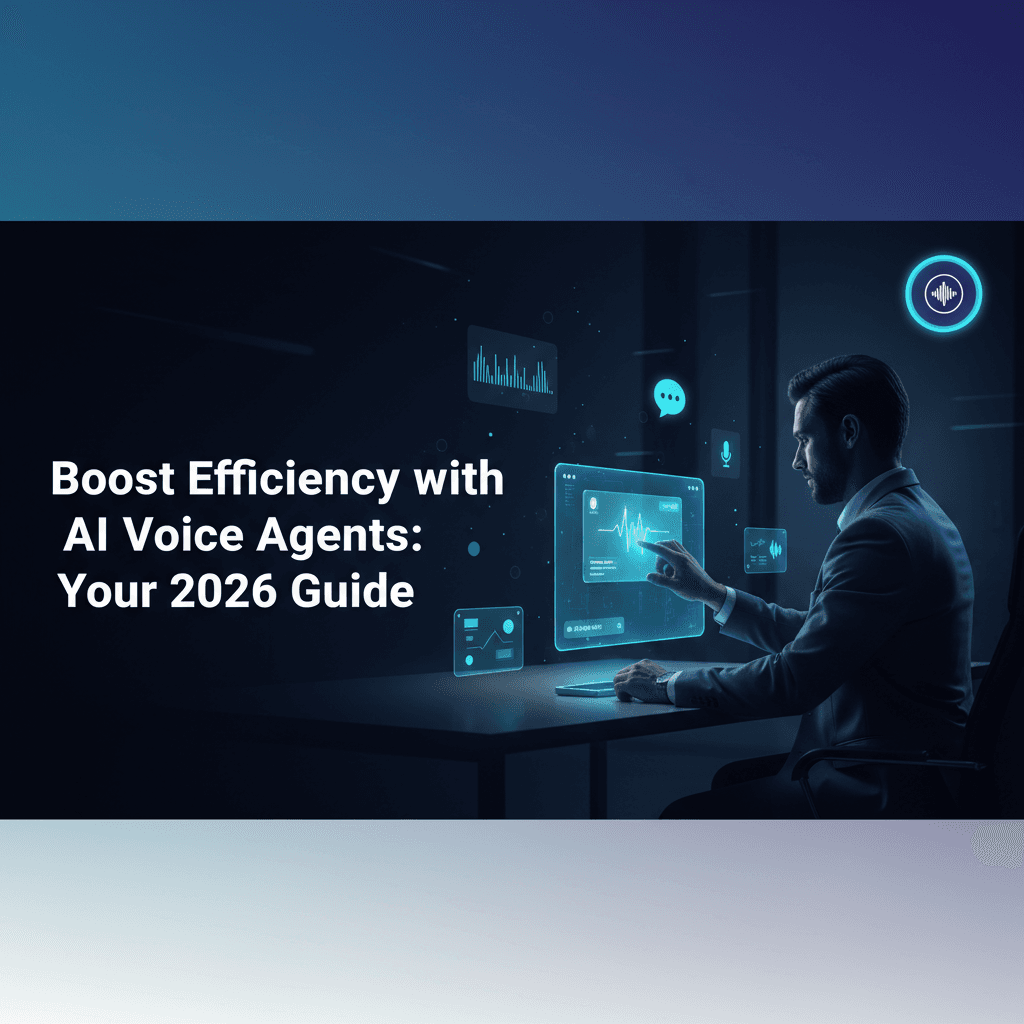
In today's fast-paced business landscape, efficiency and customer experience are paramount. The rise of AI voice agents is revolutionizing how companies interact with their customers, manage operations, and drive growth. Far beyond simple chatbots, these sophisticated systems offer real-time, human-like conversations, transforming everything from customer service to sales. This comprehensive guide will delve into the world of AI voice agents, exploring their capabilities, key applications, and what to consider when integrating them into your business strategy for 2026 and beyond.
What Exactly Are AI Voice Agents?
At its core, an AI voice agent is an artificial intelligence program designed to interact with humans using spoken language. Unlike traditional interactive voice response (IVR) systems, which rely on rigid menus and keyword recognition, modern conversational AI voice bots leverage advanced natural language processing (NLP) and machine learning to understand context, intent, and even emotion. These intelligent systems can hold dynamic, multi-turn conversations, provide information, complete tasks, and even learn from interactions, making them incredibly versatile tools for businesses.
Key Applications of AI Voice Agents in Business
1. Revolutionizing Customer Service with AI Phone Agents
One of the most impactful applications is using AI voice agents for customer service. These AI phone agents can handle a vast array of inquiries 24/7, reducing wait times and improving customer satisfaction. From answering FAQs and providing order updates to troubleshooting common issues, they free up human agents to focus on more complex, high-value interactions. This leads to significant cost savings and a more efficient support operation.
2. Streamlining Operations with AI Appointment Scheduling Agents
Manual appointment scheduling is a time-consuming task. AI appointment scheduling agents can automate this entire process, allowing customers to book, reschedule, or cancel appointments simply by speaking naturally. This not only enhances convenience for customers but also drastically reduces administrative burden for businesses, from healthcare providers to salons and service companies. Integration with existing calendar systems ensures seamless operation.
3. Boosting Sales and Outreach with AI Outbound Call Automation
AI outbound call automation is transforming sales, lead generation, and follow-ups. AI calling agents can make proactive calls for various purposes: qualifying leads, conducting surveys, confirming appointments, or even delivering personalized promotions. These systems can handle high volumes of calls efficiently, ensuring consistent messaging and freeing up human sales teams to focus on closing deals rather than initial outreach.
4. Enhancing Data and Insights with AI Voice Analytics
Beyond just conversation, AI voice analytics provides invaluable insights into customer interactions. By analyzing call recordings, businesses can identify common pain points, measure agent performance (both human and AI), and understand customer sentiment. Advanced capabilities include emotion detection in voice AI, allowing systems to identify frustration or satisfaction, and even trigger appropriate responses or escalations. This data-driven approach fuels continuous improvement in service and sales strategies.
The Evolution of Voice AI Automation: Beyond Basic IVR
The days of frustrating, menu-driven IVR systems are numbered. Voice AI automation is rapidly evolving, offering a superior alternative. Modern AI IVR replacement solutions provide a natural, conversational experience that can resolve complex queries, personalize interactions, and seamlessly transfer to a human agent with full context if needed. This shift dramatically improves customer satisfaction and operational efficiency.
Key Features and Considerations for AI Voice Agent Platforms
When evaluating AI voice agent platforms, several features are crucial for successful implementation:
- Real-time Voice AI: The ability to process and respond to spoken language in milliseconds, ensuring a natural, fluid conversation.
- Natural Language Understanding (NLU): Sophisticated NLU allows the AI to grasp the nuances of human speech, including slang, accents, and complex sentence structures.
- Integration Capabilities: Look for platforms that offer seamless integration with your existing CRM, ERP, and other business systems. CRM-connected voice agents can access customer history, personalize interactions, and update records automatically.
- Multimodal Voice Agents: The future often involves combining voice with other channels like chat or visual interfaces, creating a richer customer experience.
- Scalability: The platform should be able to handle fluctuating call volumes without compromising performance.
- Customization: The ability to tailor the AI's persona, vocabulary, and workflows to match your brand and specific business needs.
- Security and Compliance: Especially important for sensitive industries, ensuring data privacy and adherence to regulations.
- Agentic AI Voice Assistants: These advanced agents can not only follow scripts but also make decisions, learn from interactions, and proactively solve problems, acting more like true assistants.
The Future is Conversational: Embracing AI Voice Automation
The adoption of AI voice agents is not just a trend; it's a fundamental shift in how businesses operate and engage with their stakeholders. By embracing voice AI automation, companies can achieve unprecedented levels of efficiency, deliver superior customer experiences, and unlock new growth opportunities. As technology continues to advance, these intelligent agents will become even more sophisticated, capable of handling increasingly complex tasks and delivering truly personalized interactions. Investing in AI voice solutions now positions your business at the forefront of this exciting technological revolution.
Frequently Asked Questions About AI Voice Agents
Q: How do AI voice agents differ from traditional IVR systems?
Traditional IVR systems rely on predefined menus and keyword matching, often leading to frustrating experiences. AI voice agents, on the other hand, use advanced Natural Language Processing (NLP) to understand natural speech, context, and intent, allowing for fluid, human-like conversations. They can resolve complex queries and personalize interactions, acting as a true AI IVR replacement.
Q: Can AI voice agents handle complex customer service issues?
Yes, modern AI voice agents for customer service are increasingly capable of handling complex issues. They can access and process information from various databases, including CRM systems (making them CRM-connected voice agents), to provide personalized solutions. For issues requiring human empathy or highly nuanced problem-solving, they can seamlessly transfer the call to a human agent with full context.
Q: What are the benefits of using AI outbound call automation?
AI outbound call automation offers numerous benefits, including increased efficiency in lead qualification, appointment confirmations, and customer follow-ups. AI calling agents can make a high volume of calls, ensuring consistent messaging, reducing manual labor, and allowing human teams to focus on higher-value tasks like closing sales. This leads to improved productivity and better campaign performance.
Q: How does emotion detection in voice AI work?
Emotion detection in voice AI utilizes advanced machine learning algorithms to analyze vocal characteristics such as pitch, tone, pace, and volume. By comparing these patterns against vast datasets of human speech, the AI can infer emotional states like frustration, satisfaction, or neutrality. This capability allows the AI voice agent to adapt its responses, escalate calls when necessary, or even offer proactive solutions, enhancing the overall customer experience.