





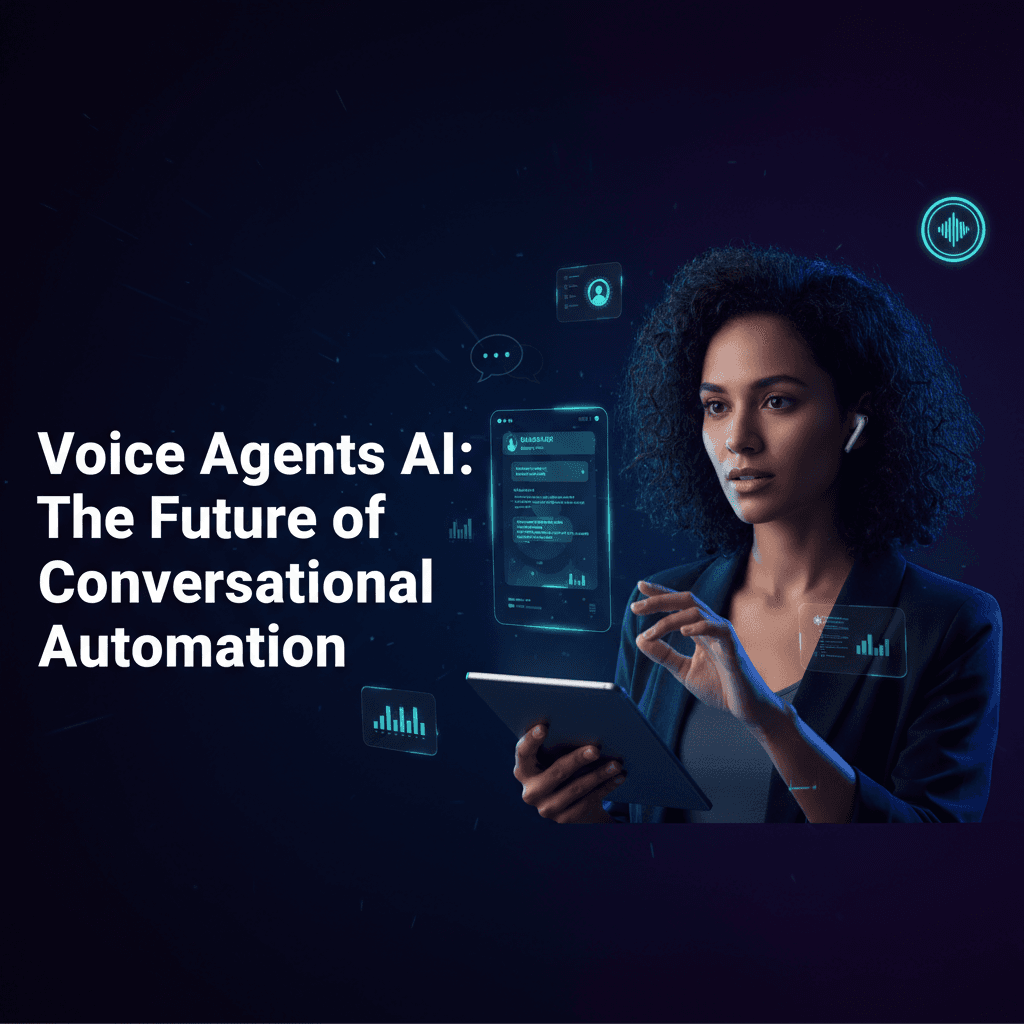
In an increasingly digital world, the way businesses interact with their customers is undergoing a profound transformation. At the forefront of this evolution are voice agents AI, sophisticated artificial intelligence systems designed to understand, process, and respond to human speech. These aren't just simple chatbots; they are advanced AI voice agents capable of engaging in natural, human-like conversations, offering unparalleled efficiency and customer satisfaction. From automating routine tasks to providing personalized support, the rise of voice AI agents is reshaping industries and setting new benchmarks for operational excellence.
What Exactly Are Voice Agents AI?
At its core, a voice agent AI is a computer program that uses artificial intelligence to conduct conversations via spoken language. Unlike traditional interactive voice response (IVR) systems, these agents leverage natural language processing (NLP), machine learning (ML), and sometimes even large language models (LLMs) to understand context, intent, and nuances in human speech. This allows for more fluid and effective interactions, moving beyond rigid scripts to dynamic, adaptive conversations. Think of them as highly intelligent voice assistant AI, but specifically designed for business applications and complex tasks.
The Technology Powering Conversational AI Voice Agents
The sophistication of modern conversational AI voice agents stems from several key technological advancements:
- Natural Language Processing (NLP): This allows the AI to understand the meaning and intent behind spoken words.
- Speech Recognition (ASR): Converts spoken language into text, enabling the AI to process the input.
- Text-to-Speech (TTS): Converts the AI's generated responses back into natural-sounding speech.
- Machine Learning & Deep Learning: These algorithms enable the AI to learn from interactions, improving its accuracy and conversational abilities over time.
- Large Language Models (LLMs): Increasingly, LLM voice agents are being deployed, bringing unprecedented contextual understanding and generative capabilities to conversations.
These components work in harmony to create a seamless and intelligent conversational experience, making natural language voice agents incredibly powerful tools for businesses.
Key Benefits of Implementing Voice AI Agents in Business
The adoption of voice AI agents offers a multitude of advantages for organizations across various sectors:
Enhanced Customer Experience
Customer service voice agents provide instant, 24/7 support, reducing wait times and resolving queries quickly. This leads to higher customer satisfaction and loyalty. The ability of real-time voice AI to handle inquiries immediately means customers get answers when they need them, improving their overall experience.
Increased Operational Efficiency
By automating routine tasks, voice agent automation frees up human agents to focus on more complex issues. This significantly lowers operational costs and boosts productivity. Businesses can deploy AI phone agents to manage a high volume of calls without compromising service quality.
Scalability and Consistency
Voice bots for business can handle an almost unlimited number of concurrent conversations, making them highly scalable. Furthermore, they ensure consistent service delivery, as every interaction adheres to predefined guidelines and brand voice, unlike human agents who might have varying performance levels.
Data Collection and Insights
Every interaction with AI voice agents generates valuable data. This data can be analyzed to identify trends, pain points, and opportunities for improvement in products, services, and customer journeys. This continuous feedback loop is crucial for informed business decisions.
Applications of Voice AI Agents Across Industries
The versatility of voice agents AI means they can be deployed in a wide array of scenarios:
Customer Support and Call Centers
This is perhaps the most prominent application. Voice AI for customer support can handle FAQs, process orders, schedule appointments, and even provide technical assistance. Voice AI call center software is transforming traditional call centers into efficient, AI-powered hubs, often utilizing speech-to-speech AI agents for seamless interactions.
Sales and Marketing
AI phone agents can qualify leads, conduct surveys, and even assist with outbound sales calls, providing product information and guiding customers through the purchasing process. Their ability to engage in personalized conversations makes them effective tools for lead nurturing.
Healthcare
From appointment scheduling and medication reminders to providing information on common ailments, voice AI agents can significantly improve patient engagement and administrative efficiency in healthcare settings.
Banking and Finance
Secure voice agents AI can assist with account inquiries, transaction details, fraud detection, and even provide financial advice, all while maintaining high levels of security and compliance.
The Rise of Multi-Agent Voice AI and LLM Voice Agents
The future of voice agents AI is moving towards even greater sophistication. Multi-agent voice AI involves multiple voice agents collaborating to solve complex problems, each specializing in different aspects of a query. This distributed intelligence allows for more comprehensive and accurate responses, mimicking human team collaboration.
Furthermore, the integration of Large Language Models (LLMs) is a game-changer. LLM voice agents possess an unparalleled ability to understand context, generate creative responses, and engage in highly nuanced conversations. This means voice agents can now handle more ambiguous queries, provide more detailed explanations, and adapt their communication style to match the user's needs, making interactions feel even more natural and human-like.
Conclusion: Embracing the Voice AI Revolution
The journey of voice agents AI from simple voice commands to sophisticated conversational AI voice agents is a testament to the rapid advancements in artificial intelligence. For businesses looking to optimize operations, enhance customer satisfaction, and stay competitive, embracing voice AI agents is no longer an option but a necessity. As technology continues to evolve, we can expect even more intelligent, intuitive, and integrated voice AI solutions that will further blur the lines between human and artificial interaction, driving efficiency and innovation across every sector.
Frequently Asked Questions About Voice Agents AI
Q: What is the main difference between a traditional IVR and a voice agent AI?
A: Traditional IVR systems rely on pre-recorded menus and rigid scripts, often frustrating users. Voice agents AI, especially conversational AI voice agents, use natural language processing to understand free-form speech, context, and intent, leading to much more natural and flexible interactions. They can adapt to user input rather than forcing users down a predefined path.
Q: Can voice AI agents truly sound human?
A: Yes, advancements in text-to-speech (TTS) technology, combined with machine learning, allow AI voice agents to generate highly natural and expressive speech. Many speech-to-speech AI agents can mimic human intonation, rhythm, and even emotions, making it difficult to distinguish them from human voices.
Q: Are voice agents AI secure for sensitive information, like in banking?
A: Absolutely. Reputable providers of voice AI agents implement robust security measures, including encryption, secure authentication protocols, and compliance with industry-specific regulations (e.g., GDPR, HIPAA, PCI DSS). When deployed correctly, AI phone agents can handle sensitive data securely, often with multi-factor authentication.
Q: How do LLM voice agents differ from other voice AI agents?
A: LLM voice agents leverage large language models, which are trained on vast amounts of text data. This gives them superior contextual understanding, the ability to generate more coherent and creative responses, and a deeper grasp of nuances in conversation compared to voice agents built on older, rule-based or less extensive machine learning models. They excel at open-ended conversations and complex problem-solving.