



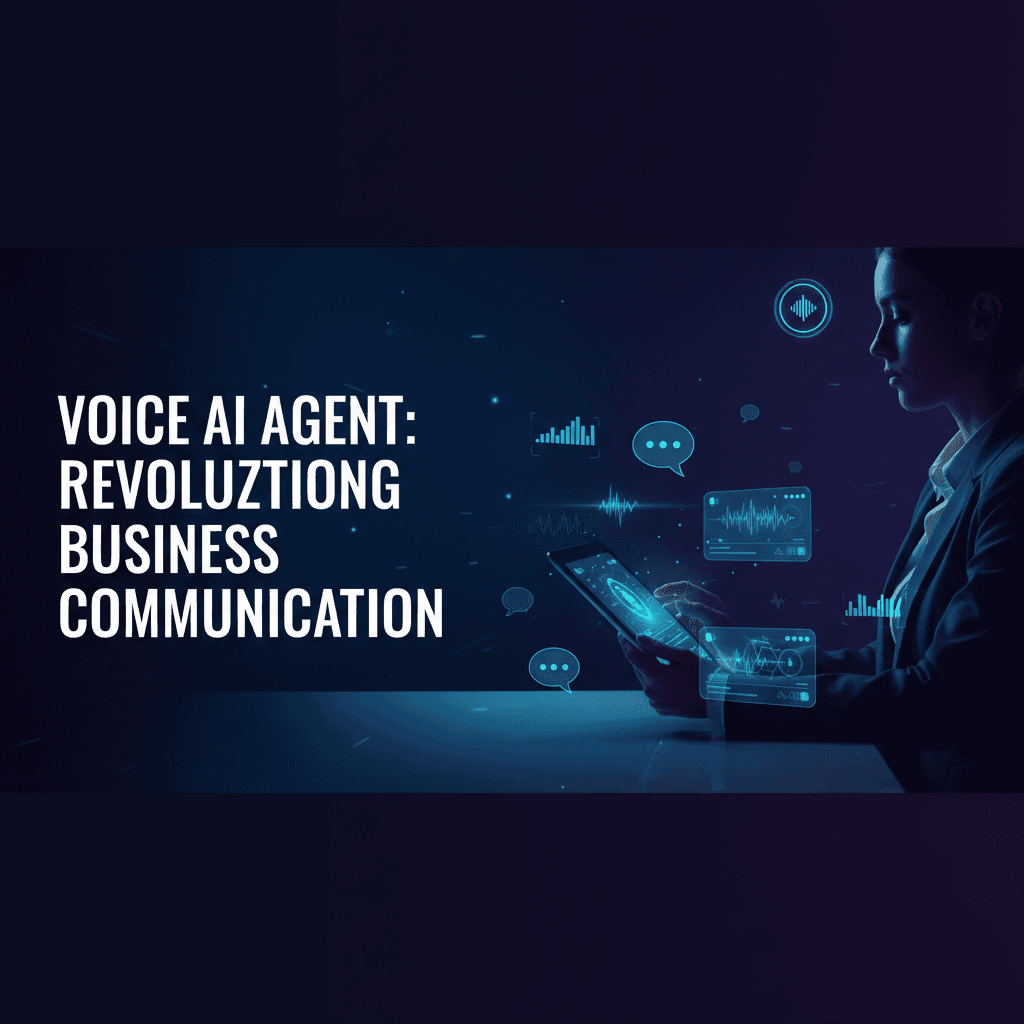
In today's fast-paced business landscape, efficiency and customer satisfaction are paramount. Companies are constantly seeking innovative solutions to streamline operations and enhance interactions. Enter the voice AI agent – a groundbreaking technology that is rapidly redefining how businesses communicate. More than just an automated answering machine, an AI voice agent leverages advanced artificial intelligence to understand, process, and respond to human speech, offering sophisticated support across various functions. This article will delve into what a voice AI agent is, its multifaceted applications, and how it can be a game-changer for your organization.
What Exactly is a Voice AI Agent?
At its core, a voice AI agent is an intelligent system designed to interact with humans using natural language through voice. Unlike traditional interactive voice response (IVR) systems, which rely on rigid scripts and touch-tone inputs, an AI voice agent utilizes natural language processing (NLP) and machine learning to comprehend context, sentiment, and intent. This allows for more fluid, human-like conversations. Think of it as a highly sophisticated AI phone assistant that can handle complex queries, provide information, and even complete tasks, all through spoken commands.
The Power of AI Voice Agent Services for Businesses
The applications of AI voice agent services for businesses are incredibly diverse, touching almost every aspect of customer interaction and internal operations. From enhancing customer support to optimizing sales processes, these agents are proving to be invaluable assets.
Revolutionizing Customer Support with Voicebots
One of the most significant impacts of a voice AI agent is in customer service. A voicebot for customer support can handle a high volume of inquiries simultaneously, reducing wait times and improving customer satisfaction. These intelligent agents can answer frequently asked questions, troubleshoot common issues, provide order status updates, and even guide customers through complex processes, all without human intervention. This frees up human agents to focus on more complex or sensitive cases, leading to a more efficient and effective support team. The inbound call AI agent is particularly adept at managing initial customer contact, ensuring every caller receives prompt attention.
Optimizing Sales and Outbound Communications
Beyond inbound support, the outbound calling AI agent is transforming sales and marketing efforts. These agents can make proactive calls for lead qualification, customer follow-ups, survey distribution, and even debt collection. The ability to automate these repetitive tasks allows sales teams to focus on closing deals rather than initial outreach. The precision and consistency of an AI calling agent ensure that every prospect receives a professional and personalized interaction, scaling outreach efforts dramatically. This form of calling AI is becoming indispensable for businesses looking to expand their market reach efficiently.
Streamlining Appointment Booking and Scheduling
For businesses that rely heavily on appointments, an AI appointment booking agent is a game-changer. Whether it's for medical practices, salons, consulting firms, or service providers, these agents can handle the entire booking process from start to finish. They can check availability, confirm appointments, send reminders, and even reschedule, all through natural voice conversation. This not only reduces the administrative burden on staff but also provides customers with a convenient and accessible way to manage their appointments 24/7.
The Rise of Conversational AI Phone Agents
The evolution from simple voicebots to sophisticated conversational AI phone agents marks a significant leap. These advanced systems are capable of understanding complex queries, maintaining context across multiple turns of conversation, and even detecting emotional cues to tailor their responses. This level of interaction mimics human conversation, leading to more satisfying and effective outcomes for callers. The goal is to make the interaction so seamless that customers may not even realize they are speaking with an AI.
Voice AI for Call Centers: A New Era of Efficiency
For large-scale operations, voice AI for call centers is nothing short of revolutionary. By integrating AI telephony agents, call centers can dramatically improve their operational efficiency and customer experience. These agents can handle routine inquiries, qualify leads, and even resolve common issues, significantly reducing the workload on human agents. This not only cuts down on operational costs but also allows human agents to focus on high-value interactions that require empathy and nuanced problem-solving. The result is a more productive workforce and happier customers.
Choosing the Right AI Voice Agent Agency
Implementing a voice AI agent solution requires careful consideration. Partnering with a reputable AI voice agent agency is crucial for successful deployment. When selecting an agency, look for expertise in natural language processing, speech recognition, and integration with existing business systems. A good agency will offer customizable solutions tailored to your specific needs, provide ongoing support, and demonstrate a clear understanding of your industry's unique challenges. They should be able to guide you through the process of developing and deploying an effective AI voice bot that aligns with your business goals.
The Future is Conversational: Embracing Voice AI
The integration of voice AI agents into business operations is no longer a futuristic concept; it's a present-day reality offering tangible benefits. From enhancing customer satisfaction and boosting operational efficiency to driving sales and reducing costs, the advantages are clear. As technology continues to advance, these intelligent voice assistants will become even more sophisticated, offering increasingly personalized and seamless interactions. Businesses that embrace this technology now will be well-positioned to lead in the evolving landscape of customer engagement and operational excellence.
Frequently Asked Questions About Voice AI Agents
Q: What's the difference between a traditional IVR and a voice AI agent?
A: A traditional IVR (Interactive Voice Response) system relies on pre-recorded messages and keypad inputs (e.g., "Press 1 for sales"). A voice AI agent, on the other hand, uses natural language processing (NLP) to understand and respond to spoken language, allowing for more natural, free-flowing conversations and complex query resolution without rigid menu navigation.
Q: Can a voice AI agent handle complex customer issues?
A: While a voice AI agent excels at handling routine and frequently asked questions, advanced conversational AI phone agents are increasingly capable of managing more complex issues by understanding context, integrating with databases, and even escalating to a human agent when necessary, providing a seamless handover with all relevant information.
Q: Is a voice AI agent suitable for both inbound and outbound calls?
A: Absolutely. There are specialized inbound call AI agents designed for customer support and service, and outbound calling AI agents that are perfect for sales outreach, lead generation, appointment setting, and proactive customer engagement. Many solutions offer capabilities for both.
Q: How long does it take to implement a voice AI agent?
A: The implementation timeline for a voice AI agent varies depending on the complexity of your requirements, the scope of integration with existing systems, and the chosen AI voice agent agency. Simple deployments can take a few weeks, while more complex, customized solutions might require several months. A good agency will provide a clear project plan and timeline.
Q: What are the main benefits of using voice AI for call centers?
A: Voice AI for call centers offers numerous benefits, including reduced operational costs, improved customer satisfaction due to faster service, 24/7 availability, increased agent efficiency by handling routine tasks, enhanced data collection for insights, and the ability to scale operations without proportional increases in staffing.