



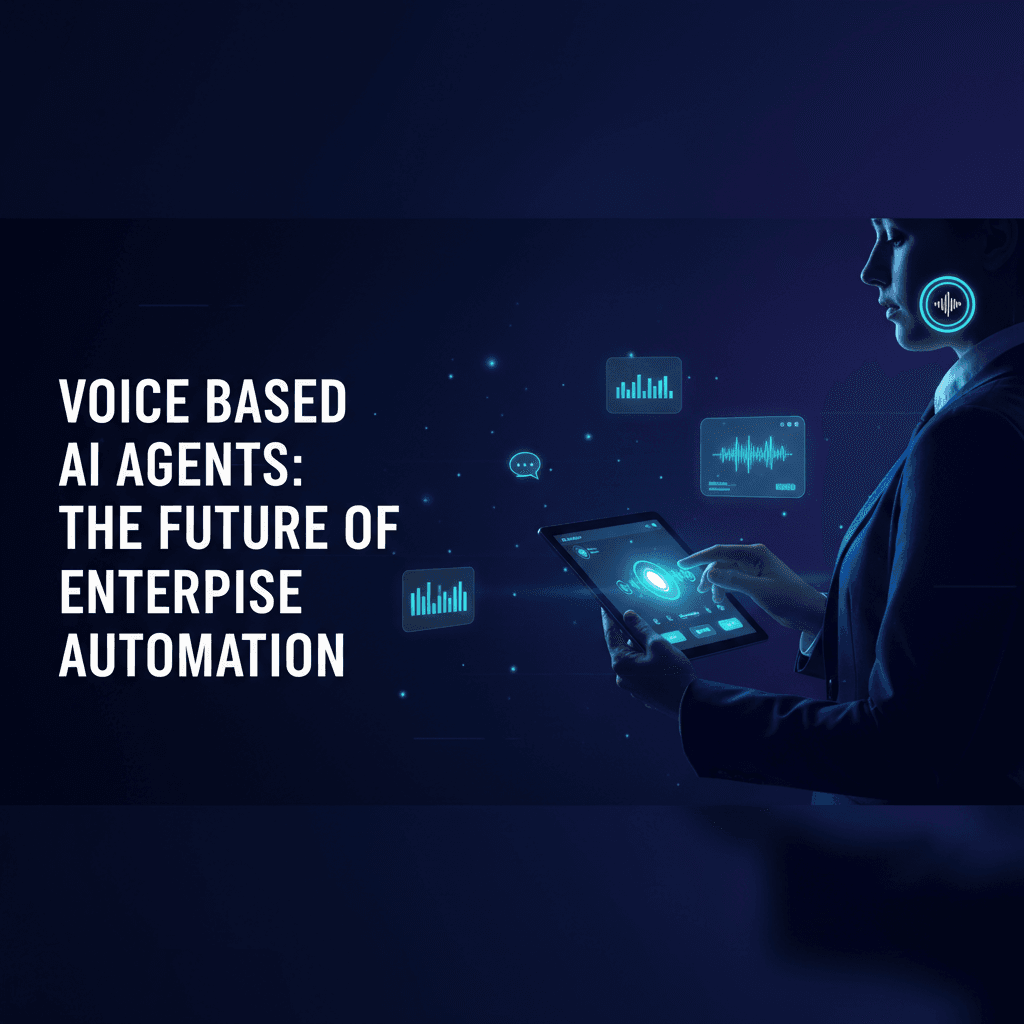
The landscape of customer interaction and enterprise operations is undergoing a profound transformation, spearheaded by the rapid evolution of voice based AI agents. Far beyond simple chatbots, these sophisticated systems are redefining efficiency, personalization, and scalability. As we look towards AI voice agents 2026, the focus is shifting from mere information retrieval to truly agentic capabilities, where AI not only understands but acts, closes transactions, and executes complex workflows. This article delves into how these advanced AI solutions are becoming indispensable for businesses aiming to optimize their customer experience and streamline internal processes, particularly in high-stakes environments like customer support.
Beyond IVR: The Rise of Conversational AI Voice Assistants
For decades, businesses have relied on Interactive Voice Response (IVR) systems, often leading to frustrating customer experiences characterized by endless menu options and robotic interactions. The advent of conversational AI voice assistant technology marks a significant departure from this legacy. These new-generation systems are powered by advanced Natural Language Processing (NLP) and machine learning, enabling them to understand context, nuance, and intent in human speech. This capability allows for more natural, free-flowing conversations, mimicking human interaction much more closely than ever before.
The primary goal of these intelligent systems is to provide seamless and efficient support. Imagine an AI phone assistant that can handle complex queries, process orders, or even troubleshoot technical issues without human intervention. This isn't just about answering questions; it's about resolving problems and completing tasks effectively. The demand for such sophisticated automation is driving innovation across various sectors, from retail to finance, where customer interactions are frequent and critical.
Agentic Voice AI Workflows: Closing Transactions, Not Just Conversations
The true power of modern voice based AI agents lies in their 'agentic' capabilities. This means they are designed not just to engage in conversation but to perform actions and complete workflows autonomously. For instance, in customer service, voice AI agents for customer support can now initiate refunds, update account information, schedule appointments, or even facilitate purchases directly. This shift transforms them from mere information providers into active participants in business processes.
Consider the impact on an ai voice commerce platform. Instead of navigating complex websites, customers can simply speak their needs to an AI, which then guides them through product selection, processes payment, and confirms delivery details. This level of automation, facilitated by agentic voice AI workflows, significantly enhances customer satisfaction and operational efficiency, reducing the need for human agents to handle routine, high-volume tasks. The ability of these systems to integrate with existing CRM and ERP systems is crucial for their seamless operation within an enterprise environment.
The Imperative of Low-Latency and Real-Time Interaction
For AI voice interactions to feel natural and effective, low-latency voice AI is paramount. Any noticeable delay between a user's speech and the AI's response can disrupt the flow of conversation and lead to frustration. Businesses are investing heavily in technologies that enable real-time conversational AI, ensuring that interactions are as smooth and immediate as speaking with a human. This is especially critical for applications like an ai call bot in a contact center, where quick resolutions are expected.
The demand for near-instantaneous responses drives advancements in speech recognition, natural language understanding, and text-to-speech synthesis. These technological leaps are making voice AI customer support not just viable but preferable for many routine inquiries, freeing up human agents to focus on more complex or sensitive issues. The goal is to create an experience where the user barely perceives they are speaking to a machine, fostering trust and efficiency.
Voice AI for Contact Centers: A Game Changer
The contact center industry stands to gain immensely from the adoption of voice AI for contact centers. These systems can handle a vast volume of inbound and outbound calls, significantly reducing wait times and improving first-call resolution rates. From answering FAQs to processing service requests, enterprise voice AI agents are transforming the operational efficiency of customer service departments.
Furthermore, the ability of multilingual voice AI agents to communicate in various languages opens up global markets and ensures consistent service quality across diverse customer bases. This capability is particularly valuable for international businesses looking to provide localized support without the overhead of maintaining large, geographically dispersed human teams. The continuous learning capabilities of these AI platforms mean they get smarter and more efficient with every interaction.
Industry-Specific Applications and Future Outlook
The applications of voice based AI agents extend far beyond traditional customer service. In healthcare, for example, voice AI for healthcare can assist with appointment scheduling, medication reminders, and even provide initial symptom assessments, directing patients to the appropriate care. This not only improves patient access but also reduces the administrative burden on healthcare professionals.
Looking ahead, the development of sophisticated AI voice agent platforms will continue to democratize access to these powerful tools, allowing businesses of all sizes to implement advanced voice AI solutions. The trend is towards more specialized, highly trained agents capable of handling niche tasks and complex scenarios within specific industries. The integration of emotional intelligence and more human-like conversational patterns will further blur the lines between human and AI interaction, making these agents even more effective and widely accepted.
FAQ: Voice Based AI Agents
What are voice based AI agents?
Voice based AI agents are advanced artificial intelligence systems that can understand, process, and respond to human speech. Unlike traditional IVR systems, they use natural language processing (NLP) to engage in human-like conversations, understand context, and often perform actions or complete transactions autonomously, making them 'agentic'.
How do voice AI agents compare to traditional IVR systems?
Traditional IVR systems rely on rigid, menu-driven interactions that often frustrate users. Voice AI agents, on the other hand, offer a conversational, free-flowing experience. They can understand natural language, adapt to user input, and handle complex queries without requiring users to navigate through predefined options, leading to significantly better customer satisfaction.
What does 'agentic' mean in the context of voice AI?
'Agentic' refers to the ability of voice AI agents to not just answer questions but to actively perform tasks and complete workflows. This includes closing transactions, updating records, scheduling appointments, or processing orders. They act as proactive agents, rather than just passive information providers, significantly enhancing their utility in enterprise settings.
Why is low-latency important for voice AI agents?
Low-latency is crucial for creating a natural and seamless conversational experience. Any delay in the AI's response can make the interaction feel unnatural, robotic, and frustrating for the user. Real-time processing ensures that the conversation flows smoothly, mimicking human-to-human interaction, which is vital for user adoption and satisfaction, especially in critical applications like customer support.
Can voice AI agents handle multiple languages?
Yes, many advanced multilingual voice AI agents are capable of understanding and responding in various languages. This feature is particularly beneficial for global businesses looking to provide consistent and localized customer support across different linguistic demographics without the need for extensive human translation services.