



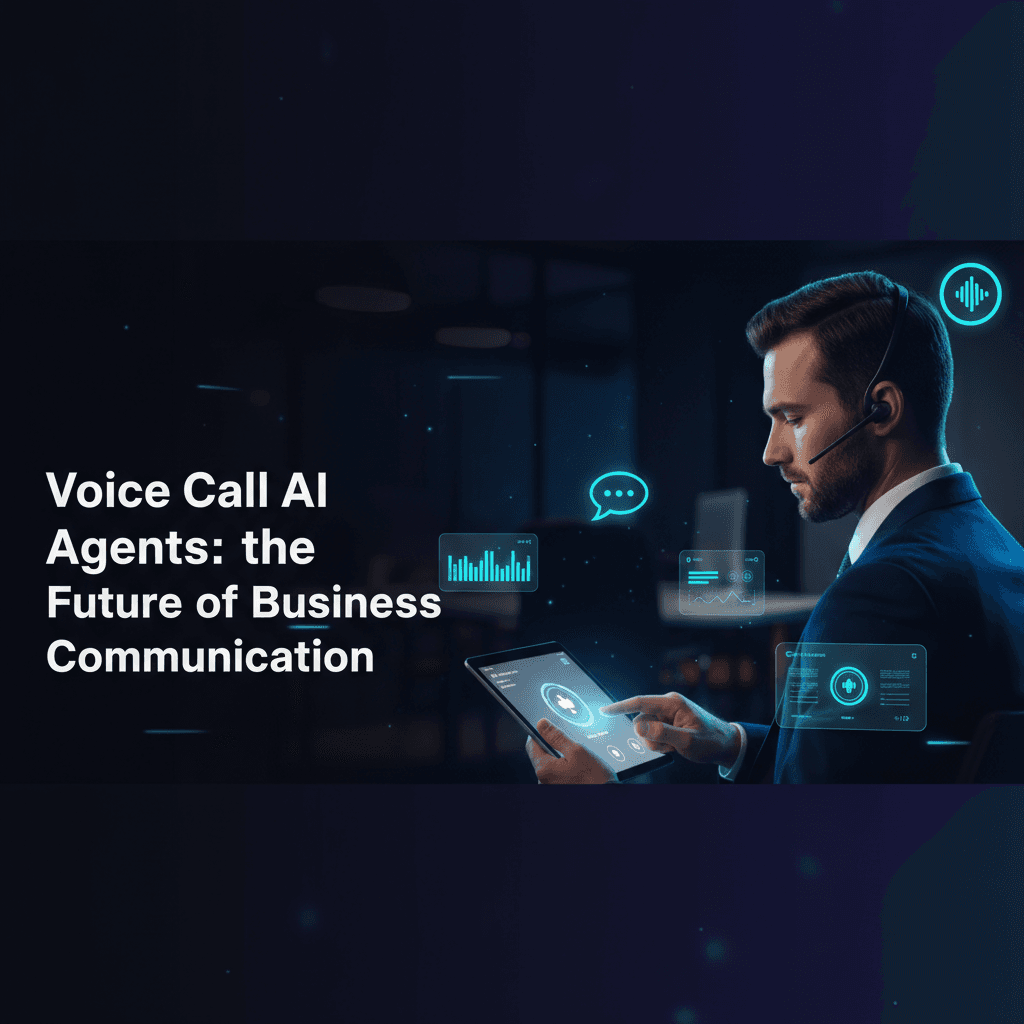
In today's fast-paced business landscape, efficient and effective communication is paramount. As technology evolves, so too do the tools available to businesses for engaging with their customers. One of the most transformative innovations making waves is the voice call AI agent. Far beyond the rudimentary interactive voice response (IVR) systems of the past, these advanced AI solutions are redefining customer service, sales, and operational efficiency, offering hyper-natural interactions and real-time task resolution. If you're looking to elevate your business communication, understanding the capabilities of a modern ai voice calling agent is crucial.
What is a Voice Call AI Agent?
At its core, a voice call AI agent is an artificial intelligence system designed to conduct natural, human-like conversations over the phone. Unlike traditional IVR systems that rely on rigid, menu-driven prompts, an ai voice agent software leverages natural language processing (NLP), machine learning (ML), and sophisticated speech recognition to understand, interpret, and respond to spoken language in real-time. This allows for more fluid, intuitive interactions, making it an invaluable ai voice agent for business operations.
Beyond Traditional IVR: The Rise of Conversational AI
For years, businesses have relied on IVR for basic call routing and information dissemination. However, the limitations of these systems often lead to customer frustration. The advent of conversational IVR and agentic IVR marks a significant leap forward. These systems don't just follow a script; they can understand context, remember previous interactions, and even infer intent. This capability allows the ai call bot to handle complex queries and provide personalized assistance, dramatically improving the customer experience compared to legacy systems.
Key Benefits of Implementing a Voice AI Agent for Business
Enhanced Customer Service and Support
One of the most immediate impacts of deploying ai voice customer service is the significant improvement in customer satisfaction. These agents can provide 24/7 support, handle high call volumes without wait times, and resolve common issues instantly. This reduces the burden on human agents, allowing them to focus on more complex or sensitive cases. The result is faster resolution times and a more positive customer journey. For businesses seeking to optimize their support channels, voice ai customer support is no longer a luxury but a necessity.
Revolutionizing Sales and Outbound Communication
Beyond customer service, ai voice agents for business are proving to be powerful tools in sales and marketing. An ai sales caller can proactively reach out to leads, qualify prospects, schedule appointments, and even close simple deals. The ability of an outbound call ai agent to conduct personalized conversations at scale opens up new avenues for lead generation and conversion, significantly boosting sales efficiency without the need for extensive human resources. Imagine an ai answering phone calls for your sales team, ensuring no lead goes unnoticed.
Operational Efficiency and Cost Savings
Deploying a voice call AI agent can lead to substantial cost savings. By automating routine calls and inquiries, businesses can reduce staffing needs for basic support tasks. Furthermore, the 24/7 availability of an AI agent means extended service hours without additional labor costs. For call centers, integrating call center voice AI can dramatically improve agent productivity, reduce average handling times, and optimize resource allocation, leading to a more streamlined and cost-effective operation.
Choosing the Best AI Phone Agents for Your Enterprise
When selecting among the best AI phone agents, several factors come into play. It's not just about finding an ai voice agent software; it's about finding the right fit for your specific business needs and existing infrastructure. Consider the following:
Integration Capabilities
A top-tier ai voice calling agent should seamlessly integrate with your existing CRM, ERP, and other business systems. This ensures that the AI has access to relevant customer data, enabling personalized and informed interactions. Without robust integration, the AI's effectiveness will be limited.
Natural Language Understanding (NLU)
The quality of the AI's NLU is paramount. Can it understand complex queries, accents, and colloquialisms? The more natural and human-like the conversation, the better the customer experience. Look for solutions that prioritize advanced NLU to ensure truly hyper-natural interactions.
Scalability and Customization
Your chosen ai voice agent for business should be able to scale with your company's growth and adapt to evolving needs. The ability to easily customize scripts, intents, and responses is crucial for maintaining relevance and effectiveness. Some platforms allow you to create AI voice agent solutions tailored precisely to your brand voice and specific use cases.
The Future is Now: Real-time Task Resolution
The most exciting development in voice call AI agent technology is its capacity for real-time task resolution. This means an AI can not only answer questions but also perform actions like processing orders, updating account information, or initiating refunds, all during a live phone call. This level of autonomy and efficiency is transforming how businesses interact with their customers, making every call an opportunity for immediate value creation. The days of being transferred multiple times or waiting for a follow-up are rapidly becoming a thing of the past.
Conclusion
The integration of a voice call AI agent is no longer a futuristic concept but a present-day imperative for businesses aiming to stay competitive. From enhancing ai voice customer service to empowering ai sales caller initiatives, these intelligent systems offer unparalleled opportunities for efficiency, cost savings, and superior customer experiences. By carefully selecting the right ai voice agent software and focusing on hyper-natural interactions and real-time task resolution, businesses can unlock the full potential of AI in their communication strategies, truly stepping into the future of business operations.
FAQ: Voice Call AI Agents
Q: How do voice call AI agents differ from traditional IVR systems?
Traditional IVR systems rely on rigid, menu-driven prompts and keyword recognition. Voice call AI agents, on the other hand, use advanced Natural Language Processing (NLP) and machine learning to understand the context, intent, and nuances of human speech, allowing for more fluid, natural, and conversational interactions. They can handle complex queries and provide personalized assistance, unlike the limited capabilities of older IVR.
Q: Can an AI voice agent truly sound human?
Yes, modern ai voice calling agents utilize sophisticated text-to-speech (TTS) technology that generates highly natural-sounding voices, often with customizable tones, inflections, and even regional accents. The goal is to create a hyper-natural conversational experience that minimizes the perception of interacting with a machine, making the interaction smoother and more pleasant for the caller.
Q: What types of tasks can an outbound call AI agent perform?
An outbound call AI agent can perform a wide range of tasks, including lead qualification, appointment scheduling, customer surveys, debt collection reminders, proactive customer outreach for service updates, and even simple sales calls. They are designed to automate repetitive outbound communication, freeing up human agents for more strategic activities.
Q: Is it difficult to create an AI voice agent for my business?
While advanced AI development can be complex, many platforms now offer user-friendly interfaces and tools to create AI voice agent solutions without extensive coding knowledge. These platforms often provide pre-built templates and drag-and-drop functionalities, allowing businesses to customize and deploy AI agents relatively quickly, especially for common use cases like customer support or sales outreach.
Q: How does a voice call AI agent handle sensitive customer data?
Reputable ai voice agent software prioritizes data security and compliance. They often employ encryption, anonymization techniques, and adhere to industry-specific regulations (like GDPR, HIPAA, PCI DSS). Businesses should choose providers that offer robust security features and clearly outline their data handling policies to ensure customer information remains protected.