

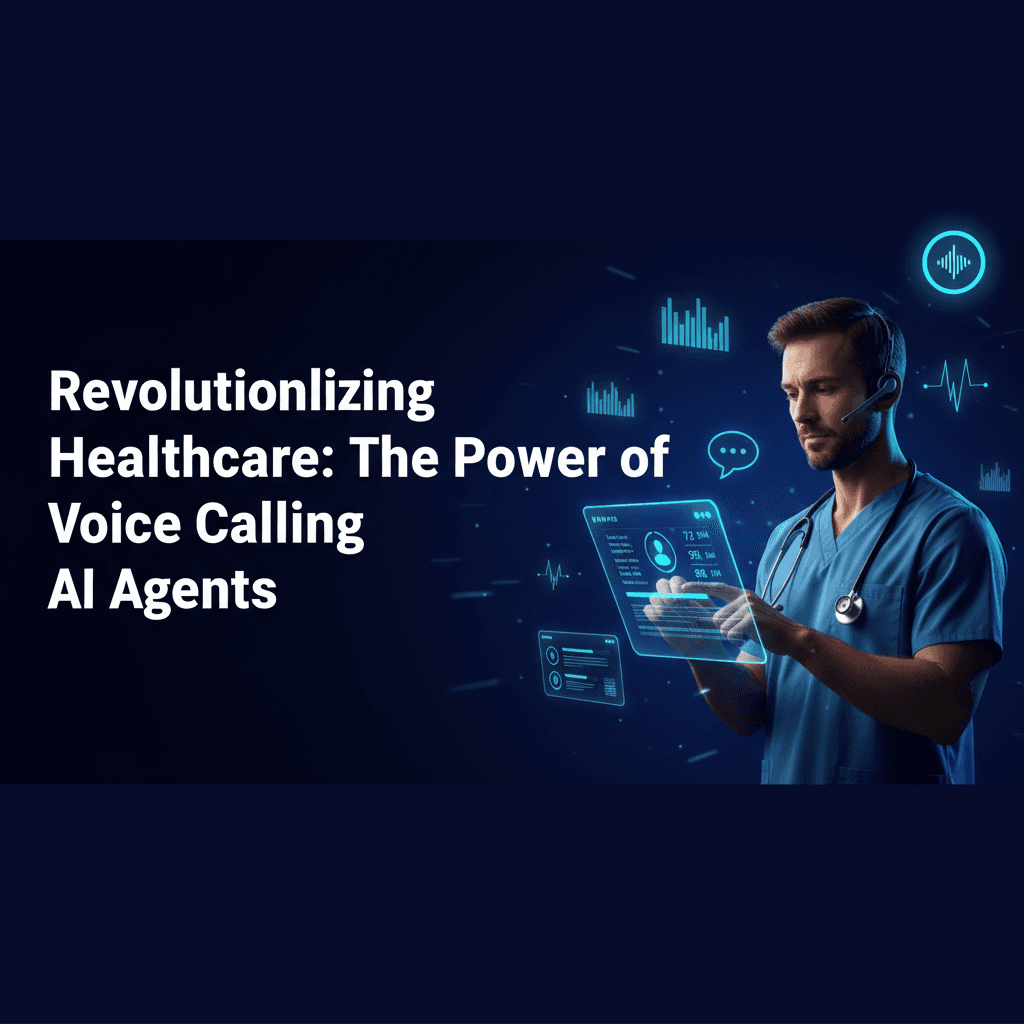
The healthcare landscape is rapidly evolving, driven by the demand for more efficient, accessible, and personalized patient care. In this transformation, one technology stands out: the voice calling AI agent for healthcare. These intelligent systems are not just answering phones; they are revolutionizing how clinics, hospitals, and healthcare providers interact with patients, streamlining operations, and enhancing the overall patient experience. From managing routine inquiries to assisting with critical tasks like triage and appointment scheduling, AI voice agent for healthcare solutions are becoming indispensable tools in modern medicine.
What is a Voice Calling AI Agent for Healthcare?
At its core, a voice calling AI agent for healthcare is an artificial intelligence system designed to interact with patients and healthcare staff via natural language voice conversations. Unlike traditional interactive voice response (IVR) systems, these advanced agents leverage sophisticated natural language processing (NLP) and machine learning to understand complex queries, respond contextually, and even learn from interactions. This allows for a much more fluid and human-like conversation, making the experience less frustrating for callers. The key differentiator for healthcare applications is the absolute necessity for these systems to be HIPAA-aligned voice AI for healthcare, ensuring patient data privacy and security.
Key Benefits of Implementing Voice AI in Healthcare
Enhanced Patient Experience and Accessibility
One of the most significant advantages of deploying voice AI for healthcare is the immediate improvement in patient accessibility and satisfaction. Patients can get their questions answered quickly, schedule appointments, or receive information without navigating complex phone trees or waiting on hold. A 24/7 AI voice agent for patient calls means that help is always available, regardless of clinic hours, significantly reducing patient frustration and improving timely access to care.
Operational Efficiency and Cost Savings
Healthcare providers face constant pressure to optimize resources. Automated voice agent for clinics can handle a high volume of routine calls, freeing up administrative staff to focus on more complex tasks. This not only reduces operational costs associated with staffing but also minimizes the risk of human error in repetitive processes. The efficiency gained allows clinics to serve more patients without increasing their human workforce proportionally.
Streamlined Administrative Tasks
Many administrative functions can be automated with a healthcare voice calling AI. Consider voice AI for healthcare appointment booking, where patients can schedule, reschedule, or cancel appointments through a natural conversation. Similarly, an AI phone agent for healthcare intake can gather preliminary patient information, verify insurance details, and guide patients through pre-appointment instructions, significantly reducing the burden on front-desk staff. These systems also excel at tasks like prescription refill requests and providing general clinic information.
Critical Clinical Support: Triage and Follow-up
Beyond administrative tasks, AI voice agent for healthcare triage is emerging as a powerful tool. These agents can ask a series of structured questions to assess a patient's symptoms, provide initial guidance, and direct them to the appropriate level of care, whether that's scheduling an urgent appointment, visiting an ER, or advising self-care. Furthermore, voice calling AI for patient follow-up can automate post-discharge calls, medication reminders, and wellness checks, ensuring continuity of care and improving patient outcomes.
The Importance of HIPAA Compliance and Data Security
When discussing any technology in healthcare, especially one that handles patient interactions, HIPAA-aligned voice AI for healthcare is not just a feature; it's a fundamental requirement. Any conversational AI voice agent for hospitals or clinics must adhere strictly to the Health Insurance Portability and Accountability Act (HIPAA) regulations. This means robust encryption, secure data storage, strict access controls, and comprehensive audit trails are paramount. Providers must partner with vendors who specialize in healthcare AI and have a proven track record of compliance to protect sensitive patient health information (PHI).
Choosing the Best Voice AI for Healthcare
When evaluating potential solutions, healthcare organizations should look for several key characteristics:
- Robust NLP Capabilities: The ability to understand diverse accents, speech patterns, and complex medical terminology.
- Seamless Integration: Compatibility with existing electronic health record (EHR) systems and practice management software.
- Scalability: The capacity to handle fluctuating call volumes and grow with the organization's needs.
- Customization: The flexibility to tailor scripts, workflows, and responses to specific clinic protocols and branding.
- Proven HIPAA Compliance: Non-negotiable security features and adherence to all regulatory standards.
- Analytics and Reporting: Tools to monitor performance, identify areas for improvement, and demonstrate ROI.
The best voice AI for healthcare front-desk or clinical applications will offer a blend of these features, providing a comprehensive and secure solution.
The Future is Conversational: Voice AI in Hospitals and Clinics
The adoption of conversational AI voice agent for hospitals and smaller clinics is not a distant dream but a current reality. As AI technology continues to advance, these agents will become even more sophisticated, capable of handling a wider range of complex interactions, offering proactive patient outreach, and even providing personalized health insights. The goal is to create a seamless, empathetic, and efficient communication channel between patients and providers, ultimately leading to better health outcomes and a more sustainable healthcare system.
Frequently Asked Questions (FAQ)
Q: How does a voice calling AI agent for healthcare ensure patient data privacy?
A: A truly HIPAA-aligned voice AI for healthcare employs end-to-end encryption for all communications, secure cloud storage compliant with HIPAA regulations, strict access controls, and regular security audits. Vendors must sign Business Associate Agreements (BAAs) to legally commit to protecting Protected Health Information (PHI).
Q: Can an AI voice agent handle medical emergencies?
A: While an AI voice agent for healthcare triage can assess symptoms and provide guidance, it is programmed to recognize potential emergencies and immediately transfer the call to a human operator or advise the caller to seek emergency medical attention. It acts as a first line of defense, not a replacement for emergency services.
Q: Is it difficult to integrate voice AI with existing hospital systems?
A: Modern voice AI for healthcare solutions are designed with integration in mind. Many platforms offer APIs and connectors to seamlessly link with popular EHR systems (e.g., Epic, Cerner) and practice management software, minimizing disruption and ensuring data flow between systems.
Q: What kind of return on investment (ROI) can be expected from implementing an automated voice agent for clinics?
A: ROI can be significant, stemming from reduced administrative costs, increased staff efficiency, lower call abandonment rates, improved patient satisfaction leading to better retention, and optimized appointment scheduling reducing no-shows. Specific ROI varies based on the scale of implementation and existing operational inefficiencies.