




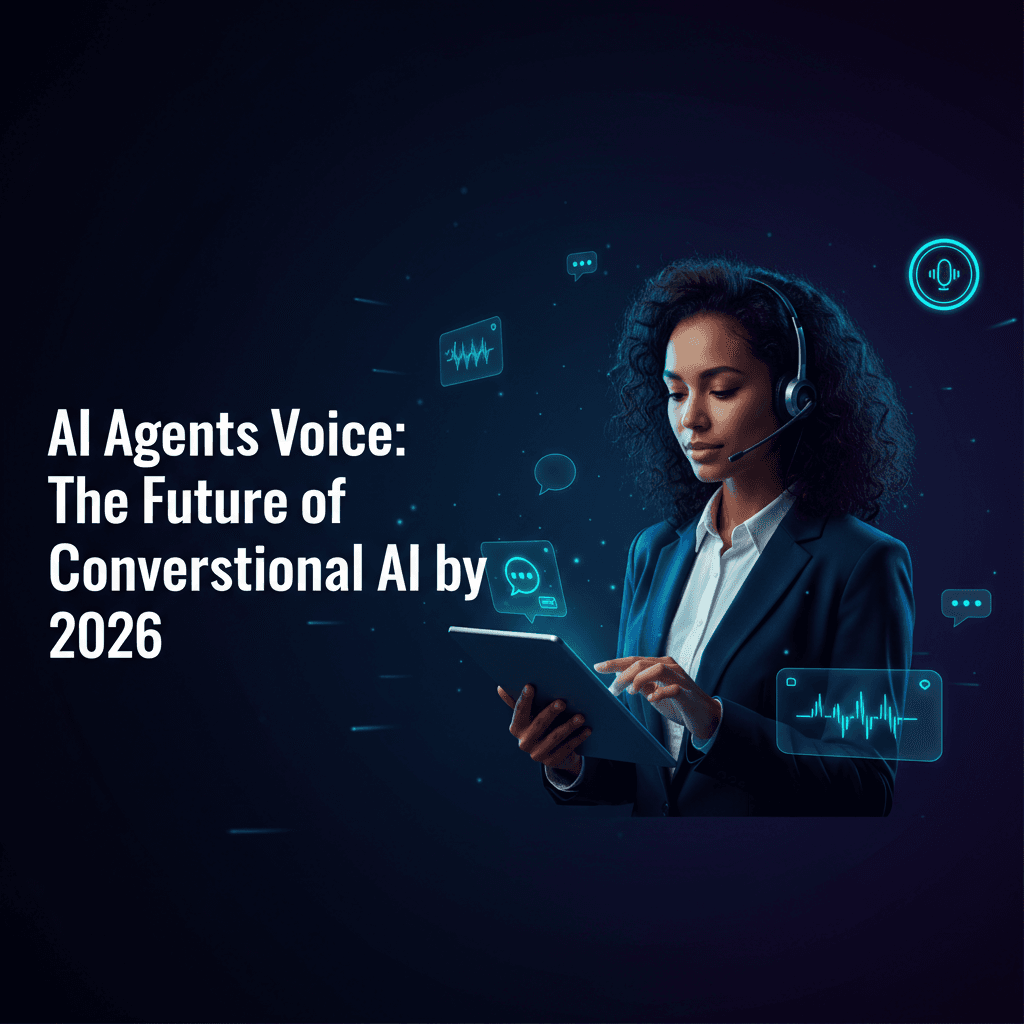
The landscape of customer interaction is undergoing a profound transformation, driven by the rapid evolution of artificial intelligence. At the forefront of this revolution is the emergence of AI agents voice technology, poised to redefine how businesses communicate with their customers. By 2026, we anticipate a significant shift from traditional, rule-based Interactive Voice Response (IVR) systems to sophisticated, agentic voice AI that not only understands intent but can also take decisive action. This article delves into the exciting trends shaping the future of voice AI, focusing on human-like interactions, real-time automation, and the substantial return on investment for enterprises.
The Rise of Agentic Voice AI: Beyond Simple Automation
For years, businesses have relied on IVR systems to manage call volumes, often leading to frustrating customer experiences. However, the advent of agentic voice AI marks a paradigm shift. Unlike their predecessors, these advanced systems are not merely following a script; they are designed to understand context, infer intent, and perform complex tasks autonomously. This capability is central to the exciting AI voice agent trends 2026, promising a more intuitive and efficient interaction model.
Human-Like AI Voice Agents: The Key to Engagement
One of the most significant advancements in this space is the development of truly human-like AI voice agents. Leveraging sophisticated natural language processing (NLP) and machine learning, these agents can mimic human speech patterns, intonation, and even emotional nuances. This makes conversations feel more natural and less robotic, fostering greater customer satisfaction and trust. The goal is to create an experience where customers might not even realize they are speaking to an AI, enhancing the overall service quality.
Transforming Customer Support with Conversational AI Voice Agents
The impact of conversational AI voice agents on customer support is monumental. Imagine a world where customers can resolve complex issues, get personalized recommendations, or even troubleshoot technical problems without ever needing to speak to a human agent. This is the promise of AI voice agent for customer support. These agents can handle a vast array of inquiries, reducing wait times and freeing up human agents to focus on more complex or sensitive cases. This shift will lead to a dramatic improvement in efficiency and customer experience.
AI Voice Agent Replacing IVR: A New Era of Efficiency
The days of navigating endless menus and pressing numbers are numbered. The move towards AI voice agent replacing IVR is gaining momentum, offering a more intuitive and user-friendly experience. Instead of rigid menu trees, customers can simply state their needs in natural language. This not only streamlines the interaction but also significantly reduces customer frustration, a common pain point with traditional IVR systems. The efficiency gains for businesses are substantial, leading to lower operational costs and higher customer satisfaction.
Real-Time AI Voice Automation: Speed and Accuracy
The power of real-time AI voice automation lies in its ability to process information and respond instantly. This is crucial for applications like AI appointment scheduling voice agent systems, where immediate confirmation and flexibility are key. Whether it's booking a doctor's appointment, reserving a table at a restaurant, or scheduling a service call, these agents can handle the entire process seamlessly, reducing no-shows and optimizing resource allocation. Similarly, an AI booking agent voice can manage complex travel arrangements or event registrations with remarkable speed and accuracy.
Beyond Customer Support: Diverse Applications of AI Voice Agents
The utility of AI voice agents extends far beyond traditional customer service. In sales, an AI voice agent for sales can qualify leads, answer product questions, and even close deals, augmenting the efforts of human sales teams. For global enterprises, multilingual AI voice agents break down language barriers, enabling businesses to serve a diverse customer base with localized support. This expansion of capabilities underscores the versatility and growing importance of these technologies.
Enterprise Voice AI Platforms and the Competitive Landscape
The demand for advanced voice AI solutions is fueling the growth of dedicated enterprise voice AI platforms. These platforms provide the robust infrastructure and tools necessary for businesses to deploy and manage their own custom AI voice agents. The competitive landscape is vibrant, with many voice AI startups 2026 emerging with innovative solutions, including those specializing in custom LLM voice agents tailored to specific industry needs. This competition drives innovation, pushing the boundaries of what's possible with conversational AI.
Measuring ROI: The Cost-Effectiveness of AI Voice Agents
Businesses are increasingly scrutinizing the return on investment (ROI) of new technologies. The AI voice agent cost per call is significantly lower than that of human agents, especially when considering 24/7 availability and scalability. Beyond direct cost savings, the benefits include improved customer satisfaction, reduced agent burnout, and the ability to handle peak call volumes without staffing increases. These factors make a compelling case for the widespread adoption of AI voice agents across various industries.
The Future is Conversational: Preparing for 2026 and Beyond
As we approach 2026, the integration of AI agents voice into daily business operations will become commonplace. The shift towards agentic, human-like, and real-time voice automation is not just a trend; it's a fundamental change in how businesses interact with their customers and manage their operations. Companies that embrace these technologies early will gain a significant competitive advantage, offering superior customer experiences and achieving greater operational efficiencies. The future of communication is conversational, intelligent, and powered by AI.
Frequently Asked Questions About AI Agents Voice
Q: What is an agentic voice AI?
A: An agentic voice AI is an advanced conversational AI system that not only understands natural language but can also infer user intent, make decisions, and autonomously perform tasks or take actions, rather than just following a predefined script. It's designed to act as an intelligent agent in a conversation.
Q: How are human-like AI voice agents different from traditional IVR?
A: Human-like AI voice agents use advanced NLP and speech synthesis to mimic natural human conversation, including intonation and emotional cues. Traditional IVR systems rely on rigid menus and touch-tone inputs, often leading to a frustrating, robotic experience. AI agents understand free-form speech and can adapt to the conversation flow.
Q: Can AI voice agents truly replace human customer support?
A: While AI voice agent for customer support can handle a vast majority of routine inquiries and automate many tasks, they are more likely to augment human agents rather than completely replace them. They free up human staff to focus on complex, sensitive, or high-value interactions that require empathy and nuanced problem-solving. This collaboration leads to improved overall service.
Q: What is the benefit of multilingual AI voice agents?
A: Multilingual AI voice agents allow businesses to provide consistent, high-quality customer service in multiple languages without needing to hire and train a diverse, large human workforce for every language. This expands market reach, improves global customer satisfaction, and offers significant cost efficiencies for international operations.
Q: What are custom LLM voice agents?
A: Custom LLM voice agents are AI voice agents built upon large language models (LLMs) that have been specifically trained or fine-tuned with a company's unique data, industry jargon, and business processes. This allows them to provide highly accurate, relevant, and personalized responses that are deeply integrated with the enterprise's specific needs and knowledge base.