




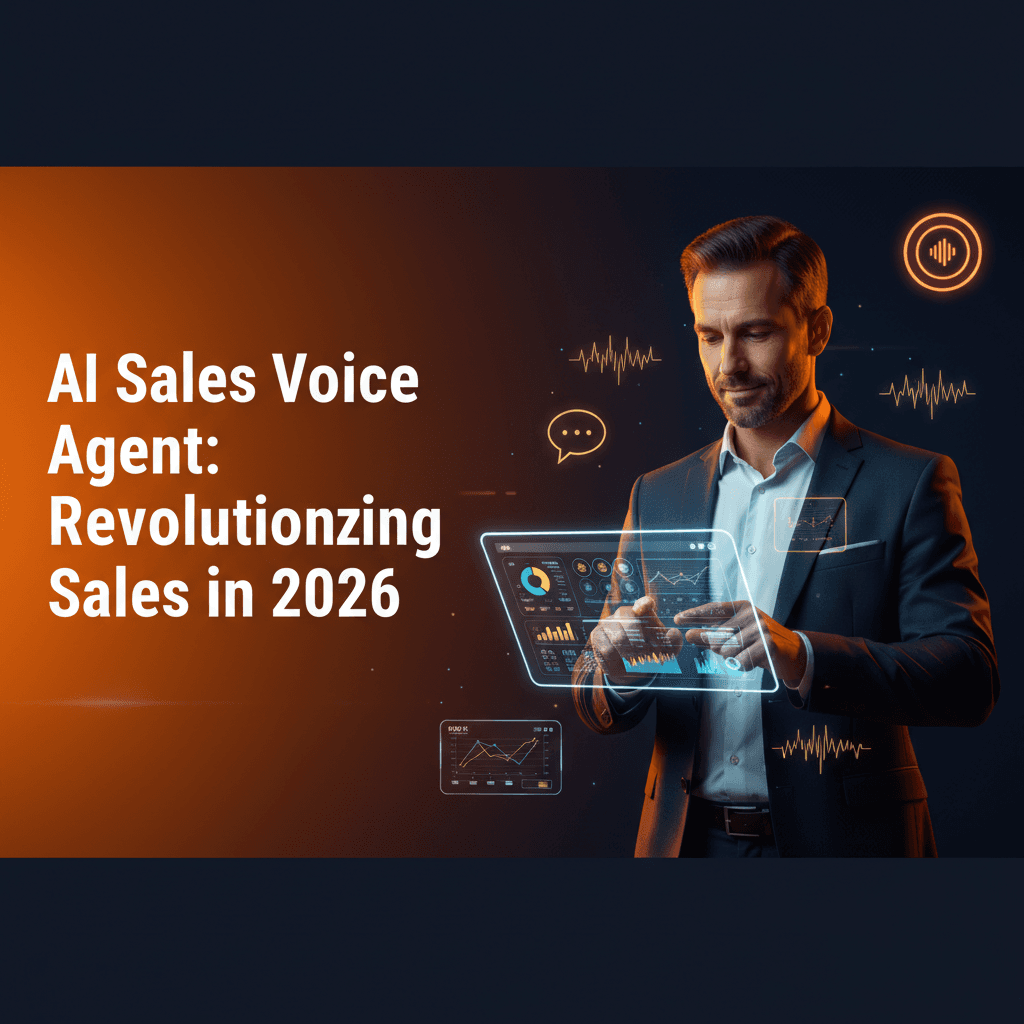
The landscape of sales is undergoing a profound transformation, driven by the rapid advancements in artificial intelligence. In 2026, the concept of an AI sales voice agent is no longer a futuristic fantasy but a tangible, highly effective tool revolutionizing how businesses connect with prospects and close deals. These sophisticated AI solutions are moving beyond simple chatbots, offering autonomous, human-like conversations that handle everything from initial outreach to appointment setting. This article delves into the capabilities of these cutting-edge tools, exploring how they are becoming indispensable for modern sales teams.
What is an AI Sales Voice Agent?
An AI sales voice agent is an advanced artificial intelligence system designed to conduct natural, conversational interactions over the phone, mimicking a human sales representative. Unlike traditional IVR systems or basic chatbots, these agents leverage natural language processing (NLP), machine learning, and often generative AI to understand context, respond dynamically, and even express empathy. They are essentially an AI voice agent for sales, capable of engaging prospects in meaningful dialogues without direct human intervention. This technology is rapidly evolving, with an increasing focus on creating an autonomous AI sales agent that can manage entire sales processes.
The Rise of Autonomous AI Sales Agents in 2026
The year 2026 marks a significant milestone in the adoption of autonomous AI in sales. Businesses are increasingly investing in an AI sales voice bot that can handle a high volume of calls, qualify leads, and even set appointments with remarkable efficiency. This shift is driven by the need to scale sales operations, reduce operational costs, and improve the consistency of customer interactions. The best AI voice agents for sales 2026 are those that seamlessly integrate with existing CRM systems, providing real-time updates and analytics to human sales teams.
Key Functions of an AI Sales Voice Agent
The versatility of an AI sales voice agent is its greatest strength. Here are some of the primary functions they perform:
1. AI Voice Agent Lead Qualification
One of the most impactful applications is AI voice agent lead qualification. These agents can engage prospects in initial conversations, asking targeted questions to assess their needs, budget, authority, and timeline (BANT). This allows human sales development representatives (SDRs) to focus their efforts on truly qualified leads, significantly improving efficiency and conversion rates. It's like having an always-on AI sales development representative voice agent dedicated to pre-screening.
2. AI Sales Appointment Setting Agent
Beyond qualification, an AI sales appointment setting agent can seamlessly schedule meetings directly into your team's calendars. By understanding availability and prospect preferences, these agents eliminate the back-and-forth emails and calls, streamlining the entire sales pipeline. This is a crucial component of effective AI voice sales automation.
3. AI Outbound Calling Agent Sales
For proactive outreach, an AI outbound calling agent sales solution can make thousands of calls daily, reaching out to potential customers, introducing products, and gathering initial interest. This is particularly effective for large-scale campaigns or for tasks like AI voice agent for cold calling, where human agents might face fatigue or discouragement. These agents act as an efficient AI calling agent for sales teams, extending reach without increasing headcount.
4. AI Voice Agent for Inbound Sales
Not just for outbound, an AI voice agent for inbound sales can handle initial inquiries, answer common questions, and route calls to the appropriate human agent when necessary. This ensures that every inbound lead receives an immediate, professional response, improving customer experience and reducing wait times.
The Technology Behind the Best AI Voice Agents for Sales 2026
The sophistication of today's AI sales voice agent is powered by several advanced technologies:
Generative AI Sales Voice Assistant
The emergence of generative AI sales voice assistant technology has been a game-changer. These agents can generate human-like speech and understand complex queries, allowing for more fluid and natural conversations. They can adapt their scripts in real-time based on the interaction, making each call unique and personalized.
AI Sales Copilot Voice Agent Integration
Many leading solutions now function as an AI sales copilot voice agent, working alongside human reps. While the AI handles routine tasks like initial outreach or data entry, it can also provide real-time suggestions or summaries to human agents during live calls, enhancing their performance. The goal is not to replace, but to augment and empower.
The Future: AI Sales Voice Platform
The trend is towards a comprehensive AI sales voice platform, offering a suite of tools that manage the entire voice-based sales cycle. These platforms provide analytics, CRM integration, customizable scripts, and advanced reporting, giving sales leaders unprecedented insight and control over their outreach efforts. This holistic approach ensures that AI voice sales automation is not just a feature, but a core strategy.
Choosing the Best AI Voice Agents for Sales in 2026
When evaluating the best AI voice agents for sales 2026, consider the following factors:
- Natural Language Understanding (NLU): How well does it understand complex queries and nuances in human speech?
- Voice Quality and Latency: Is the voice natural, and are responses immediate?
- Integration Capabilities: Does it integrate seamlessly with your CRM (e.g., Salesforce, HubSpot) and other sales tools?
- Customization: Can you tailor scripts, voices, and workflows to your specific needs?
- Scalability: Can it handle your current and future call volumes?
- Reporting and Analytics: Does it provide actionable insights into call performance and lead quality?
A robust AI sales voice platform will excel in all these areas, delivering significant ROI for your sales team.
Conclusion
The AI sales voice agent is no longer a niche technology but a mainstream solution for sales teams aiming for efficiency, scalability, and improved performance. From AI voice agent lead qualification to AI sales appointment setting agent functions, these tools are redefining the sales process. As we move further into 2026, embracing an autonomous AI sales agent or a comprehensive AI sales voice platform will be critical for businesses looking to stay competitive and maximize their sales potential. The future of sales is conversational, intelligent, and increasingly automated.
Frequently Asked Questions (FAQ)
Q: How does an AI sales voice agent differ from a traditional chatbot?
A: While both use AI, an AI sales voice agent operates primarily over voice channels (phone calls), leveraging advanced speech recognition and natural language generation to conduct human-like conversations. Chatbots are text-based. Voice agents can understand tone, intent, and respond dynamically, making them far more sophisticated for sales interactions than simple scripted chatbots.
Q: Can an AI sales voice agent truly replace human sales reps?
A: Not entirely. While an autonomous AI sales agent can handle many repetitive and time-consuming tasks like lead qualification, cold calling, and appointment setting, complex negotiations, relationship building, and strategic decision-making still require human expertise. The goal is to augment human sales teams, allowing them to focus on high-value activities, rather than complete replacement.
Q: What are the benefits of using an AI outbound calling agent for sales?
A: An AI outbound calling agent sales offers numerous benefits, including increased call volume and reach, consistent messaging, reduced operational costs, 24/7 availability, and the ability to quickly qualify leads. It allows human reps to focus on warm leads, improving overall sales efficiency and productivity, especially for tasks like AI voice agent for cold calling.
Q: How do these agents ensure a natural conversation flow?
A: Modern AI sales voice agents utilize advanced natural language processing (NLP) and generative AI. This allows them to understand context, infer intent, and generate dynamic, human-like responses. They can handle interruptions, ask clarifying questions, and adapt their script based on the conversation, leading to a much more natural and engaging interaction compared to older, rigid AI systems.