



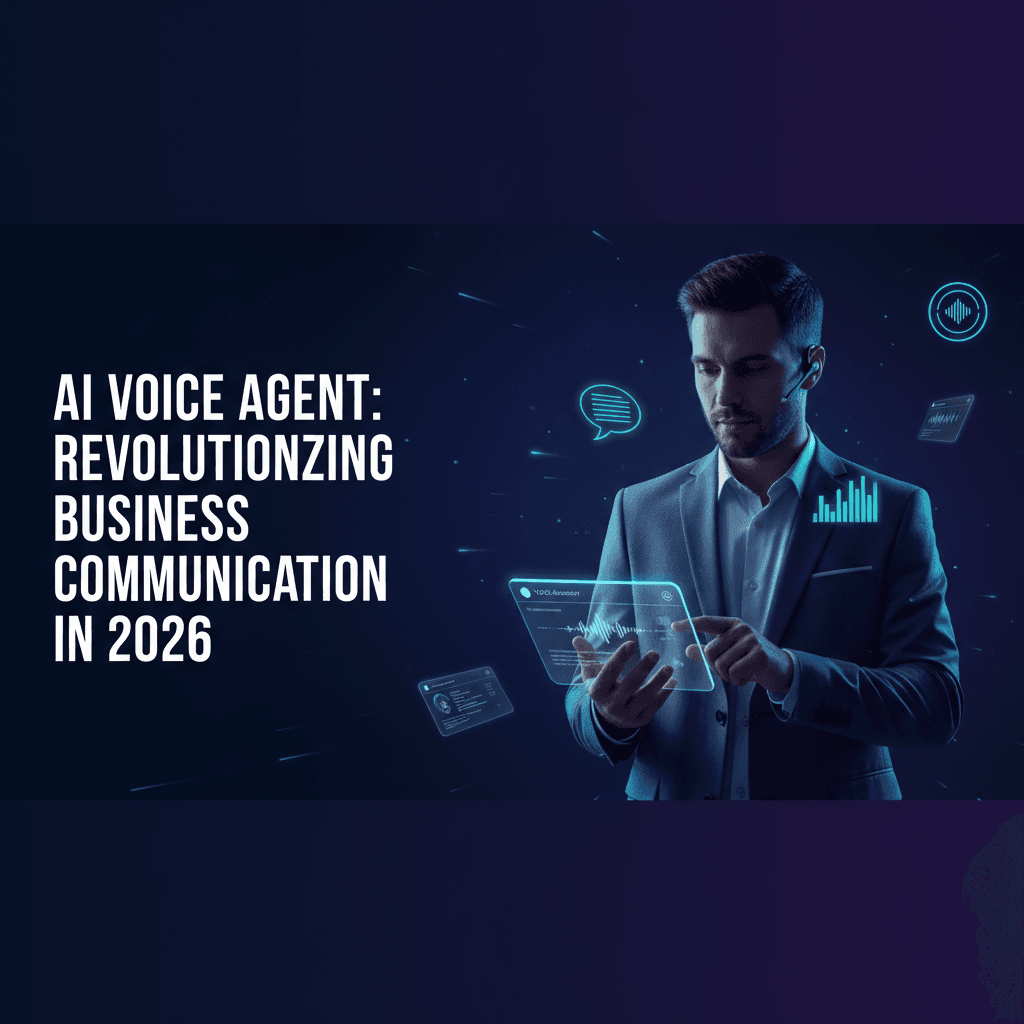
In 2026, the landscape of business communication is undergoing a profound transformation, largely driven by the advancement of the AI voice agent. No longer a futuristic concept, AI voice agents are becoming indispensable tools for businesses looking to enhance efficiency, improve customer experience, and scale operations. From handling routine inquiries to driving complex sales processes, these intelligent assistants are redefining how companies interact with their clientele. This article delves into what makes an AI voice agent so powerful, explores leading platforms, and examines the diverse applications that are shaping the future of customer engagement.
What is an AI Voice Agent?
An AI voice agent is a sophisticated software application designed to understand human speech, process natural language, and respond verbally in a conversational manner. Unlike traditional interactive voice response (IVR) systems, which rely on rigid menus and keyword recognition, an AI voice agent leverages advanced natural language processing (NLP) and machine learning (ML) to engage in dynamic, human-like conversations. This technology allows businesses to automate a wide range of phone-based interactions, offering a seamless and personalized experience for callers. Essentially, it's a conversational AI phone agent capable of handling complex dialogues and understanding intent, not just keywords.
Key Benefits of Deploying AI Voice Agent Software
The adoption of AI voice agent software offers numerous advantages for businesses of all sizes:
- 24/7 Availability: AI agents can operate around the clock, ensuring customers always have access to support or information, regardless of business hours or time zones.
- Reduced Operational Costs: By automating routine inquiries and tasks, businesses can significantly reduce staffing costs associated with call centers. This leads to substantial savings and improved efficiency.
- Improved Customer Satisfaction: With instant responses and personalized interactions, customers experience less wait time and more effective resolutions, leading to higher satisfaction scores.
- Scalability: AI voice agents can handle an unlimited number of simultaneous calls, easily scaling up or down to meet fluctuating demand without additional human resources.
- Data Collection and Insights: Every interaction handled by an AI voice agent can be analyzed to provide valuable insights into customer behavior, common issues, and areas for improvement.
- Consistency: AI agents deliver consistent messaging and service quality across all interactions, eliminating human error or variability.
Top AI Voice Agent Use Cases for Businesses
The versatility of AI voice agents means they can be deployed across a multitude of business functions. Here are some of the most impactful AI voice agent use cases:
AI Voice Agent for Customer Support
One of the most common and effective applications is the AI voice agent for customer support. These agents can handle a vast array of common inquiries, such as checking order status, providing account information, answering FAQs, and troubleshooting basic issues. This leads to significant improvements in call deflection rates and average handling time (AHT), freeing up human agents to focus on more complex or sensitive customer interactions. It's a powerful tool for AI call center automation.
AI Voice Agent for Appointment Booking
For businesses like healthcare providers, salons, and service companies, an AI voice agent for appointment booking can be a game-changer. It allows customers to schedule, reschedule, or cancel appointments conveniently over the phone, without requiring human intervention. This not only streamlines operations but also reduces no-shows through automated reminders.
AI Voice Agent for Inbound Calls
Beyond specific tasks, an AI voice agent for inbound calls acts as a sophisticated first point of contact. It can intelligently route calls, gather necessary information before transferring to a human, and even resolve common issues autonomously. This significantly improves efficiency and ensures callers are directed to the right department or agent quickly, enhancing the overall experience.
AI Voice Agent for Outbound Sales
The potential of an AI voice agent for outbound sales is immense. These agents can conduct initial qualification calls, follow up on leads, re-engage dormant customers, and even process simple sales. By automating these repetitive tasks, sales teams can focus on closing higher-value deals, leading to improved conversion rates and a more productive sales pipeline. This is a prime example of effective AI phone call automation.
Choosing the Best AI Voice Agent Platforms
When evaluating the best AI voice agent platforms, several factors come into play. Businesses need to consider their specific needs, budget, and desired level of customization. Key features to look for include:
- Natural Language Understanding (NLU) capabilities: How well can the AI understand complex queries and accents?
- Integration with existing systems: Can it connect seamlessly with your CRM, ERP, or other business tools?
- Ease of deployment and management: Is the platform user-friendly for non-technical staff?
- Scalability: Can it grow with your business?
- Voice quality and naturalness: Does the AI sound human-like and pleasant to interact with?
- Analytics and reporting: Does it provide actionable insights into call performance?
Many providers offer comprehensive voice AI platform solutions that cater to various industries and business sizes, from startups to large enterprises. For small businesses, an AI receptionist for small business can be a cost-effective way to professionalize phone interactions and manage call volume without hiring additional staff.
Understanding AI Voice Agent Pricing
AI voice agent pricing models vary significantly among providers. Common structures include:
- Per-minute usage: You pay for the actual duration of calls handled by the AI.
- Per-conversation: A flat fee per completed conversation, regardless of length.
- Subscription-based: Monthly or annual fees based on usage tiers, number of agents, or features.
- Custom enterprise solutions: Tailored pricing for large organizations with complex requirements.
It's crucial to get detailed quotes and understand what's included in each package. While the initial investment might seem significant, the long-term ROI through cost savings, increased efficiency, and improved customer satisfaction often far outweighs the expenditure. When considering an AI voice assistant for business, always factor in the potential for increased call deflection, reduced AHT, and higher conversion rates.
AI Voice Agent vs. IVR: A Clear Distinction
It's important to differentiate between an AI voice agent vs IVR. Traditional IVR systems are menu-driven, requiring callers to press numbers or speak specific keywords. They are often frustrating and inefficient. An AI voice agent, on the other hand, offers a truly conversational experience. It understands natural language, can handle interruptions, and adapts to the conversation flow, providing a far superior user experience. This shift from rigid IVR to flexible conversational AI is a key driver in modernizing phone support.
The Future is Conversational: Embracing AI Phone Call Automation
The integration of AI into voice communication is not just a trend; it's a fundamental shift in how businesses operate and interact with their customers. By embracing AI phone call automation, companies can unlock unprecedented levels of efficiency, deliver superior customer experiences, and gain a competitive edge. As the technology continues to evolve, AI voice agents will become even more sophisticated, capable of handling increasingly complex tasks and offering even more personalized interactions. The future of business communication is undoubtedly conversational, intelligent, and powered by AI.
Frequently Asked Questions About AI Voice Agents
Q: How does an AI voice agent improve customer satisfaction?
A: An AI voice agent improves customer satisfaction by providing instant, 24/7 support, reducing wait times, offering consistent and accurate information, and handling routine queries efficiently. This frees up human agents for more complex issues, leading to quicker resolutions and a more positive customer experience overall.
Q: Can an AI voice agent handle complex conversations?
A: Modern AI voice agents, powered by advanced natural language processing (NLP) and machine learning, are increasingly capable of handling complex, multi-turn conversations. They can understand context, infer intent, and adapt to dynamic dialogue, often performing as well as or better than a human for specific tasks. For highly complex or emotionally charged interactions, they can seamlessly transfer the call to a human agent.
Q: What is the typical ROI for implementing an AI voice agent?
A: The ROI for implementing an AI voice agent can be substantial. Businesses typically see benefits from reduced operational costs (lower staffing needs, decreased call volume to human agents), improved efficiency (lower AHT, higher call deflection), increased sales conversion rates (for outbound sales), and enhanced customer satisfaction. Specific metrics like call deflection rates, average handling time (AHT), and conversion rates are key indicators of ROI, often leading to significant savings and revenue growth within a year.
Q: Is an AI voice agent suitable for small businesses?
A: Absolutely. An AI receptionist for small business can be particularly beneficial. It allows small businesses to professionalize their phone presence, manage high call volumes without expanding staff, and provide 24/7 customer service. Many platforms offer scalable solutions and competitive AI voice agent pricing that fit within a small business budget, making advanced automation accessible.