




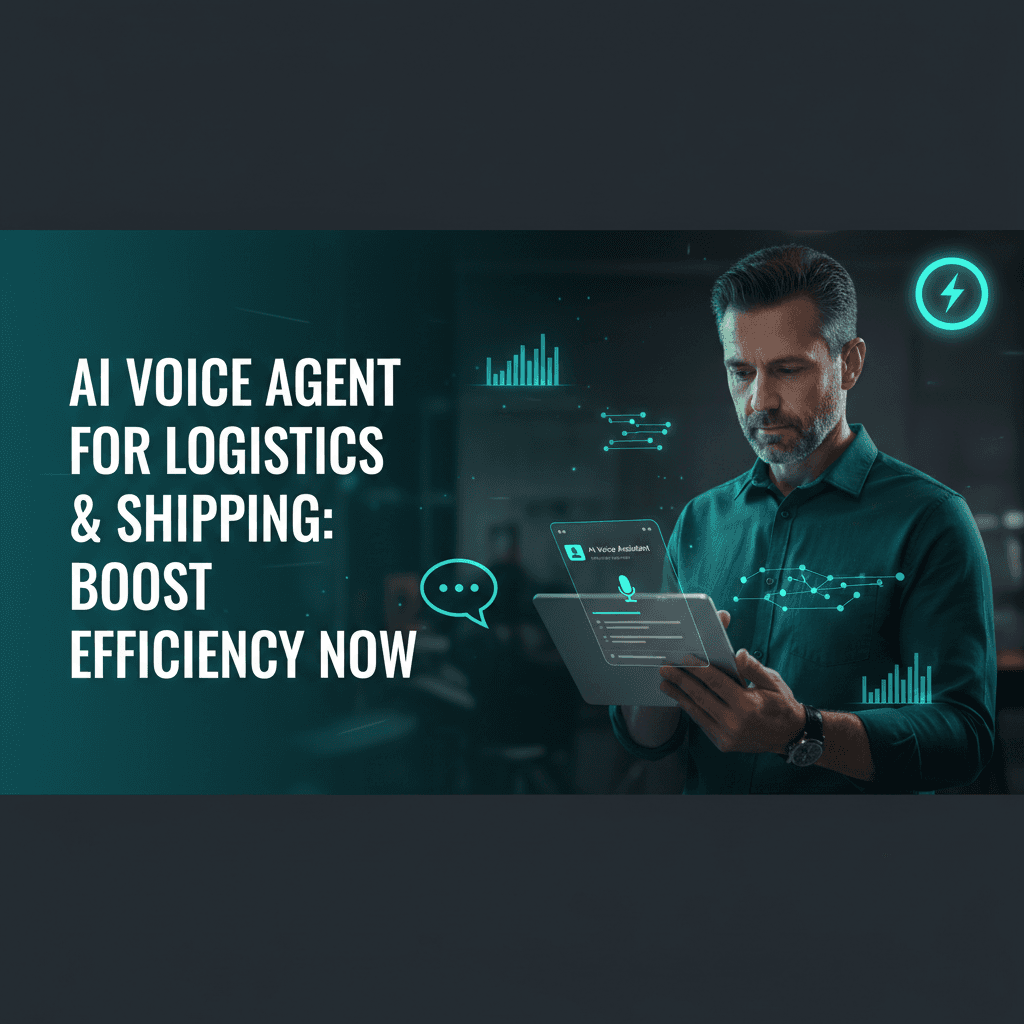
In the fast-paced world of logistics and shipping, operational efficiency isn't just a goal—it's a necessity. From managing complex supply chains to ensuring timely deliveries, the demands are relentless. This is where the power of an AI voice agent for logistics and shipping operations comes into play, transforming how companies handle everything from customer inquiries to driver coordination. Imagine a solution that works 24/7, reduces manual workload, and integrates seamlessly with your existing systems. That's the promise of AI voice technology in logistics.
The Unseen Challenges in Logistics Operations
Logistics operations are fraught with challenges. High call volumes for routine inquiries, the need for constant updates on shipment status, and the complexities of coordinating a mobile workforce can quickly overwhelm even the most robust teams. Dispatchers often spend valuable time answering repetitive questions, leading to delays and increased operational costs. This manual burden impacts not only the efficiency of internal teams but also the overall customer experience.
How AI Voice Agents Revolutionize Logistics & Shipping
An AI voice agent for logistics and shipping is more than just an automated answering service; it's a strategic asset that streamlines communication and automates critical processes. By leveraging natural language processing (NLP) and machine learning, these agents can understand and respond to a wide array of queries and commands, providing instant support and freeing up human agents for more complex tasks.
Key Applications of AI Voice Agents in Logistics
The versatility of AI voice agents means they can be deployed across numerous touchpoints within the logistics ecosystem:
Automating Customer & Partner Communications
One of the most immediate benefits is the ability to automate shipping inquiries with AI voice agents. Customers can get real-time updates on their packages, request proof of delivery, or even modify delivery instructions without human intervention. This significantly improves customer satisfaction and allows your team to focus on resolving more complex issues. An AI voice agent for supply chain customer communication ensures consistent, accurate, and 24/7 support.
Enhancing Dispatch & Driver Coordination
For dispatch teams, an AI voice agent for freight dispatch and shipment tracking is a game-changer. It can handle routine driver check-ins, provide load details, and even assist with route optimization queries. This helps to reduce dispatcher call volume with AI voice agent technology, allowing human dispatchers to concentrate on critical exceptions and strategic planning. Furthermore, an AI voice agent for real time driver check-in automation ensures that driver status and location updates are captured efficiently and accurately.
Streamlining Delivery Scheduling & Last-Mile Operations
The last mile is often the most challenging part of the delivery process. An AI voice agent for delivery scheduling and driver coordination can automate appointment setting, send delivery reminders, and even handle non-delivery report (NDR) calls. This proactive communication, especially an AI voice agent for last mile delivery and NDR calls, minimizes failed deliveries and improves overall customer experience for courier and e-commerce delivery teams.
Automating Compliance & Urgent Requests
Beyond routine tasks, AI voice agents can handle more specialized functions. For instance, you can automate MC number verification with AI voice agent technology, ensuring compliance and reducing manual checks. They can also manage AI voice agent for shipment status and urgent booking requests, prioritizing critical shipments and ensuring rapid response times.
Seamless Integration with Existing Systems
For an AI voice agent to be truly effective, it must integrate smoothly with your existing technology stack. An AI voice agent for logistics TMS and WMS integration ensures that information flows seamlessly between your transportation management system (TMS) and warehouse management system (WMS). This connectivity allows the AI to access real-time data for accurate responses and updates, making it an indispensable tool for logistics appointment scheduling.
Choosing the Best AI Voice Agents for Logistics Companies in 2026
When evaluating the best AI voice agents for logistics companies 2026, consider factors like natural language understanding capabilities, integration flexibility, scalability, and the ability to handle industry-specific terminology. Look for solutions that offer robust analytics to track performance and identify areas for further automation. The goal is to find a partner that understands the unique complexities of the logistics sector and can deliver measurable ROI.
The Future of Logistics Call Center Automation
The adoption of AI voice agent for logistics call center automation is not just about cost reduction; it's about reimagining customer service and operational efficiency. By offloading routine calls, human agents can focus on complex problem-solving, building stronger customer relationships, and contributing to strategic initiatives. This hybrid approach ensures that while AI handles the volume, human empathy and expertise are reserved for when they matter most.
Conclusion
The integration of an AI voice agent for logistics shipping is no longer a futuristic concept but a present-day imperative for companies seeking a competitive edge. From automating inquiries and tracking shipments to coordinating drivers and streamlining last-mile deliveries, these intelligent agents offer unparalleled opportunities for operational optimization, cost savings, and enhanced customer satisfaction. Embrace the power of AI voice technology to navigate the complexities of modern logistics with greater agility and efficiency.
FAQ: AI Voice Agents in Logistics
Q: What is an AI voice agent for logistics?
A: An AI voice agent for logistics is an intelligent virtual assistant powered by artificial intelligence that can understand and respond to human speech. It automates various communication tasks within the logistics and shipping industry, such as answering inquiries, providing updates, and coordinating operations.
Q: How can AI voice agents reduce dispatcher call volume?
A: AI voice agents can handle a significant portion of routine calls, such as driver check-ins, requests for shipment status, and basic load information. By automating these common interactions, they free up human dispatchers to focus on more complex issues, thereby significantly reducing overall call volume.
Q: Can AI voice agents integrate with existing TMS and WMS systems?
A: Yes, effective AI voice agents are designed for seamless integration with Transportation Management Systems (TMS) and Warehouse Management Systems (WMS). This connectivity allows them to access real-time data for accurate responses regarding inventory, shipment status, delivery schedules, and more, ensuring consistent and up-to-date information.
Q: What benefits do AI voice agents offer for last-mile delivery?
A: For last-mile delivery, AI voice agents can automate delivery scheduling, send proactive updates to customers, handle non-delivery reports (NDR calls), and coordinate with drivers. This automation improves delivery success rates, reduces customer inquiries, and enhances the overall delivery experience.
Q: How do AI voice agents improve customer communication in the supply chain?
A: AI voice agents provide 24/7 instant support for customer inquiries, offering real-time shipment tracking, delivery updates, and answers to frequently asked questions. This consistent and immediate communication significantly boosts customer satisfaction and reduces the workload on human customer service teams.