




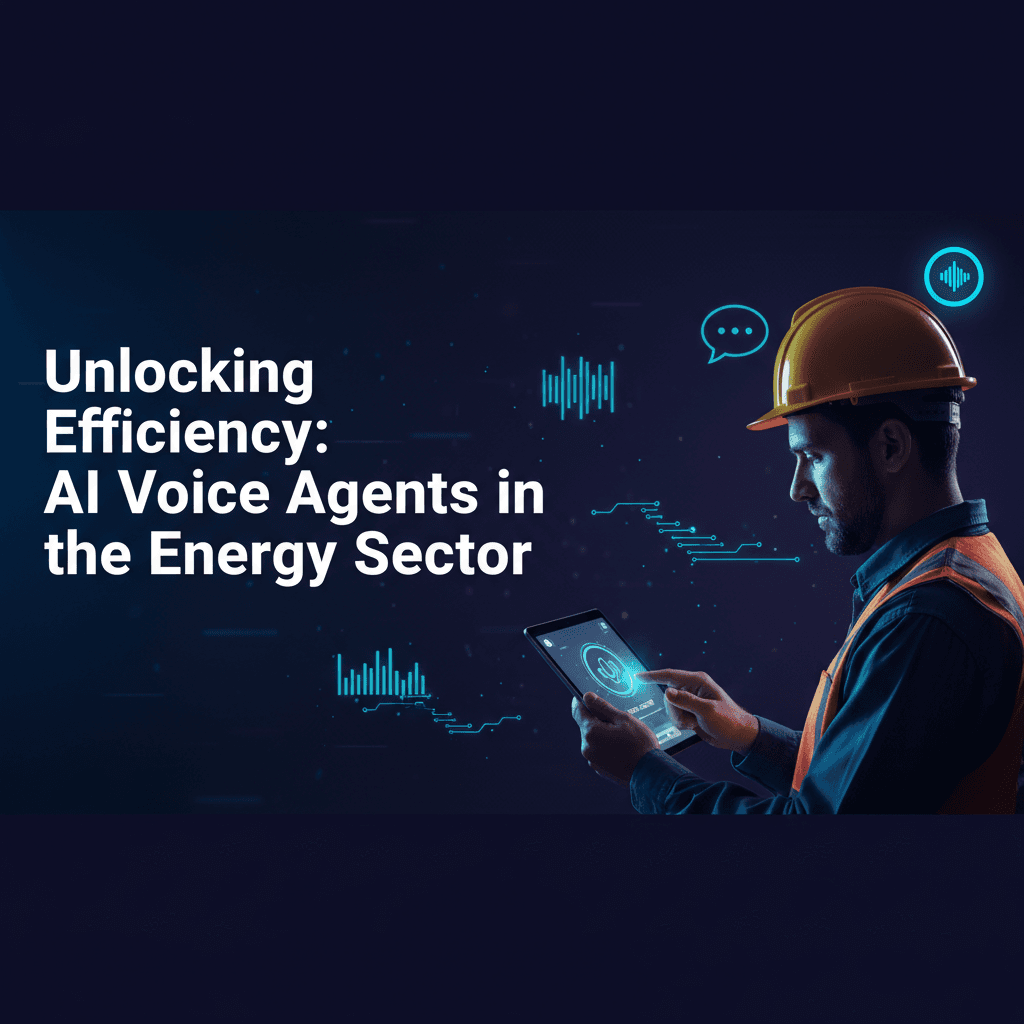
The energy and utilities sector is undergoing a significant transformation, driven by the need for greater efficiency, improved customer service, and enhanced operational resilience. At the forefront of this revolution are AI voice agents, powerful tools that are redefining how utility providers interact with their customers and manage complex operations. From handling routine inquiries to critical outage reporting, these intelligent systems are becoming indispensable. This article delves into the multifaceted applications of AI voice agent utilities energy, exploring current capabilities and future trends, particularly looking towards 2026 and beyond.
The Rise of AI Voicebots in Utility Customer Service
Customer service in the energy sector often involves high call volumes and repetitive queries. This is where an ai voicebot for utility providers 2026 becomes a game-changer. These sophisticated systems can handle a vast array of customer interactions, providing instant support and freeing up human agents for more complex issues. The integration of voice AI for customer support energy companies is not just about cost reduction; it's about delivering a superior, 24/7 customer experience.
Key Conversational AI Use Cases in the Energy Sector
The applications of conversational ai in energy sector use cases are diverse and impactful. Here are some of the most prominent:
Streamlining Outage Reporting and Management
During widespread power outages, call centers can be overwhelmed. AI agents for utility outage reporting provide an essential first line of defense. They can quickly identify the caller's location, log the outage, provide estimated restoration times, and even proactively send updates. This capability extends to voice AI for outage surge handling utilities, ensuring that even during peak events, customers receive timely information and support, significantly reducing stress and improving satisfaction.
Automating Billing Inquiries and Tariff Management
Billing questions are among the most common customer service interactions. Automated billing inquiries energy utilities ai solutions can handle requests for bill explanations, payment arrangements, and historical data with ease. Furthermore, an ai voicebot for tariff queries and meter readings can provide instant, personalized information about different energy plans and guide customers through submitting their meter readings, ensuring accuracy and compliance. This also ties into ai voice assistant for utility billing compliance, helping customers understand complex regulations and ensuring their accounts meet necessary standards.
Advanced AI for Operational Excellence
Beyond customer service, AI voice agents and broader AI solutions are making significant inroads into operational aspects of the energy sector.
Energy Price Forecasting and Market Analysis
Predicting energy prices is crucial for both providers and large consumers. An ai voice agent for energy price forecasting can synthesize vast amounts of market data, weather patterns, and geopolitical events to provide real-time insights and predictions, aiding in strategic decision-making and risk management.
Generative AI for Enhanced Customer Engagement
The advent of generative ai utilities customer engagement tools allows for more personalized and proactive communication. These systems can generate tailored energy-saving tips, suggest optimal tariff plans based on usage patterns, and even create engaging content to educate customers about renewable energy options. This level of personalized interaction fosters greater loyalty and satisfaction.
Agentic AI and Grid Management
The concept of agentic ai in energy and utilities market extends beyond customer-facing roles. Autonomous AI agents are being deployed to optimize grid operations. Autonomous ai agents for utility grid management can monitor infrastructure, predict potential failures, and even reroute power to prevent outages or minimize their impact. This proactive approach is further bolstered by edge ai controllers for grid protection utilities, which process data locally and make real-time decisions, enhancing grid stability and resilience.
AI for Renewable Energy Integration
As the world shifts towards sustainable energy, integrating diverse renewable sources into existing grids presents complex challenges. AI agents for renewable energy integration utilities play a crucial role in balancing supply and demand, optimizing energy storage, and predicting output from intermittent sources like solar and wind, ensuring grid stability and efficiency.
The Future: Multimodal AI and Beyond (2026)
Looking ahead to 2026, we anticipate the widespread adoption of multimodal ai voice utilities energy 2026 solutions. These advanced systems will combine voice with other inputs like text, images, and even video to understand customer intent more deeply and provide richer, more nuanced interactions. Imagine an AI agent that can analyze a picture of your meter reading, understand your verbal query about a high bill, and then display a personalized consumption graph on your screen, all in one seamless interaction. The capabilities of ai voice agent utilities energy are only set to expand, making operations smarter and customer experiences more intuitive.
Conclusion
The integration of AI voice agents into the energy and utilities sector is not just a trend; it's a fundamental shift towards more intelligent, efficient, and customer-centric operations. From automating routine tasks to enhancing grid resilience and fostering sustainable energy practices, these technologies are proving their value across the board. As we move towards 2026, the continued evolution of AI will undoubtedly unlock even greater potential, transforming the utilities landscape in ways we are only just beginning to imagine.
Frequently Asked Questions (FAQ)
Q: What is an AI voice agent in the utilities sector?
A: An AI voice agent in the utilities sector is an artificial intelligence program designed to interact with customers and manage operational tasks through natural language processing (NLP) and speech recognition. It can handle inquiries, provide information, and automate processes like outage reporting and billing inquiries, significantly improving efficiency and customer experience.
Q: How do AI agents help with utility outage reporting?
A: AI agents for utility outage reporting can quickly receive and log outage reports, identify the affected areas, provide real-time updates on restoration efforts, and manage high call volumes during surge events. This streamlines the process, reduces wait times for customers, and helps utility companies respond more effectively to disruptions.
Q: What is agentic AI in the energy and utilities market?
A: Agentic AI refers to autonomous AI systems that can make decisions and take actions independently to achieve specific goals. In the energy and utilities market, this includes autonomous AI agents for utility grid management, which can monitor infrastructure, predict failures, and optimize energy flow without constant human intervention, enhancing grid reliability and efficiency.
Q: How will multimodal AI impact utilities by 2026?
A: By 2026, multimodal AI in utilities is expected to combine voice with other forms of data like text, images, and video to create more comprehensive and intuitive customer interactions. This will allow AI agents to understand complex queries better, provide richer information, and offer personalized solutions, leading to a more seamless and satisfying customer experience.
Q: Can AI voice agents assist with renewable energy integration?
A: Yes, AI agents for renewable energy integration utilities are vital for managing the complexities of diverse energy sources. They can optimize the balance between supply and demand, predict output from intermittent sources like solar and wind, and manage energy storage solutions, ensuring the stability and efficiency of the grid as more renewables are integrated.