




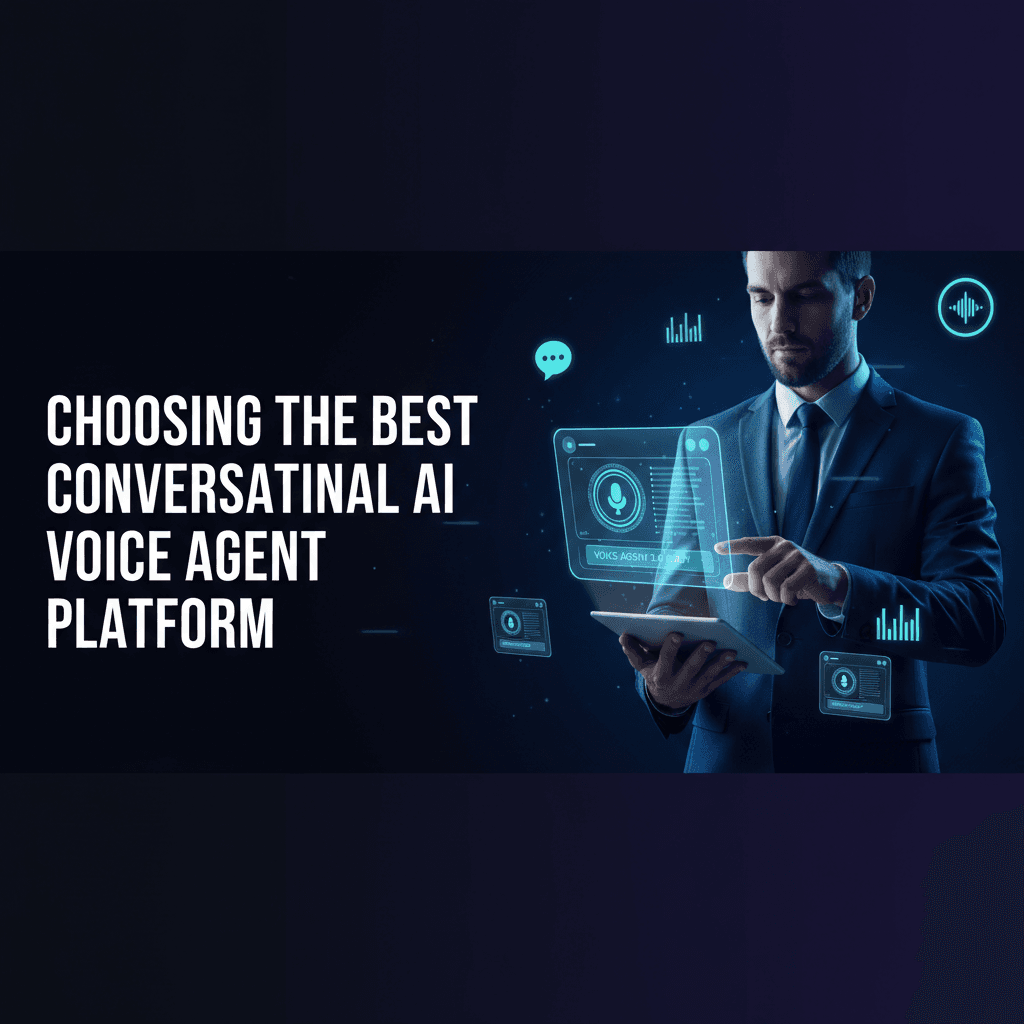
In today's fast-paced business world, customer expectations are higher than ever. Companies are constantly seeking innovative ways to enhance efficiency, improve customer satisfaction, and streamline operations. This is where conversational AI voice agents come into play. More than just automated response systems, these sophisticated tools leverage artificial intelligence to engage in natural, human-like conversations, transforming how businesses interact with their customers. From handling routine inquiries to complex problem-solving, AI voice agents are becoming indispensable. But with a growing number of AI voice agent platforms available, how do you choose the right one for your needs? This guide will walk you through the essential considerations, focusing on product features, real-time performance, and practical implementation for various business applications.
The Rise of Conversational AI Voice Agents in Business
The evolution of AI has brought us to a point where machines can understand context, intent, and even emotion in human speech. This capability is at the core of conversational AI for telephony, enabling businesses to deploy highly effective voice solutions. These aren't your grandmother's IVR systems; modern AI voice agents offer a seamless and personalized experience, significantly improving customer interactions. The demand for these solutions is skyrocketing, particularly for applications like voice AI agents for customer service, where they can handle a vast volume of calls with consistent quality.
Key Features to Look for in an AI Voice Agent Platform
Real-time Performance and Low-Latency
One of the most critical aspects of a successful AI voice agent is its ability to perform in real-time conversational voice AI. Customers expect immediate and fluid interactions, similar to speaking with a human. This means platforms must offer low-latency voice AI for phone calls. Any noticeable delay can lead to frustration and a poor customer experience. When evaluating platforms, inquire about their average response times and their architecture for processing speech and generating responses instantaneously.
Natural Language Understanding and Generation
The core intelligence of any AI voice agent lies in its natural language voice automation capabilities. A superior platform will excel at understanding complex queries, handling accents, and interpreting intent even when phrases are ambiguous. Equally important is its ability to generate natural-sounding responses that are contextually relevant and empathetic. This is what truly differentiates a basic voice bot from an advanced enterprise AI voice assistant.
Ease of Use and No-Code Development
Not every business has a team of AI developers. This is why platforms offering a no-code voice agent builder are incredibly valuable. These tools empower business users to design, deploy, and manage AI voice agents without extensive programming knowledge. Look for intuitive drag-and-drop interfaces, pre-built templates, and easy integration options. This significantly reduces the time and cost associated with deployment and iteration.
Integration Capabilities
A good AI voice agent doesn't operate in a vacuum. It needs to integrate seamlessly with your existing CRM, ticketing systems, databases, and other business applications. Robust API support and pre-built connectors are essential for a truly unified and efficient system. This allows the AI to access and update customer information in real-time, providing personalized and informed responses.
Use Cases: Where Conversational AI Voice Agents Shine
Customer Service and Support
This is perhaps the most common and impactful application. Voice-first customer support automation allows businesses to handle a high volume of inquiries 24/7, reducing wait times and freeing up human agents for more complex issues. From answering FAQs and checking order statuses to processing returns and scheduling appointments, AI call center automation significantly boosts efficiency and customer satisfaction. It's an excellent solution for inbound call routing with voice AI, directing customers to the right department or agent based on their spoken intent.
Sales and Lead Generation
Outbound sales voice agents can qualify leads, schedule demos, and even conduct initial sales calls, operating at scale that human teams cannot match. They can follow up on abandoned carts, re-engage dormant customers, and provide personalized product recommendations, all through natural conversations. This allows human sales teams to focus on closing higher-value deals.
General Business Operations
Beyond customer service and sales, conversational AI voice agents can act as an AI receptionist for business calls, managing appointment bookings, providing directions, and screening calls. They can also assist with internal operations, such as HR inquiries or IT support, improving overall organizational efficiency through phone call automation with AI voice agents.
Replacing Traditional IVR Systems with AI
For years, Interactive Voice Response (IVR) systems have been the go-to for automating phone interactions. However, traditional IVRs are often rigid, menu-driven, and frustrating for callers. The advent of conversational AI offers a powerful AI IVR replacement. Instead of forcing callers through a series of button presses, an AI-powered system can understand natural language requests, making the experience far more intuitive and efficient. This leads to higher customer satisfaction and faster resolution times, truly transforming the customer journey.
Choosing the Right Conversational AI Voice Agent Platform
When making your decision, consider the following:
- Scalability: Can the platform handle your current call volume and grow with your business?
- Customization: How easily can you tailor the AI's personality, responses, and integration points to your specific brand and needs?
- Analytics and Reporting: Does the platform provide insights into call performance, customer sentiment, and areas for improvement?
- Security and Compliance: Ensure the platform meets industry standards for data privacy and security.
- Support and Training: What kind of support does the vendor offer during implementation and ongoing operations?
By carefully evaluating these factors, you can select an AI voice agent platform that aligns with your strategic goals and delivers a significant return on investment.
Conclusion
Conversational AI voice agents are no longer a futuristic concept; they are a present-day necessity for businesses aiming to stay competitive. From revolutionizing customer service with voice AI agents for customer service to empowering sales teams with outbound sales voice agents, the applications are vast and impactful. By focusing on platforms that offer real-time conversational voice AI, user-friendly no-code voice agent builders, and robust integration capabilities, you can unlock the full potential of this transformative technology. Embrace the power of AI to create more engaging, efficient, and satisfying interactions for your customers and your team.
Frequently Asked Questions About Conversational AI Voice Agents
What is a conversational AI voice agent?
A conversational AI voice agent is an artificial intelligence program designed to interact with humans through natural spoken language. Unlike traditional voice response systems, these agents use advanced natural language processing (NLP) and machine learning to understand context, intent, and nuances in speech, engaging in dynamic, human-like conversations to fulfill requests, answer questions, and perform tasks. They are key to effective phone call automation with AI voice agents.
How do AI voice agents improve customer service?
AI voice agents significantly enhance customer service by providing 24/7 availability, reducing wait times, and handling a high volume of routine inquiries efficiently. They offer consistent, personalized interactions, freeing up human agents to focus on more complex or sensitive issues. This leads to higher customer satisfaction, faster problem resolution, and improved operational efficiency, especially for voice AI agents for customer service and AI call center automation.
Can I build an AI voice agent without coding experience?
Yes, many modern AI voice agent platforms offer no-code voice agent builders. These platforms provide intuitive graphical interfaces, drag-and-drop functionalities, and pre-built templates that allow business users and non-developers to design, configure, and deploy sophisticated AI voice agents without writing a single line of code. This democratizes access to powerful AI technology.
What is the difference between an AI voice agent and a traditional IVR?
A traditional IVR (Interactive Voice Response) system relies on rigid, menu-driven prompts where callers navigate by pressing numbers. An AI voice agent, on the other hand, uses natural language understanding (NLU) to comprehend spoken requests, allowing for free-form conversations. This makes the interaction much more natural, efficient, and less frustrating for the caller, effectively serving as an advanced AI IVR replacement and enhancing conversational AI for telephony.
Are AI voice agents suitable for enterprise-level operations?
Absolutely. Enterprise AI voice assistants are specifically designed to handle the complex demands of large organizations. They offer robust scalability, advanced integration capabilities with existing enterprise systems (CRMs, ERPs), stringent security features, and sophisticated analytics. They can manage high call volumes, support multiple languages, and provide consistent, branded customer experiences across various departments, making them ideal for large-scale AI call center automation and inbound call routing with voice AI.