



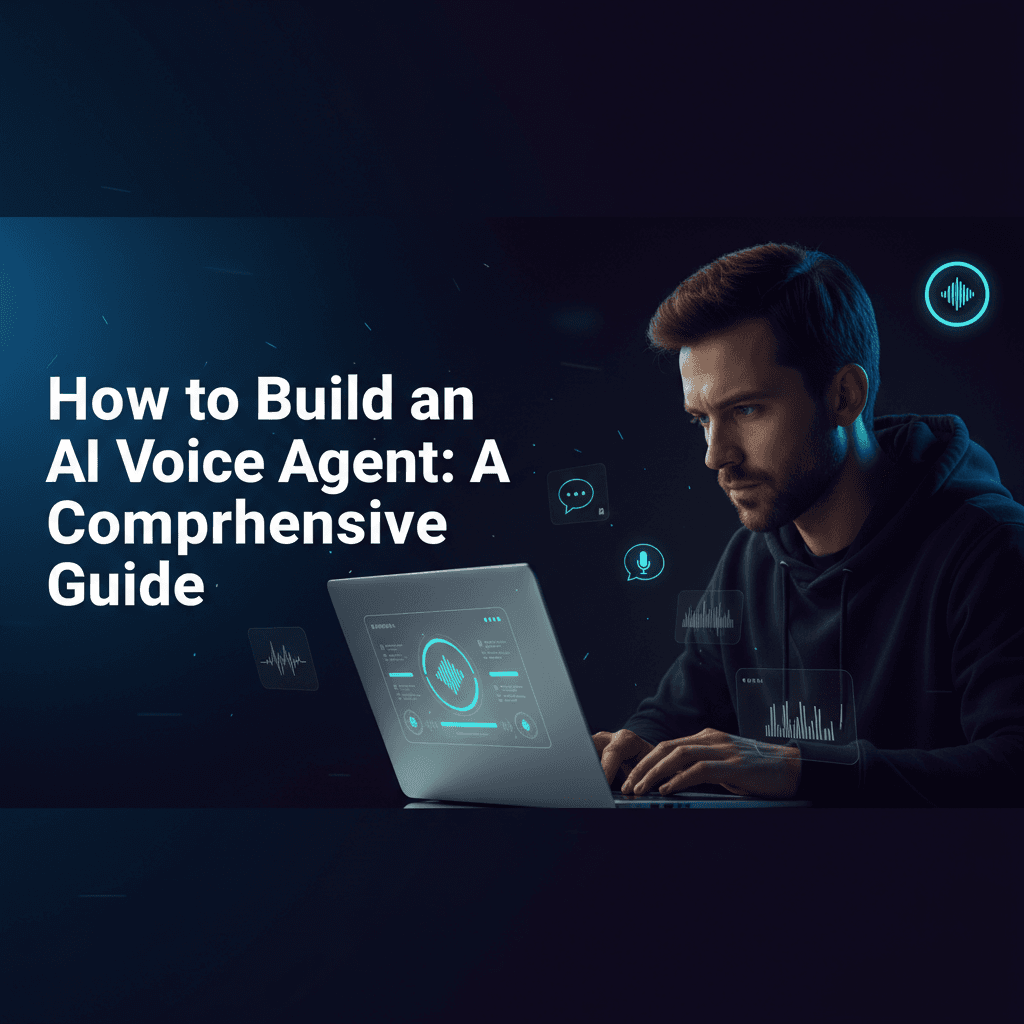
In today's fast-paced digital world, AI voice agents are transforming how businesses interact with their customers. From automating customer service inquiries to streamlining sales processes and appointment scheduling, the potential is immense. But how do you go about building one? This comprehensive guide will walk you through the process, whether you're looking to build an AI voice agent from scratch no code, leverage open-source tools, or dive deep into Python development. We'll explore various approaches, from simple no-code solutions to advanced custom implementations with knowledge bases and function calling.
Understanding AI Voice Agents: What Are They?
An AI voice agent is a sophisticated software program designed to understand human speech, process natural language, and respond verbally in a conversational manner. Unlike traditional IVR systems, these agents can handle complex queries, maintain context, and even perform actions based on user commands. They are powered by a combination of Automatic Speech Recognition (ASR), Natural Language Understanding (NLU), and Text-to-Speech (TTS) technologies. The goal is to provide a seamless and natural interaction, making them invaluable for various business applications.
Choosing Your Path: No-Code vs. Code-Based Development
When you decide to build an AI voice agent, one of the first decisions you'll face is whether to opt for a no-code platform or a more customizable code-based approach. Both have their merits, depending on your technical expertise, budget, and specific requirements.
No-Code Solutions for Rapid Deployment
For those looking to build an AI voice agent from scratch no code, several platforms offer intuitive drag-and-drop interfaces and pre-built templates. These solutions are ideal for beginners and businesses that need to deploy an agent quickly without extensive programming knowledge. Many of these platforms allow you to create custom AI voice agent with knowledge base integration, enabling your agent to access and provide information from your existing data sources.
Code-Based Development: Flexibility and Customization
If you require more control, unique functionalities, or want to build AI voice agent with open source tools, a code-based approach using languages like Python is often preferred. This allows for deep customization and integration with other systems. The AI voice agent stack low code vs python often boils down to the level of control and unique features you need.
Step-by-Step Guide to Build an AI Voice Agent
This AI voice agent development guide for beginners will walk you through the essential steps, regardless of your chosen development path.
Step 1: Define Your Agent's Purpose
Before writing any code or configuring any platform, clearly define what your AI voice agent will do. Are you looking to create AI voice agent for customer service tutorial purposes, handle sales inquiries, or manage appointments? Understanding the core functions will guide your technology choices and design.
Step 2: Choose Your Core Technologies
This is where your no-code vs. code decision comes into play. For code-based solutions, you'll need:
- ASR (Speech-to-Text): Converts spoken words into text.
- NLU (Natural Language Understanding): Interprets the meaning and intent of the text.
- TTS (Text-to-Speech): Converts the agent's response back into natural-sounding speech. Many developers look into how to build AI voice agent using ElevenLabs for high-quality, realistic voice synthesis.
- Orchestration Layer: Manages the flow of conversation and integrates different components.
For a step by step guide to build AI voice agent for business, consider platforms that offer these components integrated.
Step 3: Develop the Conversation Flow (Dialog Management)
Design the conversation tree or state machine that defines how your agent will interact. This includes greetings, common questions, error handling, and the path to resolving user queries. This is crucial for creating an effective AI voice agent tutorial for sales and appointments.
Step 4: Integrate a Knowledge Base (Optional but Recommended)
To make your agent truly intelligent, integrate it with a knowledge base. This allows it to fetch relevant information dynamically. Learning how to create custom AI voice agent with knowledge base is a game-changer for complex applications.
Step 5: Implement Function Calling (Advanced)
For agents that need to perform actions (e.g., book an appointment, check an order status), you'll need to learn how to build AI voice agent with function calling. This involves connecting your agent to external APIs or internal systems.
Step 6: Deployment and Integration
Once developed, you need to deploy your agent. This could mean integrating it into a website, a mobile app, or even how to deploy AI voice agent to phone lines. For phone line integration, tools like Twilio are often used. If you're looking to build AI voice agent with Python and Twilio, you'll manage call routing and audio streams through Twilio's API.
Open-Source Tools and Frameworks
For those who prefer open-source, there are excellent options to build AI voice agent with open source tools. Frameworks like Rasa for NLU/dialog management, combined with open-source ASR engines (e.g., Mozilla DeepSpeech) and TTS libraries, provide a robust foundation. Additionally, exploring how to build AI voice agent with LiveKit open source can be beneficial for real-time audio and video communication needs, offering powerful infrastructure for voice applications.
Best Tools to Build AI Voice Agent in 2026
While technology evolves rapidly, some of the best tools to build AI voice agent in 2026 are likely to include:
- Google Dialogflow / Amazon Lex: For robust NLU and dialog management (often low-code).
- ElevenLabs / Google WaveNet / Azure Neural Voice: For advanced, natural-sounding TTS.
- OpenAI's Whisper / Google Speech-to-Text: For highly accurate ASR.
- Rasa / DeepPavlov: For open-source NLU and dialog management.
- Twilio: For integrating voice agents with phone lines.
- LiveKit: For real-time communication infrastructure.
Considering an AI voice agent full course for production will often cover these and other industry-leading tools.
Conclusion
Building an AI voice agent is a rewarding endeavor that can significantly enhance business operations and customer interactions. Whether you choose a no-code platform for speed or a Python-based approach for ultimate customization, the principles remain the same: define your purpose, select the right technologies, design intelligent conversations, and integrate with necessary data sources and external systems. With this step by step guide to build AI voice agent for business, you're well-equipped to embark on your development journey.
FAQs about Building AI Voice Agents
Q: Can I build an AI voice agent without any coding knowledge?
A: Yes, absolutely! Many platforms allow you to build an AI voice agent from scratch no code. These typically feature intuitive visual interfaces, pre-built components, and templates that simplify the development process significantly.
Q: What's the difference between a low-code and a Python-based AI voice agent stack?
A: The AI voice agent stack low code vs python primarily differs in flexibility and development effort. Low-code stacks offer faster development with less coding but might have limitations in customization. Python-based stacks provide maximum control and customization but require more technical expertise and development time.
Q: How can I integrate my AI voice agent with phone lines?
A: To deploy AI voice agent to phone lines, you typically use a communication platform as a service (CPaaS) like Twilio. You can build AI voice agent with Python and Twilio by using Twilio's APIs to manage incoming and outgoing calls, convert speech to text, and play back your agent's responses.
Q: What is function calling in AI voice agents?
A: How to build AI voice agent with function calling refers to enabling your agent to execute specific actions or interact with external systems based on user requests. For example, if a user asks to book an appointment, the agent can call an API to check availability and schedule it.
Q: Why should I consider using ElevenLabs for my AI voice agent?
A: Many developers choose to build AI voice agent using ElevenLabs for its highly realistic and natural-sounding text-to-speech capabilities. It offers advanced voice cloning and customization options, which can significantly enhance the user experience and brand identity of your voice agent.