



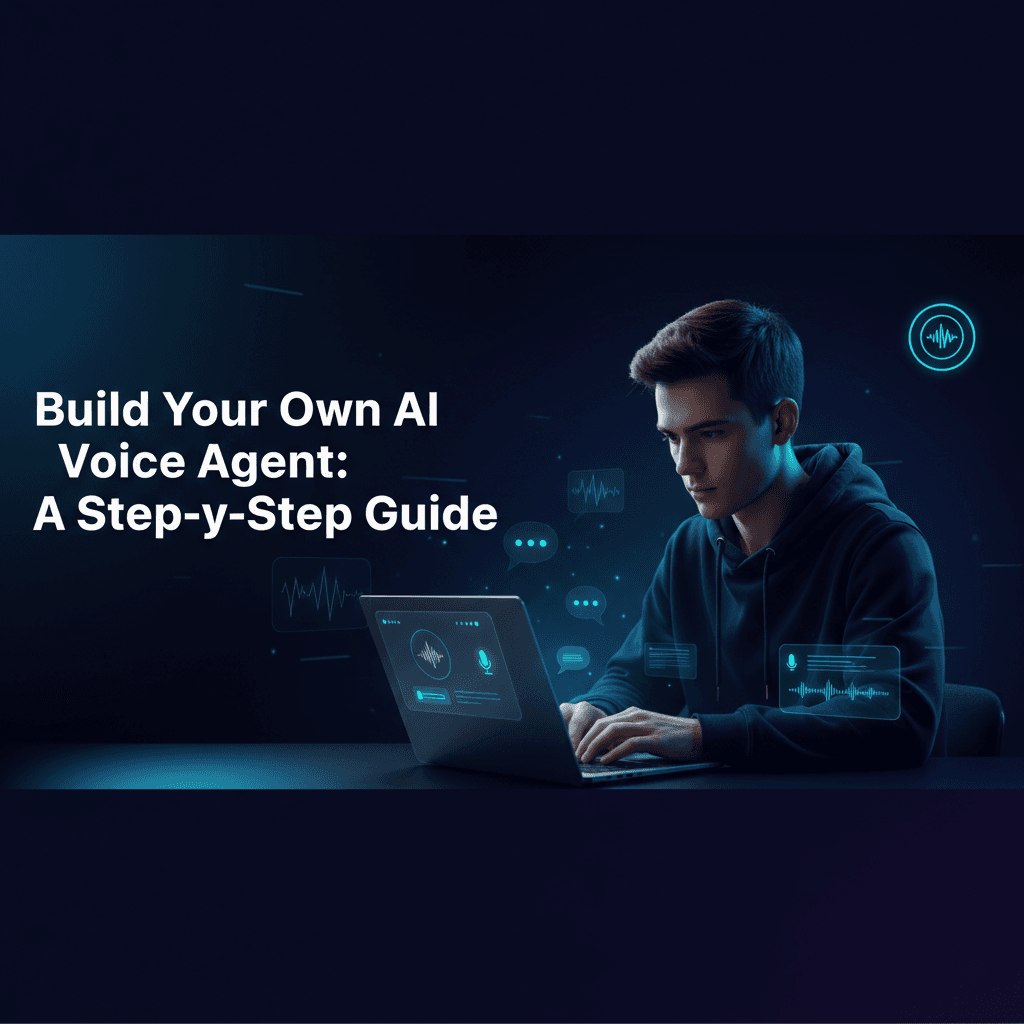
In today's fast-paced digital world, AI voice agents are transforming how businesses interact with their customers. From automating customer service to streamlining sales processes, these intelligent assistants offer unparalleled efficiency. If you've ever wondered how to build an AI voice agent, you're in the right place. This comprehensive guide will walk you through the process, covering everything from basic setup to advanced features like custom knowledge bases and real-time speech-to-speech interaction. Whether you're looking for an AI voice agent tutorial for beginners step by step or want to explore options to create an AI voice agent without coding, we've got you covered.
Understanding AI Voice Agents and Their Benefits
An AI voice agent is a software program designed to understand human speech, process natural language, and respond verbally, mimicking human conversation. These agents can perform a variety of tasks, significantly enhancing operational efficiency. Imagine an AI voice agent for lead qualification and sales, tirelessly engaging with potential customers, or an AI voice receptionist for phone calls, handling inquiries 24/7. The benefits include reduced operational costs, improved customer satisfaction, and the ability to scale your customer interactions without proportional increases in human resources.
Getting Started: Core Components of an AI Voice Agent
Every AI voice agent, regardless of its complexity, relies on several key components:
- Speech-to-Text (STT): Converts spoken words into written text.
- Natural Language Understanding (NLU): Interprets the meaning and intent behind the text.
- Dialogue Management: Manages the flow of conversation, deciding the next best action or response.
- Natural Language Generation (NLG): Formulates a textual response.
- Text-to-Speech (TTS): Converts the textual response back into spoken words.
For those looking to build an AI voice agent with real time speech to speech capabilities, the efficiency and integration of these components are paramount.
Option 1: Build an AI Voice Agent Without Coding (No-Code/Low-Code Platforms)
For individuals and businesses who want to create an AI voice agent without coding, several platforms offer intuitive drag-and-drop interfaces and pre-built modules. These platforms abstract away the complexities of programming, allowing you to focus on the agent's logic and dialogue flow.
Popular No-Code Platforms:
- Google Dialogflow: A robust platform for building conversational interfaces. While it has a coding option, its visual flow builder is excellent for no-coders.
- Voiceflow: Specifically designed for voice and chat experiences, offering a highly visual development environment.
- ElevenLabs Agents: Emerging as a powerful tool, you can build AI voice agent using ElevenLabs agents for highly realistic and customizable voice interactions, often with simplified setup processes.
These platforms often provide integrations for phone systems, websites, and messaging apps, making deployment straightforward.
Option 2: Build AI Voice Agent with Open Source Tools (Coding Required)
For developers and those seeking maximum flexibility and control, build AI voice agent with open source tools is an excellent path. This approach typically involves Python and various libraries.
Key Open-Source Components:
- Speech-to-Text: Libraries like Google Cloud Speech-to-Text API (though not fully open-source, it's widely used), Mozilla DeepSpeech, or Whisper (OpenAI's offering) can convert audio to text.
- Natural Language Processing (NLP): NLTK, SpaCy, or Rasa are popular choices for understanding user intent and entities. Rasa is particularly powerful for creating conversational AI with its NLU and dialogue management capabilities.
- Text-to-Speech: Google Text-to-Speech, Amazon Polly, or open-source options like MaryTTS can convert text responses into natural-sounding speech.
- Frameworks: Python is the language of choice. You can find many an open source AI voice agent Python tutorial online to guide you.
Advanced Features and Customization
Once you have the basics down, you can enhance your AI voice agent with advanced functionalities:
Custom Knowledge Base Integration
To make your agent truly intelligent and domain-specific, integrate an AI voice agent with custom knowledge base PDF documents, FAQs, or databases. This allows the agent to answer specific questions about your products, services, or policies accurately. Techniques like Retrieval Augmented Generation (RAG) are crucial here, enabling the AI to pull information from your documents and synthesize a relevant response.
Function Calling and Tools
An AI voice agent with function calling and tools can perform actions beyond just answering questions. This means your agent can:
- Book appointments: Learn how to make AI voice agent that books appointments by integrating with calendar APIs.
- Process orders: Connect to e-commerce platforms.
- Retrieve data: Query databases for customer information or product details.
OpenAI's models, for instance, offer robust function calling capabilities, allowing you to define tools your agent can use.
Real-Time Speech-to-Speech and OpenAI Realtime API
For the most natural and engaging interactions, focus on building an AI voice agent with real time speech to speech. This minimizes latency between speaking and hearing a response. The OpenAI Realtime API (or similar low-latency alternatives) is crucial for achieving this, allowing for near-instantaneous transcription and generation of speech.
Deployment and Integration
Once your AI voice agent is built, the next step is to deploy it where your users are.
Integrating with LiveKit
For real-time voice applications, learning how to deploy AI voice agent with LiveKit is highly beneficial. LiveKit is an open-source WebRTC platform that provides robust infrastructure for real-time audio and video, making it an excellent choice for connecting your AI voice agent to phone calls or web-based voice interfaces.
Website Widget Integration
To provide instant support on your website, you'll want to integrate AI voice agent into website widget. Many no-code platforms offer embeddable widgets, or you can build a custom one using JavaScript and your agent's API.
Future Trends: Best Platforms to Build AI Voice Agents 2026
Looking ahead, the landscape for building AI voice agents will continue to evolve rapidly. Expect more sophisticated no-code platforms, even more realistic voice synthesis, and seamless integration with a wider array of business tools. The best platforms to build AI voice agents 2026 will likely be those that offer unparalleled customization, robust security, and scalable infrastructure, catering to both developers and non-technical users.
Conclusion
Building an AI voice agent is an exciting endeavor that can significantly enhance your business operations and customer engagement. Whether you choose a no-code platform for speed and simplicity or dive into open-source coding for ultimate control, the tools and resources are readily available. By focusing on clear objectives, integrating relevant knowledge, and deploying strategically, you can create a powerful AI voice agent that truly makes a difference.
Frequently Asked Questions (FAQ)
Q: Can I really create an AI voice agent without any coding experience?
A: Absolutely! Platforms like Google Dialogflow, Voiceflow, and ElevenLabs Agents are designed specifically for users to create an AI voice agent without coding. They offer intuitive visual interfaces where you can design conversation flows, integrate services, and deploy your agent with minimal technical expertise.
Q: What are the best open-source tools to build an AI voice agent?
A: For those looking to build AI voice agent with open source tools, popular choices include Rasa for NLU and dialogue management, Mozilla DeepSpeech or OpenAI's Whisper for Speech-to-Text, and various Python libraries for Text-to-Speech. LiveKit is also an excellent open-source option for real-time voice communication infrastructure.
Q: How can an AI voice agent help with lead qualification?
A: An AI voice agent for lead qualification and sales can engage potential customers, ask pre-defined qualification questions, gather essential information, and even schedule follow-up calls with human sales representatives. This automates the initial screening process, allowing your sales team to focus on high-quality leads.
Q: What does it mean to integrate an AI voice agent with a custom knowledge base?
A: Integrating an AI voice agent with custom knowledge base PDF documents or other proprietary data sources means the agent can access and use this specific information to answer user queries. Instead of relying solely on general knowledge, it can provide accurate, context-rich responses tailored to your business's unique offerings or policies.
Q: How do I deploy an AI voice agent for phone calls?
A: To create an AI voice receptionist for phone calls, you typically need to integrate your AI agent with a telephony platform or a WebRTC service. Platforms like Twilio, Vonage, or open-source solutions like LiveKit can act as the bridge, connecting your AI's voice capabilities to standard phone lines or VoIP systems.