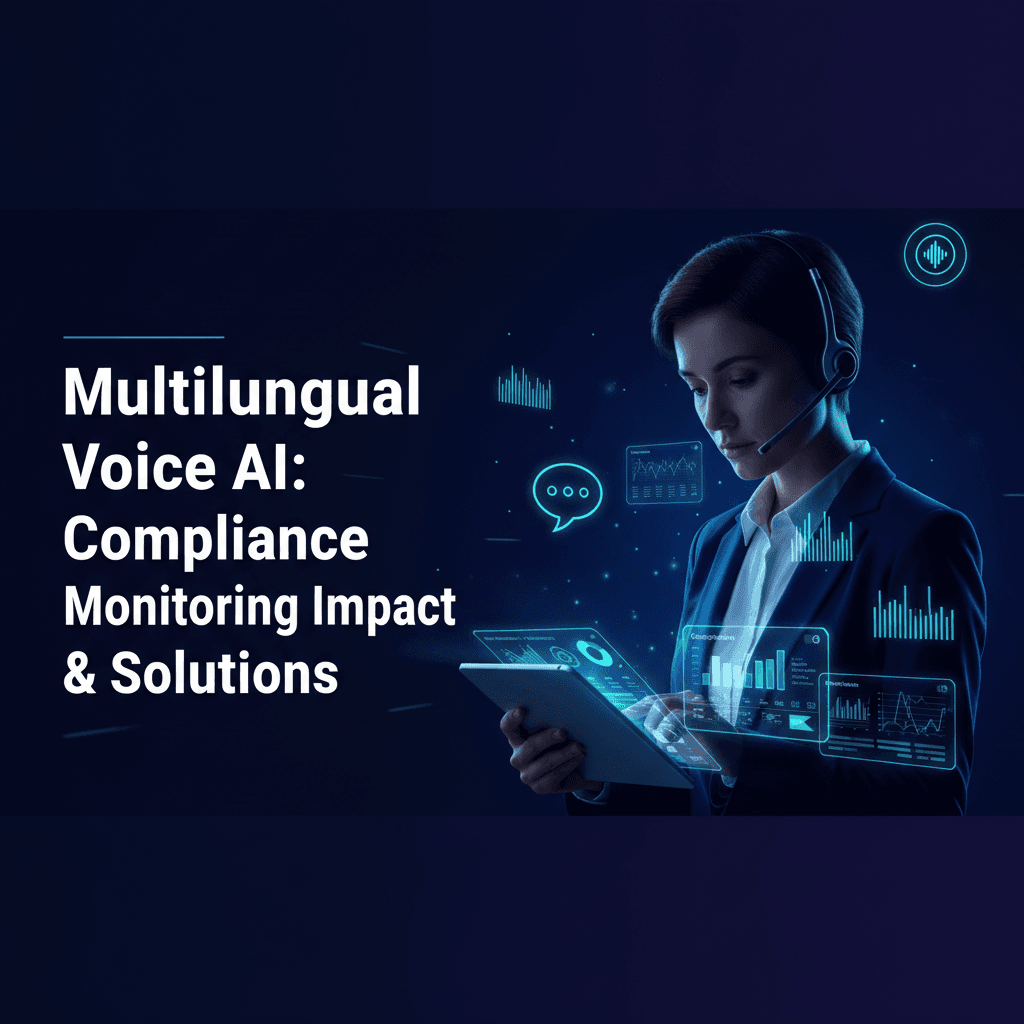
In today's interconnected global economy, businesses operate across diverse linguistic landscapes, making regulatory compliance an increasingly complex endeavor. The advent of artificial intelligence, particularly multilingual voice AI agents, offers a transformative solution for navigating these complexities. This article delves into the significant multilingual voice AI agents compliance monitoring impact, exploring how these advanced systems are revolutionizing adherence to regulations, reducing risks, and enhancing operational efficiency across various sectors. We'll examine the challenges, benefits, and best practices for leveraging multilingual voice AI to ensure robust compliance monitoring.
The Transformative Impact of Multilingual Voice AI on Regulatory Compliance Monitoring
The impact of multilingual voice AI on regulatory compliance monitoring is multifaceted and overwhelmingly positive. Traditionally, monitoring compliance in multiple languages involved extensive human resources, often leading to inconsistencies, delays, and higher costs. Multilingual voice AI agents, however, can process and analyze vast amounts of spoken data in real-time, across numerous languages, ensuring a consistent and thorough approach to compliance.
One of the most significant advantages is the ability of multilingual voice agents to improve real-time compliance monitoring. This capability is crucial for industries where immediate detection of non-compliance is paramount, such as financial services and healthcare. By instantly flagging deviations from scripts, unauthorized disclosures, or suspicious activity, these agents provide an invaluable layer of protection against regulatory breaches.
Regulatory Impact of Multilingual Voice AI in Global Call Centers
Global call centers are at the forefront of experiencing the profound regulatory impact of multilingual voice AI in global call centers. These environments handle millions of customer interactions daily, often across dozens of languages. Ensuring compliance with local and international regulations like GDPR, HIPAA, and PCI-DSS in such a dynamic setting is a monumental task. Multilingual voice AI can monitor every interaction for adherence to consent protocols, data privacy rules, and mandated disclosures, significantly reducing the risk of penalties and reputational damage.
Multilingual Voice AI Compliance Monitoring Challenges and Solutions
While the benefits are clear, organizations must also address multilingual voice AI compliance monitoring challenges and solutions. These can range from the accuracy of speech-to-text transcription in less common dialects to the nuanced interpretation of intent across cultures.
Addressing Bias and Hallucination
A critical challenge is bias and hallucination monitoring in multilingual voice AI compliance. AI models, if not properly trained and validated, can exhibit biases present in their training data or generate plausible but incorrect information (hallucinations). Solutions involve using diverse, representative training datasets, implementing robust validation processes, and incorporating human-in-the-loop oversight to review flagged instances and continuously refine the AI's performance.
Mitigating Language Vulnerabilities
Another area of concern is language vulnerability and compliance monitoring in multilingual voice AI. This refers to the potential for misinterpretation or failure to detect critical compliance issues due to the AI's limitations in understanding specific accents, slang, or cultural idioms. Continuous model training with diverse linguistic inputs and the integration of contextual awareness are vital solutions.
Sector-Specific Compliance with Multilingual Voice AI
The application of multilingual voice AI compliance monitoring in finance and healthcare is particularly impactful due to the stringent regulatory environments in these sectors.
Finance Sector Compliance
For financial institutions, multilingual voice AI compliance monitoring for PCI-DSS and MiFID II is critical. PCI-DSS mandates strict security standards for handling payment card information, while MiFID II governs financial markets in the EU, requiring extensive record-keeping and transparency. Voice AI can ensure that sensitive data is not mishandled during calls and that all required disclosures are made, regardless of the language spoken.
Healthcare Sector Compliance
In healthcare, multilingual voice AI compliance monitoring for GDPR and HIPAA is paramount. HIPAA protects patient health information (PHI) in the US, while GDPR governs data protection and privacy in the EU. Voice AI can monitor patient interactions to ensure PHI is handled securely, consent is properly obtained, and privacy regulations are strictly followed across all languages, including interactions with multilingual voice AI compliance monitoring for vulnerable customers who may require extra care in communication.
The Future of Compliance: Automation and ROI
The future of compliance monitoring is increasingly intertwined with automation. The multilingual voice AI compliance monitoring automation benefits are substantial, including reduced manual effort, faster detection of non-compliance, improved accuracy, and scalability. This automation frees up human compliance officers to focus on more complex cases and strategic initiatives.
Organizations are keen on measuring compliance monitoring ROI with multilingual voice AI agents. The return on investment comes from several areas: reduced fines and penalties from regulatory breaches, lower operational costs associated with manual monitoring, improved customer trust, and enhanced brand reputation. As regulations like the EU AI Act compliance monitoring impact of multilingual voice agents become more prominent, especially looking towards 2026, the value proposition of these technologies will only grow.
Multilingual Voice AI Compliance Monitoring Best Practices 2026
To maximize the effectiveness of these systems, consider the following multilingual voice AI compliance monitoring best practices 2026:
- Continuous Training and Updates: AI models must be continuously trained with new data to adapt to evolving language nuances and regulatory changes.
- Human Oversight: Implement a robust human-in-the-loop process for reviewing flagged instances and ensuring accuracy, especially for complex or ambiguous cases.
- Data Security and Privacy: Ensure that the AI system itself complies with all relevant data protection regulations, especially when handling sensitive customer information.
- Transparency and Explainability: Strive for AI systems that can explain their compliance decisions, fostering trust and facilitating audits.
- Scalability: Choose solutions that can scale with your business's growth and expanding linguistic needs.
- Integration: Seamlessly integrate voice AI compliance tools with existing CRM, compliance, and reporting systems.
The integration of multilingual voice AI agents into compliance monitoring frameworks is no longer a luxury but a necessity for global enterprises. By addressing challenges proactively and adopting best practices, businesses can harness the full potential of these technologies to achieve unparalleled levels of regulatory adherence, operational efficiency, and risk mitigation.
Frequently Asked Questions (FAQ)
How do multilingual voice AI agents improve real-time compliance monitoring?
Multilingual voice AI agents improve real-time compliance monitoring by continuously analyzing spoken interactions across multiple languages. They can instantly detect keywords, phrases, emotional cues, and conversational patterns that indicate potential non-compliance, flagging these issues for immediate review and intervention, far faster than human-only processes.
What are the main challenges in multilingual voice AI compliance monitoring?
Key challenges include ensuring accurate speech recognition across diverse accents and dialects, interpreting nuanced cultural contexts, mitigating AI bias and hallucinations, and addressing language vulnerability where specific linguistic expressions might be misinterpreted or missed. Robust training data and human oversight are crucial for overcoming these.
How does multilingual voice AI help with GDPR and HIPAA compliance?
For GDPR and HIPAA, multilingual voice AI monitors interactions to ensure sensitive data (like Personally Identifiable Information or Protected Health Information) is handled according to regulations. It can verify consent, detect unauthorized disclosures, ensure proper data anonymization during recording, and confirm that agents adhere to privacy protocols, all in real-time and across any supported language.
What is the EU AI Act's impact on multilingual voice agents for compliance monitoring?
The EU AI Act, expected to be fully implemented by 2026, will significantly impact multilingual voice agents used for compliance monitoring, especially those categorized as 'high-risk.' It will mandate stricter requirements for data governance, human oversight, transparency, robustness, and accuracy, pushing developers and deployers to ensure their AI systems are fair, reliable, and accountable across all linguistic applications.
Can multilingual voice AI help with compliance monitoring for vulnerable customers?
Yes, multilingual voice AI is highly beneficial for compliance monitoring with vulnerable customers. It can detect signs of distress, confusion, or potential exploitation in any language, ensuring agents follow specific protocols designed to protect these individuals. This includes verifying clear communication, identifying high-pressure sales tactics, or ensuring appropriate support is offered, thereby enhancing ethical compliance and customer protection.