



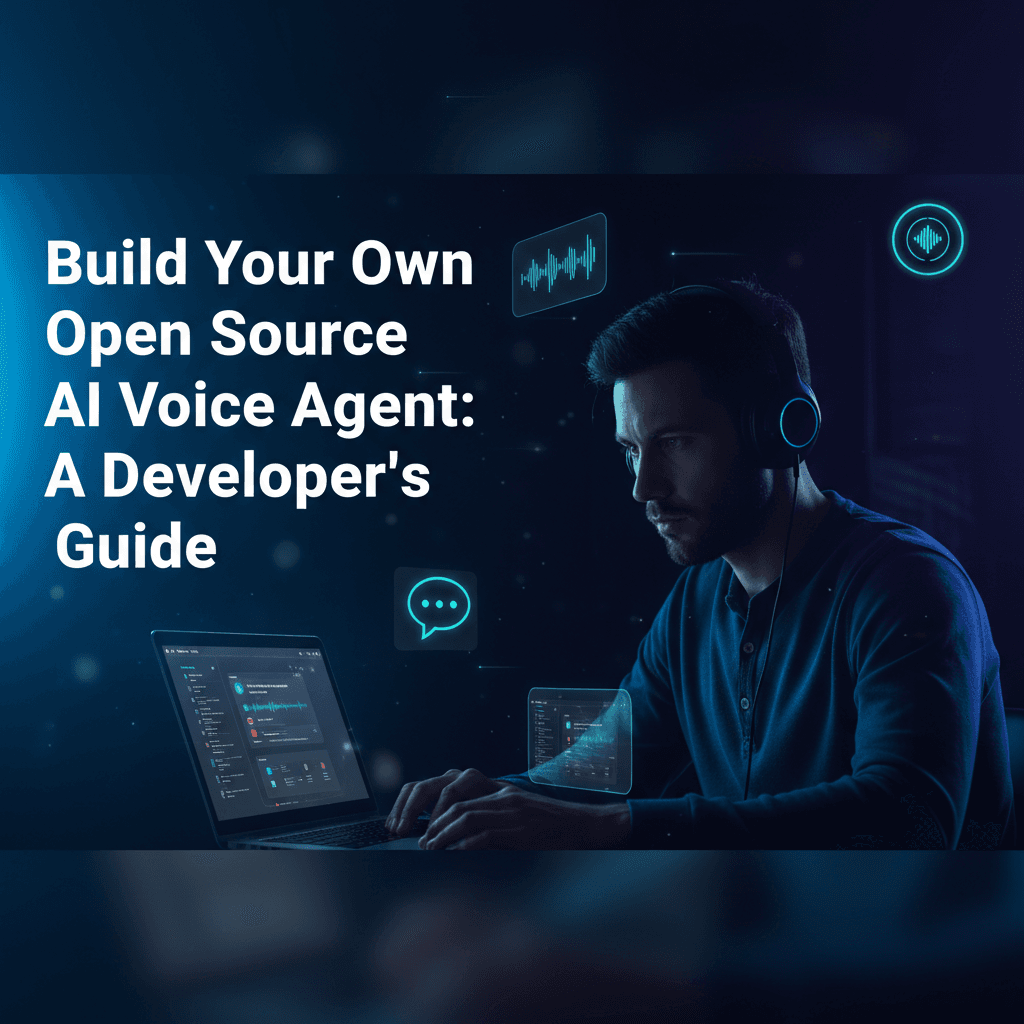
In an era dominated by conversational AI, developers are increasingly seeking flexible, cost-effective, and transparent solutions. While proprietary platforms offer convenience, the desire for greater control, customization, and data privacy has fueled a surge in interest for the open source AI voice agent ecosystem. This guide is tailored for technical builders looking to dive deep into creating their own self-hosted AI voice agent, exploring the best frameworks, tools, and models available today and what to expect by 2026.
Why Choose an Open Source AI Voice Agent?
The appeal of an open source AI voice agent lies in several key advantages. Firstly, it offers unparalleled control over your application's architecture and data. Unlike black-box proprietary solutions, you can inspect, modify, and optimize every component. Secondly, it often translates to significant cost savings, especially for high-volume applications, as you avoid per-minute or per-API-call charges. Finally, the open-source community fosters innovation, providing a rich array of tools and active support that can accelerate development. For those looking for open source AI voice agent alternatives to Vapi or Retell, the options are more robust than ever.
Core Components of a Real-Time Open Source Voice AI Agent
Building a real time open source voice AI agent requires orchestrating several critical components:
- Speech-to-Text (STT): Transcribing spoken language into text.
- Large Language Model (LLM): Processing text, understanding intent, and generating responses.
- Text-to-Speech (TTS): Converting the LLM's text response back into natural-sounding speech.
- Voice Activity Detection (VAD): Identifying when a user is speaking and when they have paused.
- Audio Streaming & Management: Handling real-time audio input and output efficiently.
The synergy of these components is what enables a truly interactive and low-latency conversational experience, crucial for applications like open source voice AI for phone agents.
Leading Open Source Voice AI Frameworks and Tools
Vocode Open Source Voice Agent Framework
When discussing open source voice ai agent tools, Vocode stands out as a prominent player. The Vocode open source voice agent framework provides a robust foundation for building real-time voice agents. It abstracts away much of the complexity of managing audio streams, STT, LLM integration, and TTS, allowing developers to focus on the conversational logic. Its modular design makes it highly adaptable for various use cases, from customer service bots to interactive voice assistants.
LiveKit Agents Open Source Voice AI
LiveKit Agents offers another compelling solution for open source voice AI. Built on the powerful LiveKit real-time communication platform, LiveKit Agents open source voice AI leverages WebRTC for low-latency audio and video streaming. This makes it an excellent choice for applications requiring robust, scalable, and real-time interactions, particularly in scenarios involving multiple participants or complex media routing. Its focus on real-time infrastructure provides a strong backbone for sophisticated voice agents.
Dograh Open Source Voice Agent Platform
While less widely known than Vocode or LiveKit, projects like Dograh represent the burgeoning landscape of community-driven innovation. The Dograh open source voice agent platform often focuses on specific niches or simplified deployments, providing excellent starting points for developers who want to understand the core mechanics without being overwhelmed by enterprise-grade features. Keeping an eye on such emerging platforms is key to discovering the best open source voice AI frameworks 2026.
Key Open Source TTS Models for Voice Agents
A natural-sounding voice is paramount for a good user experience. Here are some notable open source TTS model for voice agents:
Chatterbox Open Source TTS Model
The Chatterbox open source TTS model (often referring to various community-driven projects under similar names) aims to provide highly expressive and customizable speech synthesis. These models are continuously evolving, offering different voice styles, languages, and emotional nuances, making them suitable for diverse applications.
Kokoro Open Source TTS Model
Similarly, the Kokoro open source TTS model (or projects with similar naming conventions in the open-source community) focuses on delivering high-fidelity speech synthesis with a strong emphasis on naturalness and low latency. Exploring these models allows developers to fine-tune the voice output to match their agent's persona perfectly.
Building Your Own Self-Hosted AI Voice Agent Stack (2026 Outlook)
For developers aiming to build your own open source voice AI agent, a typical open source AI voice agent stack 2026 might look something like this:
- Frontend/Client: WebRTC-enabled browser or mobile app for audio capture.
- Backend Framework: Python (FastAPI/Flask) or Node.js (Express) for orchestrating services.
- Voice Agent Framework: Vocode or LiveKit Agents for real-time audio handling and integration.
- STT: OpenAI's Whisper (self-hosted or API), Mozilla DeepSpeech, or NVIDIA NeMo.
- LLM: Llama 3 (self-hosted), Mistral, or other open-source LLMs for conversational intelligence.
- TTS: Chatterbox, Kokoro, or a fine-tuned version of Bark/VITS for voice generation.
- VAD: WebRTC VAD or Silero VAD for efficient voice activity detection.
- Deployment: Docker/Kubernetes for scalable, self hosted AI voice agent deployment.
Projects like Ultravox AI open source voice agent are also emerging, aiming to provide more integrated and streamlined solutions, further simplifying the deployment process for developers.
Conclusion: The Future is Open Source for Voice AI
The landscape of open source AI voice agent development is dynamic and rapidly evolving. With powerful frameworks like Vocode and LiveKit, advanced TTS models like Chatterbox and Kokoro, and a growing array of specialized tools, developers have never had more resources to create sophisticated, customizable, and cost-effective voice agents. By embracing open source, you gain the freedom to innovate, control your infrastructure, and contribute to a thriving community that is pushing the boundaries of conversational AI. The future of voice AI is undoubtedly open, empowering builders to craft the next generation of intelligent agents.
Frequently Asked Questions (FAQ)
What are the best open source voice AI frameworks for 2026?
Based on current trends and community activity, Vocode and LiveKit Agents are strong contenders for the best open source voice AI frameworks 2026. Their focus on real-time capabilities and modular design makes them highly adaptable for future advancements. Emerging platforms like Dograh and Ultravox AI will also likely gain traction.
Can I build a self-hosted AI voice agent for free?
Yes, you absolutely can! By leveraging open-source STT models (like Whisper), open-source LLMs (like Llama 3), and open-source TTS models (like Chatterbox or Kokoro), along with frameworks like Vocode or LiveKit, you can create a fully self hosted AI voice agent with minimal to no licensing costs, though you will incur infrastructure costs for hosting.
What are good open source AI voice agent alternatives to Vapi?
For developers seeking open source AI voice agent alternatives to Vapi, Vocode and LiveKit Agents are excellent choices. They provide similar real-time conversational capabilities but offer the flexibility and control inherent in open-source projects, allowing for deep customization and self-hosting.
How important is real-time processing for open source voice AI agents?
Real-time processing is crucial for creating natural and engaging conversational experiences. Low latency in STT, LLM inference, and TTS is what makes an agent feel responsive and human-like. Frameworks designed for real time open source voice AI agents, such as Vocode and LiveKit, prioritize this aspect to minimize delays between speaking and receiving a response.