



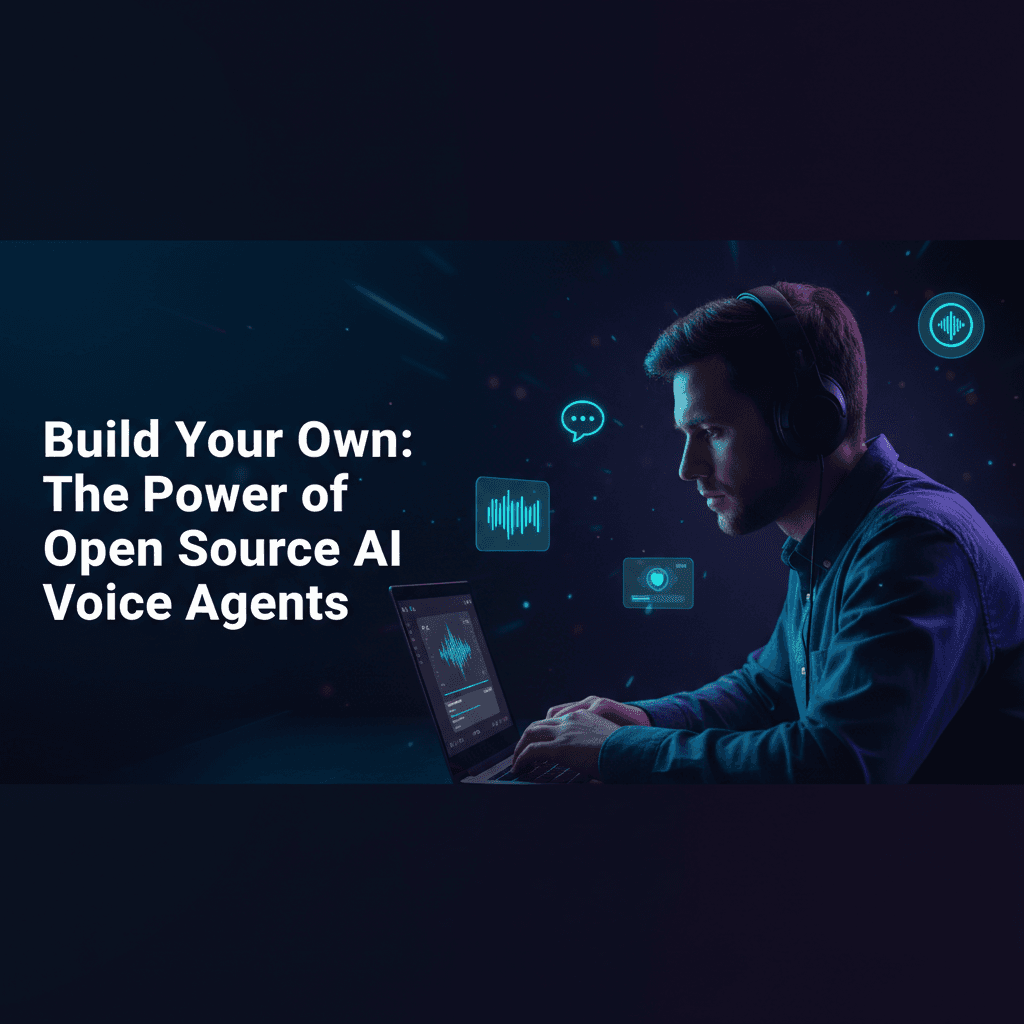
The landscape of artificial intelligence is rapidly evolving, and nowhere is this more apparent than in voice technology. From virtual assistants to automated customer service, AI voice agents are becoming ubiquitous. While commercial solutions offer convenience, a growing community of developers is turning to open source AI voice agent tools for greater control, customization, and cost-effectiveness. This guide delves into the exciting world of open-source voice AI, exploring frameworks, models, and platforms that empower you to build your own intelligent conversational agents.
Why Choose an Open Source AI Voice Agent?
The appeal of open source extends beyond just cost. For developers, the ability to inspect, modify, and extend the underlying code is invaluable. When it comes to voice AI, this translates into:
- Customization: Tailor your agent's voice, personality, and functionality precisely to your needs.
- Control: Maintain full ownership of your data and infrastructure, crucial for privacy and security. This is especially relevant for those seeking a self hosted AI voice agent.
- Innovation: Contribute to and benefit from a vibrant community, driving faster development and access to cutting-edge research.
- Flexibility: Avoid vendor lock-in and integrate with a wider range of existing systems.
These benefits are driving the demand for robust open source AI voice agent tools 2026 and beyond.
Key Components of an Open Source Voice AI Stack
Building a complete voice AI agent requires several interconnected components. An open source voice AI stack developer needs to understand these layers:
Speech-to-Text (STT) Models
This is the first step, converting spoken words into text. While commercial APIs are prevalent, open-source options are catching up in accuracy and performance. A notable mention is the Parakeet TDT open source STT model, which offers robust transcription capabilities for various applications.
Text-to-Speech (TTS) Models
Converting text back into natural-sounding speech is crucial for a compelling user experience. The chatterbox open source TTS model is gaining traction for its quality. For advanced voice cloning, XTTS-v2 open source voice cloning offers impressive capabilities, allowing developers to create highly personalized voices. For low-latency applications, Kokoro open source TTS low latency solutions are essential for real-time interactions.
Natural Language Processing (NLP) & Understanding (NLU)
This is where the agent understands the user's intent and extracts relevant information. Open-source libraries like Rasa, spaCy, and Hugging Face Transformers provide powerful tools for building custom NLP pipelines.
Orchestration and Frameworks: The Best Open Source Voice AI Frameworks
Bringing all these components together requires robust frameworks. Several projects are emerging as the best open source voice AI frameworks:
- Vocode Open Source Voice Agent Framework: Vocode is a powerful framework designed for building real time open source voice AI agents. It simplifies the integration of various STT, LLM, and TTS models, making it an excellent choice for developers looking to create interactive voice experiences.
- LiveKit Agents Open Source Voice AI: LiveKit, known for its real-time communication capabilities, is extending into AI agents. LiveKit Agents open source voice AI focuses on enabling real-time, low-latency conversational AI within live audio and video streams, perfect for interactive applications.
- Dograh Open Source Voice Agent Platform: While still in development, the Dograh open source voice agent platform aims to provide a comprehensive, end-to-end solution for deploying and managing custom voice agents, offering a promising alternative to more established platforms.
- Ultravox AI Open Source Voice Agent: Keep an eye on Ultravox AI open source voice agent as it emerges. It's positioned to offer advanced features for building highly intelligent and context-aware conversational agents, pushing the boundaries of what's possible with open source.
Building a Self-Hosted AI Voice Agent for Specific Use Cases
The beauty of open source lies in its adaptability. You can build a self hosted AI voice agent for a myriad of applications:
- Customer Support: Develop an intelligent agent to handle common inquiries, reducing call center load.
- Smart Home Control: Create a personalized voice interface for your home automation system.
- Educational Tools: Build interactive learning companions.
- Accessibility: Provide voice-controlled interfaces for users with disabilities.
- Telephony Applications: An open source AI voice agent for phone can power IVR systems, automated outbound calls, or intelligent call routing, offering significant advantages over traditional systems.
Open Source Voice Agent Alternatives to Vapi and Retell
Many developers seek open source voice agent alternatives Vapi and similar commercial platforms. While Vapi and Retell offer convenient APIs, their closed-source nature and pricing models can be restrictive. By leveraging the frameworks and models discussed above, you can assemble a powerful, custom, and often more cost-effective solution. This approach gives you full control over the entire stack, from audio processing to the underlying language models, ensuring your agent behaves exactly as you intend without external dependencies.
The Future is Open: Real-Time Open Source Voice AI Agents
The trend towards real time open source voice AI agent development is undeniable. As models become more efficient and hardware capabilities increase, the ability to process speech, understand intent, and generate responses with minimal latency is becoming a standard expectation. The open-source community is at the forefront of this innovation, continually pushing the boundaries of what's possible, making sophisticated voice AI accessible to everyone.
Conclusion
The world of open source AI voice agent technology is rich with possibilities. For developers and organizations seeking flexibility, control, and innovation, the tools and frameworks available today offer a compelling alternative to proprietary solutions. By embracing the open-source ecosystem, you can build powerful, customized, and future-proof voice AI agents that meet your specific needs and contribute to a collaborative future of artificial intelligence.
Frequently Asked Questions (FAQ)
What are the advantages of an open source AI voice agent over a commercial one?
Open-source agents offer greater customization, full control over data and infrastructure (ideal for a self hosted AI voice agent), no vendor lock-in, and often lower operational costs. They also benefit from community-driven innovation.
Can I build a real-time voice AI agent with open-source tools?
Absolutely! Frameworks like Vocode open source voice agent framework and LiveKit Agents open source voice AI are specifically designed for building real time open source voice AI agents with low latency, integrating advanced STT and TTS models like Kokoro open source TTS low latency.
What are some promising open-source voice AI tools for the near future (e.g., 2026)?
Keep an eye on emerging platforms and frameworks like Ultravox AI open source voice agent and the Dograh open source voice agent platform, which are poised to offer advanced capabilities among open source AI voice agent tools 2026. Existing tools like Vocode and LiveKit Agents will also continue to evolve rapidly.
Are there open-source alternatives to services like Vapi?
Yes, by combining various open-source components, you can build powerful open source voice agent alternatives Vapi. Frameworks like Vocode provide the orchestration layer, allowing you to integrate open-source STT (e.g., Parakeet TDT open source STT model), TTS (e.g., chatterbox open source TTS model, XTTS-v2 open source voice cloning), and LLMs to create a custom solution.