



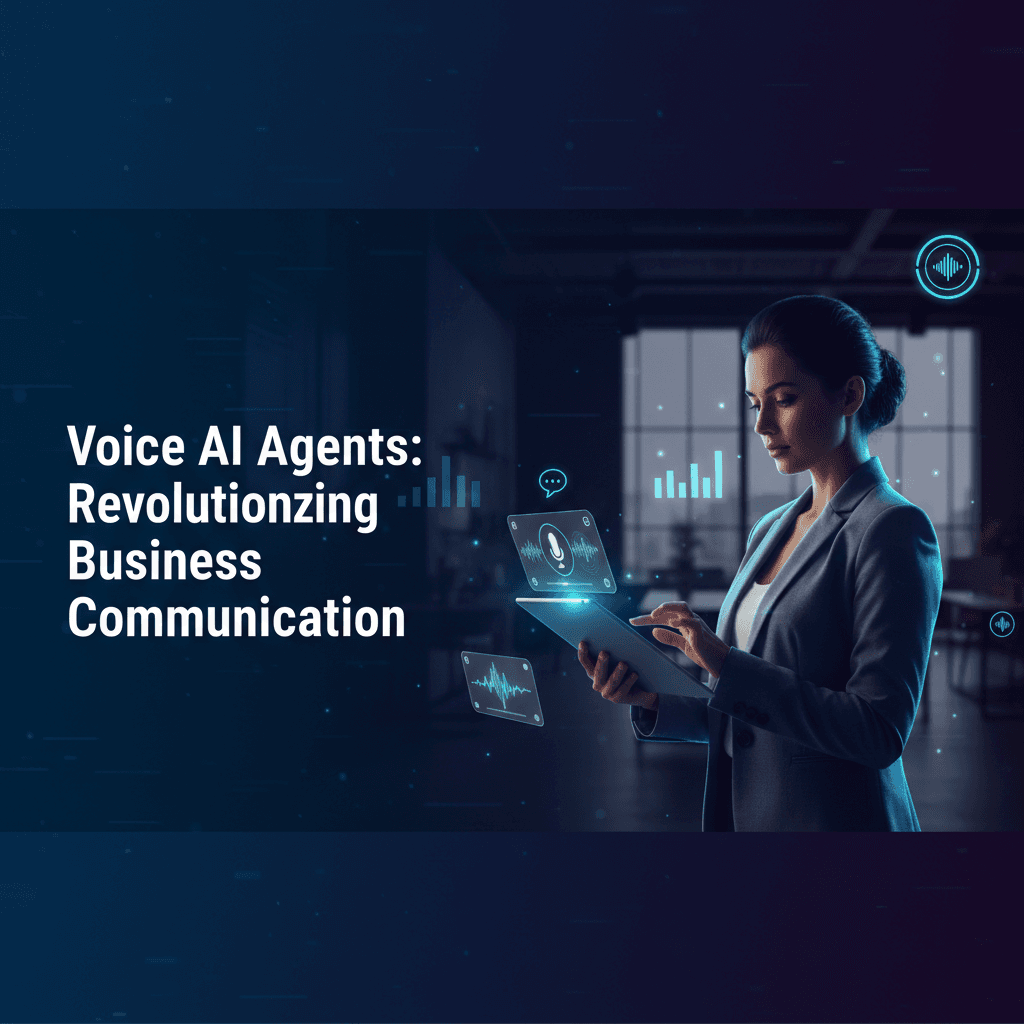
In today's fast-paced business world, efficiency and exceptional customer experience are paramount. This is where voice AI agents step in, revolutionizing how businesses interact with their customers and manage internal operations. Far beyond simple chatbots, these advanced AI voice agent platforms leverage sophisticated artificial intelligence to understand, process, and respond to human speech in a natural and intelligent way. If you're looking to streamline communications, enhance productivity, and provide always-on support, understanding the power of voice agents AI is crucial.
What Exactly Are Voice AI Agents?
At its core, a voice AI agent is an artificial intelligence program designed to interact with users through spoken language. Unlike traditional interactive voice response (IVR) systems, these agents don't just follow predefined scripts. They utilize natural language processing (NLP) and machine learning (ML) to understand context, intent, and even emotional cues in human speech. This allows them to engage in dynamic, human-like conversations, making them incredibly versatile for a multitude of business applications. Think of them as highly intelligent virtual assistants capable of handling complex queries and tasks, operating 24/7 without fatigue.
Key Benefits of Implementing Voice AI Agents for Business
Integrating voice AI agents for business brings a host of advantages that directly impact your bottom line and customer satisfaction:
Enhanced Customer Service and Support
One of the most significant applications is as a voice agent for customer service. These agents can handle a high volume of inquiries simultaneously, reducing wait times and providing instant support. They can answer FAQs, troubleshoot common issues, and even process simple transactions, freeing up human agents to focus on more complex or sensitive cases. This leads to higher customer satisfaction and lower operational costs.
Increased Efficiency and Productivity
Whether it's an inbound call AI voice agent managing incoming queries or an outbound calling AI voice agent reaching out to customers, these systems automate repetitive tasks. This drastically improves efficiency across various departments, from sales to support. Imagine an AI phone agent handling routine calls, allowing your human staff to dedicate their time to more strategic initiatives.
24/7 Availability
Businesses operate globally, and customer needs don't adhere to a 9-to-5 schedule. Conversational AI voice agents provide round-the-clock support, ensuring that your customers can get assistance whenever they need it, regardless of time zones or holidays. This constant availability significantly boosts customer loyalty and reduces missed opportunities.
Cost Reduction
Automating interactions with an AI voice assistant technology reduces the need for large human call center teams, leading to substantial savings on salaries, training, and infrastructure. Over time, the return on investment for AI voice agent platforms can be significant.
Popular Use Cases for Voice AI Agents
The versatility of voice AI agents means they can be deployed across numerous business functions:
Customer Service and Support
As mentioned, this is a prime area. From answering billing questions to providing product information, a voice AI chatbot can handle a wide array of customer interactions efficiently.
Appointment Booking and Scheduling
An appointment booking voice agent can manage calendars, confirm appointments, send reminders, and even reschedule with minimal human intervention. This is invaluable for healthcare providers, salons, and service-based businesses.
Lead Qualification and Generation
A lead qualification voice agent can make initial contact with potential customers, ask qualifying questions, gather essential information, and even schedule follow-up calls for sales teams. This ensures that human sales representatives spend their time on genuinely interested and qualified leads.
Internal Operations
Beyond customer-facing roles, voice AI agents can assist employees with HR queries, IT support, or accessing internal knowledge bases, enhancing overall workplace productivity.
Choosing the Best Voice Agent Platforms
When looking for the best voice agent platforms, several factors come into play:
Customization and Integration
Can you tailor the agent's personality, voice, and conversational flows to match your brand? Does it integrate seamlessly with your existing CRM, ERP, or other business systems? The ability to build your own voice agent or extensively customize an existing one is crucial.
Natural Language Understanding (NLU)
The effectiveness of an AI voice assistant technology hinges on its ability to accurately understand user intent, even with varied accents, speech patterns, or background noise. Look for platforms with robust NLU capabilities.
Scalability
Can the platform handle increasing call volumes as your business grows? Scalability is key to long-term success.
Analytics and Reporting
Robust analytics provide insights into agent performance, common queries, and areas for improvement, allowing you to continuously optimize your voice AI agents.
Consider an AI Voice Agent Agency
For businesses lacking in-house expertise, partnering with an AI voice agent agency can be a smart move. These agencies specialize in designing, deploying, and managing voice AI solutions, ensuring you get the most out of your investment without the steep learning curve.
The Future is Conversational: Embracing Voice AI
The adoption of voice AI agents is not just a trend; it's a fundamental shift in how businesses operate and interact with their stakeholders. From enhancing customer service with a dedicated voice agent for customer service to revolutionizing sales processes with a proactive lead qualification voice agent, the potential is immense. By carefully selecting the right AI voice agent platforms and strategically implementing these technologies, businesses can unlock new levels of efficiency, customer satisfaction, and competitive advantage. The future of communication is conversational, and voice AI is leading the charge.
Frequently Asked Questions About Voice AI Agents
Q: What's the difference between a voice AI agent and an IVR system?
A: An IVR (Interactive Voice Response) system follows a rigid, menu-driven script, requiring users to press numbers or speak specific keywords. A voice AI agent, on the other hand, uses natural language processing (NLP) to understand free-form speech, context, and intent, allowing for more fluid, human-like conversations. It's a significant leap in AI voice assistant technology.
Q: Can voice AI agents replace human customer service representatives entirely?
A: While voice AI agents can handle a vast majority of routine inquiries and tasks, they are best seen as augmenting, not entirely replacing, human agents. They excel at repetitive tasks, freeing up human staff to focus on complex, sensitive, or high-value interactions that require empathy and nuanced problem-solving. It creates a more efficient and satisfying customer experience overall.
Q: How long does it take to implement a voice AI agent?
A: The implementation time for voice AI agents varies depending on the complexity of the desired functionalities, the chosen platform, and the level of integration required. Simple deployments can take weeks, while more complex, highly customized solutions might take a few months. Working with an experienced AI voice agent agency can significantly expedite the process.
Q: Are voice AI agents secure?
A: Reputable AI voice agent platforms prioritize security and data privacy. They employ encryption, access controls, and compliance with industry standards (like GDPR, HIPAA, etc.) to protect sensitive information. When selecting a platform, always inquire about their security protocols and certifications.