



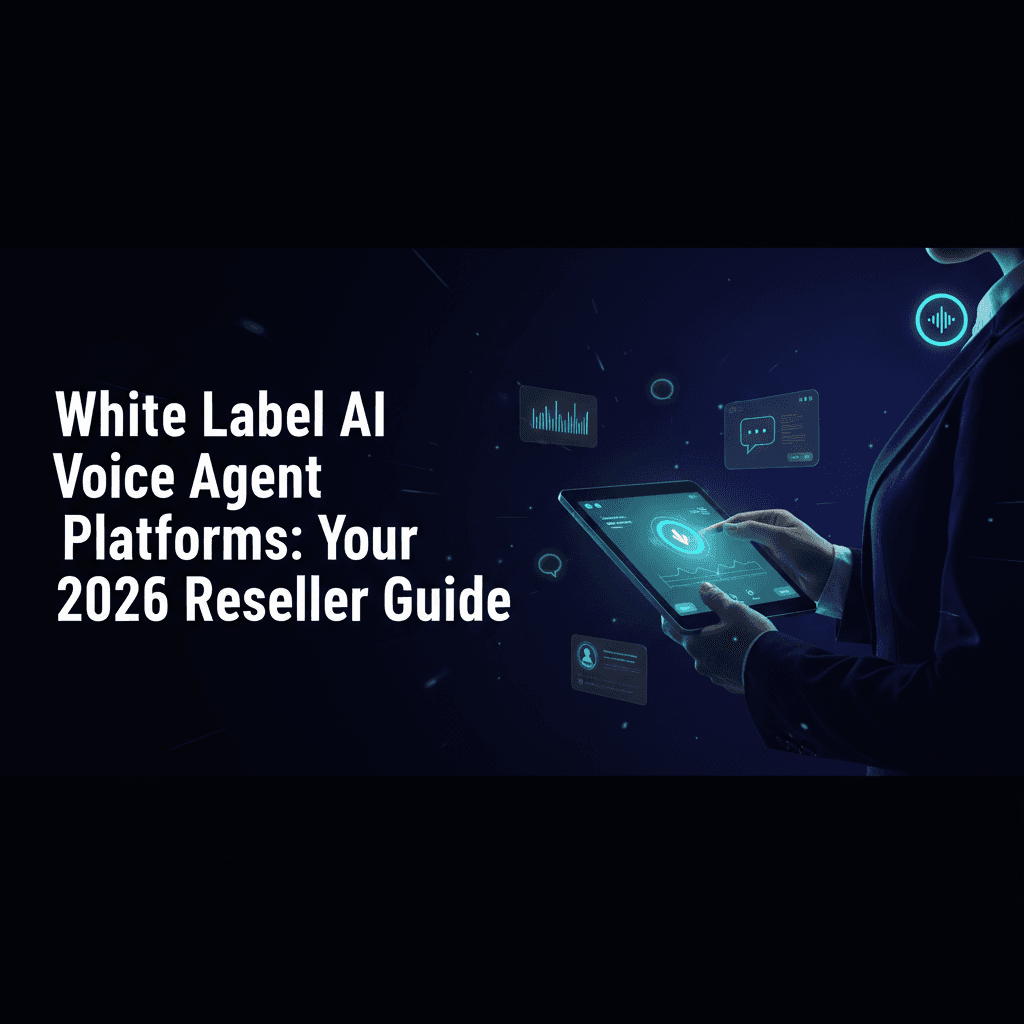
In the rapidly evolving landscape of artificial intelligence, businesses are constantly seeking innovative ways to enhance customer service, streamline operations, and reduce costs. For agencies, MSPs, and ambitious entrepreneurs, the demand for sophisticated AI solutions presents a golden opportunity. Enter the white label AI voice agent – a powerful tool that allows you to offer cutting-edge conversational AI under your own brand. This comprehensive guide will delve into the world of white label AI voice agent platforms, exploring how you can leverage them to build new revenue streams, scale your services, and meet the growing needs of your clients in 2026 and beyond.
What is a White Label AI Voice Agent?
A white label AI voice agent is a pre-built artificial intelligence system designed to handle voice interactions, such as answering calls, providing information, and resolving customer queries, which can be rebranded and resold by another company. Essentially, you take a robust AI solution developed by a third party, put your own logo and branding on it, and offer it as your own product or service to your clients. This approach allows businesses to quickly enter the AI market without the significant investment in R&D, infrastructure, and talent required to build an AI voice agent from scratch. It's a turnkey solution for offering advanced voice automation.
Why Consider a White Label AI Voice Agent Platform?
The benefits of adopting a white label AI voice agent platform are numerous, particularly for those looking to expand their service offerings and capitalize on the AI boom:
Rapid Market Entry and Reduced Costs
Building an AI voice agent from the ground up is a complex, time-consuming, and expensive endeavor. A white label solution bypasses these hurdles, allowing you to launch your branded AI service almost immediately. This is crucial for agencies and MSPs who need to respond quickly to market demands without diverting significant resources.
Brand Building and Client Trust
By offering a white label AI phone agent under your own brand, you strengthen your company's reputation as an innovator and a comprehensive solution provider. Your clients interact with your brand, fostering loyalty and trust, rather than an unknown third party. This is especially beneficial for a white label AI voice agent for agencies looking to deepen client relationships.
Scalability and Recurring Revenue
A white label AI call center platform or a white label conversational AI platform allows you to scale your offerings without proportional increases in operational overhead. You can onboard multiple clients, each with their own branded AI, and generate predictable recurring revenue streams through subscriptions or usage-based billing. This makes a white label AI voice agent reselling model highly attractive.
Focus on Core Competencies
Instead of managing complex AI development, you can focus on what you do best: client acquisition, strategic consulting, and delivering exceptional service. The underlying technology and maintenance are handled by the white label provider, making it an ideal white label AI voice agent software solution for businesses of all sizes.
Key Considerations When Choosing a White Label AI Voice Agent Platform
To identify the best white label AI voice agent platforms for your business, consider these critical factors:
Branding and Customization Options
The essence of white labeling is complete brand immersion. Ensure the platform allows for extensive customization, including logos, color schemes, domain names, and even the AI's voice persona. This is vital for a true white label voice AI for agencies.
Multi-Tenancy and Client Management
For agencies and MSPs, the ability to manage multiple client accounts from a single dashboard is non-negotiable. Look for robust multi-tenancy features that provide segregated environments for each client, ensuring data privacy and easy administration. This is key for an effective AI voice agent reseller program.
Telephony Integration and Capabilities
A critical component of any AI voice agent is its ability to seamlessly integrate with existing phone systems. Does the platform offer direct SIP trunking, Twilio integration, or other robust telephony options? Can it handle high call volumes and complex call flows? This is paramount for a white label AI phone answering service.
AI Capabilities and Natural Language Understanding (NLU)
Evaluate the sophistication of the AI. Does it offer advanced NLU to understand complex queries, sentiment analysis, and context retention? The more human-like and effective the AI, the better the experience for your clients' customers. Look for platforms that allow for easy training and customization of AI models.
Billing and Monetization Models
Understand the provider's pricing structure and how it enables your own monetization. Are there flexible pricing tiers, usage-based billing, or flat-rate options? Can you easily mark up services and manage client invoicing? This directly impacts your profit margins when offering white label voice automation for businesses.
Support and Training
Even with a white label solution, you'll need support. Look for providers offering comprehensive documentation, training resources, and responsive technical support to help you and your clients succeed. This is particularly important for white label AI voice assistant for MSPs who might be integrating with complex existing systems.
Maximizing Your Margins with White Label AI Voice Agents
The profitability of a white label AI voice agent reseller program hinges on strategic pricing and efficient operations. Here’s how to optimize your margins:
Value-Based Pricing
Instead of merely marking up the provider's cost, price your services based on the value and ROI your clients receive. Highlight how the AI voice agent reduces their operational costs, improves customer satisfaction, and increases sales. This justifies higher pricing and demonstrates your expertise.
Tiered Service Packages
Offer different tiers of service (e.g., basic answering, advanced lead qualification, full call center automation) to cater to various client needs and budgets. Each tier can include different levels of AI sophistication, integration, and support. This also helps in understanding white label AI voice bot pricing models.
Add-on Services
Boost revenue by offering complementary services such as AI script writing, custom integration with CRM systems, ongoing AI training and optimization, and detailed analytics reporting. These value-added services can significantly increase your average revenue per client.
Partner with the Right Provider
Your choice of white label partner directly impacts your margins. Look for providers with competitive wholesale pricing, transparent billing, and a strong commitment to their reseller network. A good partner will empower you to succeed, not just sell you a product.
How to Build a White Label AI Voice Agent Offering
Wondering how to build a white label AI voice agent service? Follow these steps:
- Research and Select a Platform: Based on the criteria above, identify the white label AI voice agent platform that best aligns with your business goals and target market.
- Onboarding and Branding: Work with the provider to set up your account, apply your branding, and configure your reseller portal.
- Develop Your Service Packages: Design your tiered offerings, pricing models, and any add-on services you plan to provide.
- Integrate Telephony: Set up the necessary phone numbers, SIP trunks, or other telephony integrations to ensure your AI can answer calls.
- Train Your Team: Ensure your sales and support teams are fully trained on the platform's capabilities, benefits, and how to effectively sell and support the AI voice agent.
- Marketing and Sales: Launch your new service, targeting businesses that can benefit most from AI-powered voice automation.
- Continuous Optimization: Regularly review performance, gather client feedback, and work with your white label provider to optimize and enhance the AI's capabilities.
Conclusion
The opportunity to leverage a white label AI voice agent is immense for agencies, MSPs, and resellers looking to expand their portfolios and drive significant growth. By carefully selecting the right platform and strategically positioning your branded services, you can tap into the booming demand for AI-powered communication solutions. The future of customer interaction is here, and with a white label AI voice agent, you can be at the forefront, delivering innovation under your own name.
Frequently Asked Questions (FAQ)
Q: What's the difference between a white label AI voice agent and a custom-built one?
A: A white label AI voice agent is a pre-existing solution that you rebrand and resell, saving significant development time and cost. A custom-built agent is developed from scratch, requiring substantial investment in resources, but offering complete control over every aspect of the AI's functionality.
Q: Can I integrate a white label AI voice agent with my clients' existing CRM systems?
A: Most advanced white label AI voice agent platforms offer robust API integrations or pre-built connectors for popular CRM systems like Salesforce, HubSpot, or Zoho. This allows the AI to access and update customer data, providing a more personalized and efficient experience.
Q: What kind of businesses can benefit from a white label AI phone answering service?
A: Virtually any business that handles a significant volume of inbound calls can benefit. This includes small to medium-sized businesses (SMBs) across various sectors like healthcare, real estate, e-commerce, legal services, and home services, as well as larger enterprises looking to offload routine inquiries.
Q: Is it difficult to set up and manage a white label AI voice bot?
A: The complexity varies by platform, but most white label solutions are designed for ease of use. They typically feature intuitive dashboards, drag-and-drop interfaces for call flow design, and guided setup processes. While some technical understanding is helpful, extensive coding knowledge is usually not required.
Q: What are the typical white label AI voice bot pricing models?
A: Pricing models often include a base monthly fee for the platform, plus usage-based charges (per minute or per interaction), and sometimes additional fees for advanced features or integrations. Resellers usually get a wholesale rate, allowing them to mark up services for their clients.